
Best Intercom Fin Alternatives That Go Beyond Chat-Based Automation
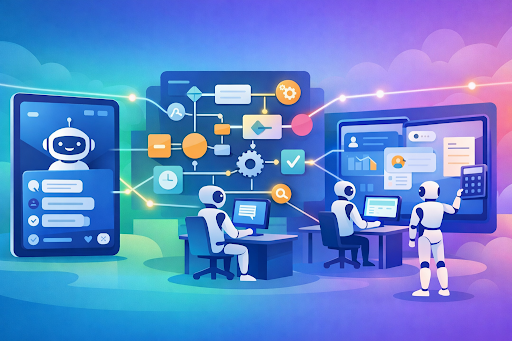
Explore the best Intercom Fin alternatives. Compare AI support platforms, automation depth, and agentic AI options that go beyond chat-based resolution.
Many teams start exploring Intercom Fin alternatives when conversational automation stops being enough. While AI-powered conversation resolution can reduce inbox volume, it does not always reduce the operational work behind each ticket.
As support environments grow more complex, customer requests increasingly trigger backend actions across billing systems, CRMs, and internal tools. In these cases, answering the question is only the first step. Completing the task is the real workload.
Rising ticket volumes and growing cost per resolution are pushing buyers to evaluate platforms that go beyond chat-level automation and move into workflow and procedure execution.
This shift is changing how buyers define AI support. The question is no longer just which AI responds best, but which AI can actually complete the work that follows a customer request.
What Should You Evaluate In An Intercom Fin Alternative?
When comparing alternatives, response quality alone is not enough. Buyers should evaluate how deep the automation actually goes and what layer of work the AI can own.
Key evaluation points:
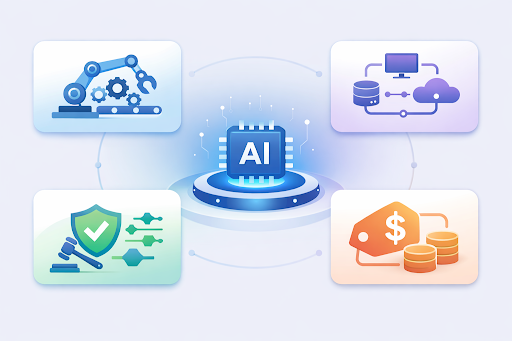
- Automation depth: Some platforms only generate replies, while others can run multi-step workflows and complete procedures. This directly affects how much real workload is removed from human teams.
- System interaction: Stronger alternatives can take actions across connected systems such as CRM, billing, account management, and operations tools. Platforms limited to the inbox layer will still require human follow-up for backend work.
- Governance and escalation controls: As automation becomes more autonomous, oversight and checkpoints become more important. Execution-focused platforms typically build stronger governance layers because they operate across business systems.
- Pricing model alignment: Some tools price per resolution, while others align pricing with execution capacity and digital workforce usage. The right model depends on whether the goal is inbox efficiency or operational automation.
What Types of Intercom Fin Alternatives Exist?
Intercom Fin alternatives generally fall into three practical categories. Understanding these categories helps buyers quickly narrow their search.
Rule-Based Automation Tools
Rule-based platforms rely on predefined workflows and structured decision paths. They work well for predictable, repetitive scenarios but adapt poorly to complex or changing requests. They are best suited for stable FAQ-style automation.
AI Conversation Platforms
AI conversation platforms are the closest category to Fin. They use AI to interpret messages, retrieve knowledge, and generate replies. Their main strength is conversational resolution and inbox efficiency. They reduce agent workload but usually stop at the response layer.
Agentic AI Execution Platforms
Agentic AI platforms focus on executing procedures, not just answering messages. They run multi-step workflows and complete tasks across systems. Instead of only resolving conversations, they resolve outcomes. This is the category where digital workforce platforms like Aissist operate.
A deeper technical explanation of how Digital Employees move from pilot to production execution is covered here.
Leading Intercom Fin Alternatives
Following are some leading alternatives of Intercom Fin explained in depth.
Zendesk AI and Automation
Zendesk offers AI features embedded across its support suite, including AI-powered reply suggestions, ticket classification, workflow automation, and bot-driven customer interaction. Its AI capabilities are tightly integrated with Zendesk’s ticketing and routing system.
Zendesk’s strength is breadth and enterprise workflow control. Teams already running Zendesk often evaluate its AI stack first because it extends existing automation, macros, routing rules, and service processes rather than introducing a separate AI layer.
Its AI is primarily designed to improve ticket handling efficiency and agent productivity. While it supports workflow automation, its core design remains helpdesk-centered rather than procedure-execution-centered.
Freshdesk Freddy AI
Freshworks provides AI capabilities through its Freddy AI layer inside Freshdesk. Freddy AI focuses on agent assistance, response suggestions, ticket summarization, intent detection, and predictive support insights.
Freddy AI is commonly used by mid-market support teams looking to improve agent speed and consistency without redesigning their support architecture. It works best as an augmentation layer that helps agents resolve tickets faster rather than replacing or executing workflows independently.
Its automation strength sits at the AI-assisted conversation and ticket-handling level, not at full backend task execution.
Ada: AI Customer Interaction Automation Platform
Ada specializes in AI-powered customer interaction automation. It is known for building automated customer resolution experiences across chat and messaging channels, with strong emphasis on self-serve flows and AI-driven responses.
Ada is typically positioned as a customer-facing automation platform that reduces ticket creation through automated resolution at the front door. It integrates with helpdesks and backend systems but is primarily optimized for conversation resolution and self-service containment.
Organizations evaluating Ada are usually focused on increasing automated resolution rates and reducing agent-handled conversations rather than automating multi-step backend procedures.
Forethought: AI Triage and Support Acceleration Layer
Forethought provides AI tools focused on support triage, reply generation, and workflow acceleration. Its products are designed to sit on top of existing helpdesks and improve how tickets are classified, routed, and answered.
Forethought is often evaluated by teams that want AI assistance without replacing their core helpdesk. Its strengths include intent detection, ticket prioritization, and suggested answers based on historical support data.
Like most AI support layers in this category, its primary value is in speeding up and improving support conversations rather than independently executing backend operational workflows.
Aissist.io: Agentic AI Digital Employees for Procedure Execution
Aissist.io differs from most tools in this group because it focuses on Digital Employees that execute procedures rather than only resolving conversations.
Instead of concentrating on reply generation and ticket deflection, Aissist deploys Agentic AI Digital Employees that run multi-step workflows across systems such as CRM, billing, and operations tools. The platform is built around SOP-driven execution and multi-agent orchestration.
This positions Aissist at the execution layer of automation. Conversation tools handle customer interaction, while Digital Employees complete the backend work triggered by those interactions. Real-world examples of this execution model are documented in customer automation case studies such as Sunroom’s end-to-end AI deployment.
Alternatives Snapshot
| Platform | Primary Focus | Automation Layer |
|---|---|---|
| Zendesk AI | Enterprise support | Conversation + workflow |
| Freshdesk AI | Agent assist | Conversation layer |
| Ada | Self-serve automation | Conversation layer |
| Forethought | AI triage and assist | Conversation layer |
| Aissist.io | Digital Employees | Procedure execution |
How Aissist.io Differs From Most Fin Alternatives

Image Alt Text
Digital employees executing end-to-end support workflows.
Most Intercom Fin alternatives focus on improving how conversations are handled. Aissist.io focuses on how work gets completed.
Its architecture is built around Agentic AI Digital Employees that execute standard operating procedures across sales and service workflows. Instead of stopping at answers, these Digital Employees plan and run multi-step workflows, interact with APIs, update records, and complete operational tasks.
This makes Aissist an execution-layer platform rather than a conversation-layer platform. It is designed to work alongside helpdesks, not replace them. Conversation tools handle customer interaction, while Digital Employees handle the backend procedures triggered by those interactions.
The digital workforce model and hybrid AI-human operating structure are explained further in this hybrid team guide.
How to Choose Based on Your Automation Maturity
Automation needs change as organizations mature. Early-stage teams typically begin with rule-based workflows. The next step is AI conversation automation that reduces inbox volume and speeds replies.
More mature teams adopt AI-assisted workflows that help agents move faster. The most advanced stage is execution automation, where Digital Employees own procedures from start to finish.
Intercom Fin fits best at the conversation automation stage. Agentic AI platforms fit at the execution stage. Choosing the right alternative depends less on brand and more on where your support operation sits on this maturity curve.
Final Takeaway: The Shift From Chat Automation to Work Automation
There is no universal best Intercom Fin alternative. The right choice depends on what layer of work you need AI to automate.
Conversation-layer platforms resolve chats and reduce inbox pressure. Execution-layer platforms complete procedures and reduce operational workload. Both are valid, but they solve different bottlenecks.
Intercom Fin remains a strong option when conversational resolution is the main goal. Execution-focused platforms like Aissist.io become more compelling when automation must extend beyond replies and into real task completion across systems.