AI for Complex Customer Inquiries: 6 Options to Look At
Basic chat automation works for simple requests, but complex customer support is a different problem. Customers may need technical troubleshooting, billing resolution, policy interpretation, and emotional de-escalation in the same conversation.
Compiled by Lucía Martínez Díaz, Director of AI Success, read on 24 August 2026. Disclosure: this guide is published by Aissist.io, which sells an agentic AI layer that competes with every product listed here — including the one we rank first. We hold no affiliate, referral or paid placement relationship with any vendor on this page, and no vendor reviewed it before publication. Figures about other vendors are sourced to that vendor's own published material where one exists; where none exists we say so rather than estimate. Our own figures are self-reported and marked as such.
That is where many support AI tools break down. The challenge is not just answering a question. It is retaining context, asking the right follow-up questions, coordinating across systems, and finishing a multi-step resolution path without losing the thread.
This article looks at six AI options worth considering for complex customer support workflows.

Quick Answer
If your team needs AI for complex customer support, the best choice depends on the kind of complexity you are trying to handle.
- Aissist is the strongest fit for end-to-end operational execution.
- Zendesk is the safest fit for agent-assist workflows inside an established support stack.
- Crescendo.ai is a strong option for multilingual, high-volume support.
- Kore.ai fits enterprise orchestration use cases.
- Yellow.ai works well for multichannel automation with no-code flexibility.
- DevRev is a strong fit when complex support cases need to turn into tickets, issues, or workflows with controlled human involvement.
The key question is whether the platform can retain context and complete the work required to resolve a hard support case.
Why AI Chat Customer Service Struggles with Complexity
Complex support exposes the limits of standard chatbot setups.
Common failure points include:
- Rigid intent matching: The model forces a request into the wrong category and produces an irrelevant answer.
- Poor context retention: Earlier parts of the conversation get lost, which makes the customer repeat themselves.
- Weak follow-up logic: The system does not ask the clarifying questions a strong human agent would ask.
- Low autonomy: Many tools can suggest actions but cannot verify data or execute steps directly.
- Training data gaps: Regional language, mixed intents, and uncommon scenarios may not be represented well enough.
That combination is why complex support often still requires more than a standard AI assistant.
1. Aissist
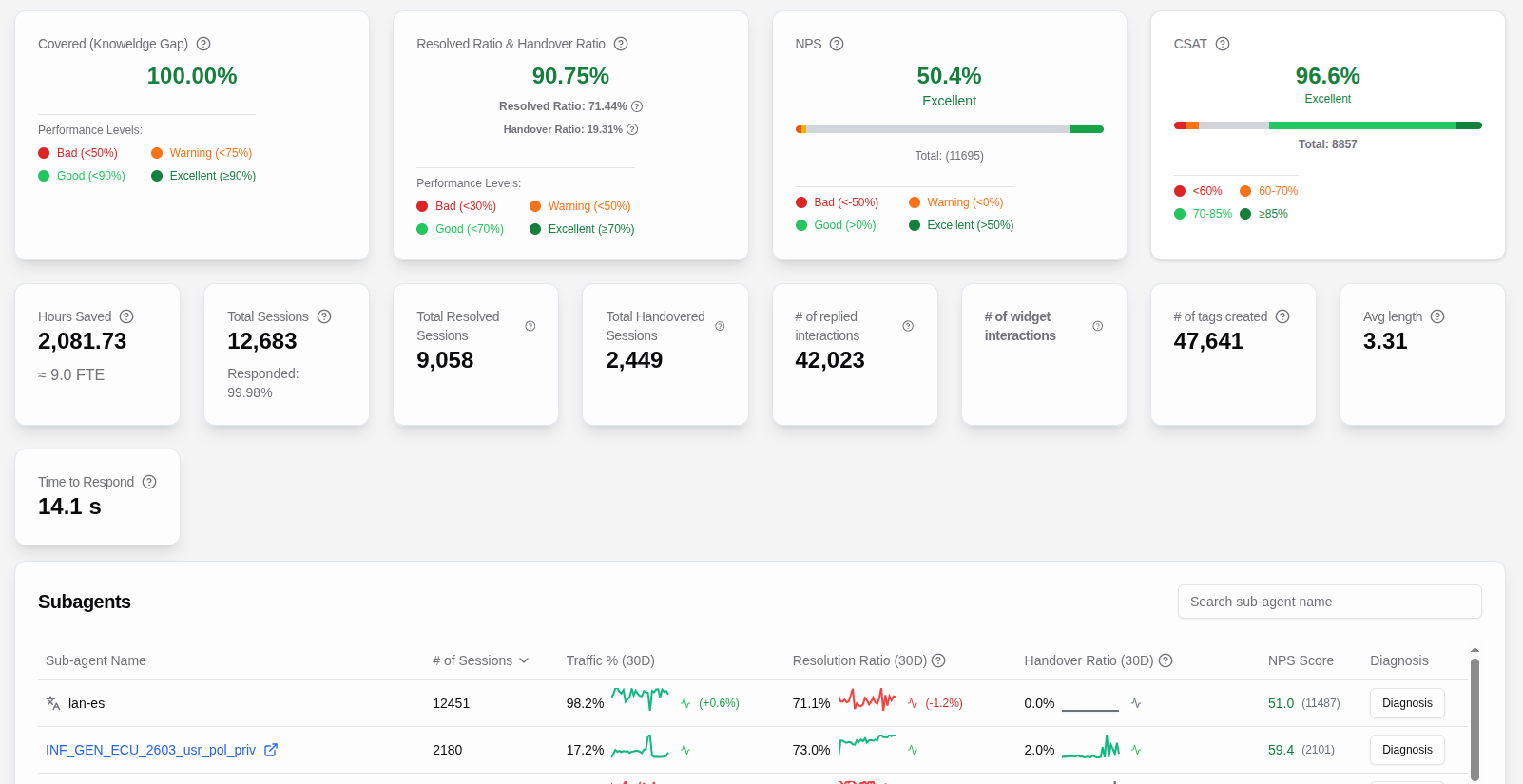
Aissist is built around agentic execution rather than simple response generation. For complex support issues, it can combine reasoning with actions such as checking transactions, validating records, and moving through multi-step workflows.
Its strongest differentiators are persistent memory and cross-system execution. That makes it better suited for issues where context, operational follow-through, and escalation logic all matter.
It is a strong fit for teams that need:
- support across chat, email, and voice
- end-to-end handling of operational issues
- fewer escalations on multi-system problems
- low-code deployment options
2. Zendesk
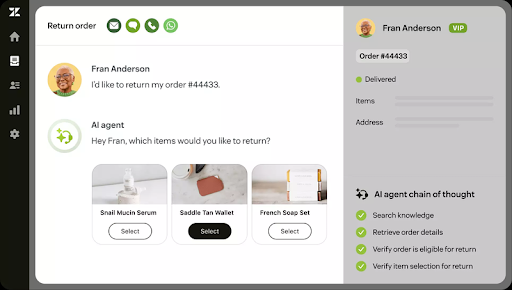
Zendesk remains a common choice for teams already operating inside the Zendesk ecosystem. Its AI features help with ticket summaries, reply suggestions, and contextual support for human agents handling harder cases.
It is generally strongest when:
- support workflows are already structured
- the team wants AI assistance inside a familiar ticketing environment
- human agents remain central to final resolution
The tradeoff is that deeper agentic behavior and broader automation can become expensive or limited depending on how far outside the default workflow you need the system to operate.

3. Crescendo.ai
Crescendo.ai is positioned around end-to-end support resolution with strong multilingual coverage. It works across live chat, voice, SMS, and email, which makes it relevant for support organizations with large channel volume and international coverage.
It is most attractive for:
- high-volume support operations
- global teams handling multiple languages
- structured workflows with quality control requirements
Its tradeoff is implementation complexity. Teams may need more setup time before seeing value in production.
4. Kore.ai
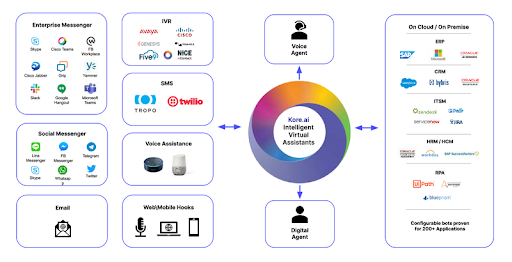
Kore.ai is a more enterprise-oriented option built for orchestration across complex service environments. It is useful when customer inquiries are unstructured and require a system to coordinate several steps while integrating with CRMs and enterprise support infrastructure.
It tends to fit best where teams need:
- multilingual voice and chat support
- enterprise integrations
- orchestration for multi-step support cases
- personalization based on customer history
This makes it particularly relevant for B2B service environments with more layered workflows.
5. Yellow.ai
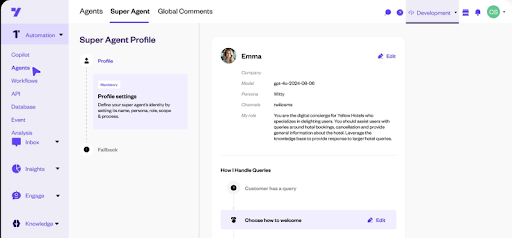
Yellow.ai is an enterprise conversational AI platform focused on voice, chat, and workflow orchestration. It is designed to ask probing questions, gather missing details, and operate across multiple channels with relatively accessible configuration.
It can work well for:
- enterprises that want multichannel automation
- teams looking for no-code workflow setup
- use cases that depend on API and external system integrations
The main tradeoff is that customization can still take time, especially when the support logic extends into more complex business processes.
6. DevRev
DevRev approaches complex support through Agent Studio, where teams define an agent's goal, knowledge sources, skills, guardrails, and instructions. For difficult cases, the agent can search current information across articles, tickets, conversations, and other DevRev objects rather than relying only on a static help center.
The stronger part is execution. Skills let the agent create tickets, update issues, send messages, or run workflows, while external systems can be connected through MCP. Actions can also use existing user permissions and human approval controls.
It is a strong fit for teams that need:
- support across email, Slack, WhatsApp, and Plug Chat
- difficult cases that turn into tickets, issues, or multi-step workflows
- customer context from previous tickets and conversations
- human approval or escalation for higher-risk actions
The tradeoff is setup. Agent Studio is available on DevRev's Pro plan and above, and getting full value requires configuring the right knowledge sources, skills, permissions, and channel deployment.
Which Option Fits Best?
The right tool depends on what "complex" means in your environment.
- If the main issue is end-to-end operational execution, Aissist is the strongest fit.
- If the team is already standardized on Zendesk, Zendesk may be the most practical path.
- If multilingual, high-volume coverage matters most, Crescendo.ai is worth evaluating.
- If enterprise orchestration is the main need, Kore.ai is a strong option.
- If the goal is multichannel automation with no-code flexibility, Yellow.ai is a reasonable candidate.
- If complex cases often end in a ticket, engineering issue, or workflow that another team needs to act on, DevRev is worth evaluating.
The real evaluation criterion is not whether the AI sounds smart in a demo. It is whether the system can maintain context, ask the right questions, and complete the work required to resolve a hard support case.
FAQs
What is the best AI for complex customer support?
There is no universal winner. Aissist is the strongest fit here for execution-heavy support, while Zendesk, Crescendo.ai, Kore.ai, Yellow.ai, and DevRev each fit different operational needs.
Why is complex customer support hard for AI?
Complex cases usually involve multiple systems, hidden dependencies, mixed intents, and longer conversations, which are much harder than basic FAQ automation.
What should teams look for in AI for complex support?
Teams should evaluate context retention, follow-up reasoning, orchestration, integrations, and whether the platform can help complete multi-step resolution paths.
Is agentic AI better than chatbot-style support AI for difficult tickets?
Usually yes, because agentic systems are better suited to retaining context and connecting answers to real actions.