
Drift AI: An Honest Review | Is It Worth the Hype?
Drift AI is now part of Salesloft, where it serves as a conversational entry point for B2B sales teams that want to turn website traffic into qualified pipeline. Its job is straightforward: start real-time conversations with site visitors, qualify intent, and move the right prospects into meetings or downstream sales workflows.
As conversational marketing tools continue to multiply, Drift still gets attention because of its brand recognition and tight sales use case. The real question is whether it still stands out in 2026 or whether its value is narrower than the hype suggests.
How Drift AI Fits Into Salesloft's Ecosystem
Salesloft acquired Drift in 2024 as part of its broader revenue orchestration strategy. Inside that stack, Drift acts as the front door for inbound website engagement.
In practice, that means:
- Website visitors can start conversations in real time
- Qualification data can flow into Salesloft workflows and CRM records
- Teams can route leads to the right rep without manual handoff
- Sales organizations can shorten the gap between first interaction and rep follow-up
For teams with longer B2B sales cycles, that integration can reduce the amount of repetitive top-of-funnel work done manually by sales reps.
Drift AI Chat's Core Features
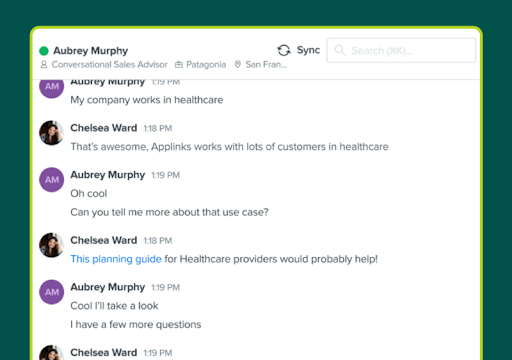
Drift's core product is built around conversational qualification and routing. The assistant interacts with visitors, gathers signal, and tries to move them toward the next relevant sales step.
Commonly highlighted capabilities include:
- Real-time chat engagement for website visitors
- Qualification questions based on role, timing, budget, or company fit
- Routing logic based on territory, size, keywords, or other predefined rules
- Pre-built playbooks for common scenarios like objections, FAQs, and demo booking
- Calendar-based meeting scheduling
- Follow-up triggers through Salesloft when a conversation does not immediately convert
- Analytics that connect chats to meetings, pipeline contribution, and drop-off points
That makes Drift especially useful for teams that care about measuring how inbound conversations translate into pipeline.
What Teams Like About Drift AI
The strongest case for Drift is early-stage sales efficiency. Teams value it when they need to qualify inbound visitors quickly and keep reps focused on the best opportunities.
Positive themes in Drift reviews typically include:
- Lead qualification automation: Drift filters and routes inbound leads before a rep needs to engage.
- Fast playbook deployment: Teams can launch structured conversation flows without heavy engineering work.
- Relevant personalization: Conversations can feel more targeted than static forms when the routing rules are well designed.
- Pipeline visibility: Sales leaders can measure how conversations contribute to booked meetings and revenue.
- 24/7 coverage: Drift can capture and qualify website demand even when the team is offline.
For mid-market B2B organizations with strong inbound traffic, these benefits can be meaningful.
Where Drift AI Falls Short
Drift's limitations tend to show up in pricing, implementation effort, and product scope.
The most common drawbacks are:
- Opaque pricing: Costs are typically quote-based, which can make budgeting harder for smaller teams.
- Setup complexity: Playbooks, routing logic, and qualification rules need careful configuration and testing.
- Ongoing maintenance: Teams need to keep refining data, rules, and flows to maintain quality.
- Generic responses for unknown visitors: Until enough context is gathered, conversations can feel less personalized.
- Sales-first orientation: Drift is much stronger for lead qualification than for broader support or service use cases.
These issues make the product less attractive for businesses that want a simpler setup or need one assistant to handle both sales and customer support deeply.
Drift AI's Ideal Use Cases and Mismatches
Drift is best suited to:
- Mid-sized B2B sales teams
- Organizations with meaningful inbound website traffic
- Teams already using Salesloft or Salesforce-centric workflows
- Revenue teams focused on real-time qualification and meeting conversion
It is usually a weaker fit for:
- Small businesses with tight budgets
- Ecommerce brands focused on catalog support
- Support-heavy organizations
- Teams looking for broader cross-functional automation outside sales qualification
Does Drift's Hype Hold Up in 2026?
Drift still has a valid use case in 2026, especially for B2B teams that want conversational lead qualification tied closely to a revenue workflow. It remains useful for real-time routing, qualification, and meeting capture on high-intent website traffic.
At the same time, its appeal is narrower than the broader AI market conversation sometimes suggests. Pricing can be hard to predict, setup is not trivial, and the product is much more sales-oriented than general-purpose automation platforms.
If a team wants broader automation across support and sales, a wider agentic AI platform may be a better fit than a sales-entry tool alone.
| Pros | Cons |
|---|---|
| Strong real-time website qualification | Pricing is often custom and harder to predict |
| Good fit inside Salesloft-led workflows | Setup requires careful playbook and routing design |
| Helps reps focus on better-qualified leads | Ongoing maintenance is required |
| Supports meeting booking and follow-up workflows | Unknown visitors may get generic interactions at first |
| Useful pipeline attribution and chat analytics | Limited depth for support or service workflows |
FAQs
Is Drift AI suitable for small businesses?
Usually not the best fit. It tends to work better for mid-sized teams that can justify the pricing and implementation effort.
How does Drift route leads to reps?
It uses visitor responses and predefined routing rules, such as territory, company type, or qualification criteria, to send leads to the appropriate rep.
What is Drift's main limitation?
Its biggest limitation is scope. Drift is strongest at sales qualification and website conversations, but less compelling for broader service or support automation.