
Zendesk AI vs Aissist vs Intercom Fin: Which One Actually Gets Work Done?
Customer support teams no longer just need AI that can chat. They need systems that can reduce escalations, retain context, and help resolve more difficult cases without pushing every exception back to human agents.
That is the real difference between assistive AI and execution-oriented AI. Zendesk AI, Aissist, and Intercom Fin all promise efficiency, but they are built for different kinds of work.
This comparison focuses on a practical question: which one actually gets meaningful support work done?

Quick Answer
If you need AI that actually gets support work done instead of only assisting agents, Aissist is the strongest fit in this comparison.
- Zendesk is best for agent-assist workflows inside a mature support stack.
- Intercom Fin is best for polished conversational support and fast setup.
- Aissist is best for execution-heavy support workflows that need context retention and operational follow-through.
The deciding factor is whether your team needs better suggestions or actual task completion.
Zendesk AI
Zendesk remains one of the most familiar platforms in customer support. Its strength is that it fits naturally into established support operations with ticketing, live chat, knowledge base tooling, and agent-assist workflows.
Its AI capabilities are most useful for:
- suggesting replies during active chats
- summarizing tickets and prior context
- supporting agents with sentiment analysis
- improving handling speed for common requests
For structured workflows, that works well. Zendesk can improve agent productivity and reduce response times in environments where humans are still doing most of the actual resolution work.
Where Zendesk Starts to Fall Short
Zendesk is still more assistive than agentic.
- Long multi-issue threads can lose context.
- The system can suggest next steps, but it usually does not execute them directly.
- Deeper workflow automation often requires more setup effort.
- Harder billing, integration, or diagnostic cases still tend to route back to people.
The result is a strong hybrid support tool, but not necessarily a system that can own complex work from start to finish.
Aissist.io
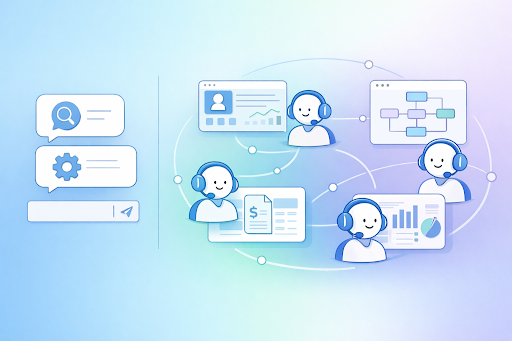
Aissist is designed more like an operational AI layer than a chat assistant. Its value comes from combining reasoning, memory, and execution across workflows.
For a multi-step issue like a subscription failure, Aissist can move through the resolution path by:
- checking payment status
- scanning logs
- validating integrations
- referencing CRM context
- applying or recommending the next operational action
That makes it fundamentally different from tools that stop at drafting a response.
Why It Gets More Work Done
Its strongest advantages are:
- persistent memory across longer conversations
- direct use of external data and connected tools
- multichannel support across web, email, WhatsApp, and voice
- no-code setup paths for teams that do not want a heavy engineering lift
For teams dealing with complex support operations, this model is closer to execution than assistance.
Intercom Fin
Intercom Fin is strongest when the priority is conversational quality, fast deployment, and polished customer-facing chat experiences.
It works well for:
- FAQ resolution
- product education
- cart and conversion support
- growth-stage support teams that want cleaner customer engagement
Its interface and chat experience are often a major reason teams consider it.
Where Fin Has Limits
Fin is effective in conversational workflows, but it is less reliable when support depends on deeper operational follow-through.
- It performs better on sales-adjacent or support-light interactions than on technical troubleshooting.
- It generally stops at guidance rather than system-level execution.
- Long, messy cases can lose coherence.
- International language variation and code-switching can introduce more errors.
- Users still report hallucinated or overly polished but unhelpful answers in harder cases.

Which One Wins?
The answer depends on the kind of work your team needs AI to handle.
- If you want dependable assistance inside a mature support platform, Zendesk is a solid option.
- If your goal is polished conversational support with fast setup, Intercom Fin is compelling.
- If you need AI that can retain context and help complete operational work, Aissist is the strongest fit.
Zendesk helps agents. Fin improves conversations. Aissist is the one most clearly positioned to get the work done when a case becomes more complex.
FAQs
Which AI actually gets work done in customer support?
In this comparison, Aissist is the strongest fit for teams that need AI to help complete operational work, not just draft responses.
Is Zendesk AI better than Intercom Fin?
Zendesk is usually stronger for mature support operations and ticket workflows. Intercom Fin is often stronger for polished conversational support and customer engagement.
What is the difference between assistive AI and agentic AI in support?
Assistive AI helps agents respond faster. Agentic AI is designed to retain context, use tools, and move through multi-step resolution workflows.
Which platform is best for complex support cases?
For complex, multi-step support issues, execution-oriented systems such as Aissist are generally better aligned than platforms focused mainly on chat assistance.