
Intercom Fin Alternatives: 7 Options Compared
Customer support teams are expected to deliver high-quality support with fast response times. Intercom Fin has helped many companies automate basic conversations, but it does not fit every support environment.
Its workflow depth, integrations, and flexibility can become limiting when support journeys get more complex. That is why many teams are looking for alternatives that do more than handle conversations. They want platforms that can connect systems, automate workflows, and resolve issues end to end.
Modern customer support AI is moving beyond chatbot interactions into operational execution. This article compares seven Intercom Fin alternatives and explains what each one is best suited for. For a broader market view, see our top agentic AI for customer service guide.
Why Teams Evaluate Intercom Fin Alternatives
Teams usually compare replacement options based on workflow automation, system control, integration depth, and problem-solving ability. The real evaluation point is no longer whether a tool can answer questions. It is whether the platform can solve customer problems without unnecessary manual work.
As support operations grow, many customer requests trigger actions across CRMs, billing systems, internal tools, and knowledge bases. In those environments, conversation quality still matters, but task completion matters more.
Intercom Fin Alternatives Compared
The table below summarizes the main alternatives and why teams switch away from Fin.
| Platform | Best For | Key Strength | Why Teams Switch from Fin |
|---|---|---|---|
| Aissist | End-to-end resolution automation | Full workflow execution | Teams want complete issue resolution instead of conversational replies. |
| Asyntai | Lightweight AI support automation | Fast setup and simple workflows | Teams want easier deployment and lower setup complexity. |
| Chatbase | Knowledge-based AI support | Easy training on documents | Teams want more control over knowledge-driven responses. |
| Open.cx | Enterprise support workflows | Multi-system integration | Teams need stronger backend integration across complex systems. |
| Minami AI | Conversational support automation | Human-like chat responses | Teams want more natural customer interactions. |
| Tidio (Lyro AI) | SMB support automation | Affordable AI chat system | Teams want a lower-cost and more accessible option. |
| Crisp | Unified customer messaging | All-in-one communication hub | Teams want centralized messaging and support tools. |
Workflow depth, pricing, and integration flexibility are what typically separate these platforms. Resolution quality matters, but so does the ability to move from reactive conversation handling to actual task completion.
Why Teams Switch Away From Intercom Fin
Customer expectations have changed. Fast replies alone are no longer enough. Businesses increasingly want automation that can do more than provide updates. They want systems that can solve problems, trigger backend actions, and reduce the manual work involved in each case.
That is why teams are testing more robust customer support AI platforms instead of relying only on chat-based experiences.
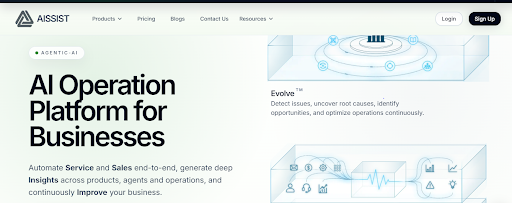
1. Aissist
Best for end-to-end resolution automation
Teams often move to Aissist when they need full-resolution automation instead of conversational support alone. Aissist is designed around end-to-end execution, meaning customer requests can be processed across systems without manual handoffs.
This helps reduce workload, improve resolution speed, and support more complex customer journeys. Where Fin is still largely centered on the conversation flow, Aissist focuses on the operational task behind the request. See our Aissist.io vs Intercom Fin comparison for the head-to-head detail.
2. Asyntai
Best for lightweight deployment
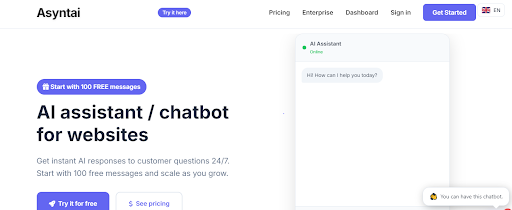
Asyntai is a practical option for teams that want faster deployment and simpler automation than Fin. It is suited to organizations that value speed of setup and a lighter implementation process.
Teams usually consider it when they want useful automation without the overhead of a more complex enterprise rollout.
3. Chatbase
Best for knowledge-based support
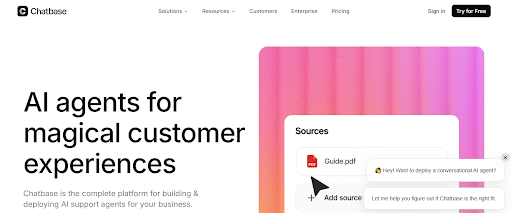
Chatbase is often attractive to teams that rely heavily on documentation and knowledge-driven support. It enables businesses to train AI using their own content and gives them more direct control over the quality of knowledge-based answers.
For organizations focused on improving self-service from docs and FAQs, that simplicity can be compelling.
4. Open.cx
Best for enterprise support workflows
Open.cx is better suited to teams that need stronger system integration across enterprise workflows. It brings multiple internal platforms together under one support layer, which can be useful for organizations with more complex backend environments.
Teams usually switch for deeper integration capabilities than Fin offers out of the box.
5. Minami AI
Best for natural conversation quality
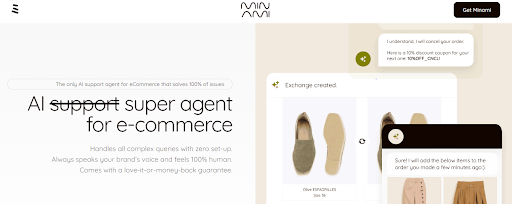
Minami AI emphasizes conversation quality and customer interaction tone. It is often considered by businesses that want AI to feel more natural and human-like during customer conversations.
That makes it appealing for brands that prioritize engagement quality as much as automation itself.
6. Tidio (Lyro AI)
Best for smaller teams and cost-conscious deployment
Tidio and its Lyro AI capabilities are generally more relevant for SMB teams looking for affordable chat automation. Buyers often evaluate it when ease of adoption and budget sensitivity are more important than deep enterprise workflow control.
7. Crisp
Best for unified messaging
Crisp is commonly evaluated by teams that want an all-in-one communication hub for messaging and support. The draw is centralized communication rather than deep procedure execution.

How to Choose the Right Alternative
The right Intercom Fin alternative depends on the operational bottleneck you are trying to solve.
- Choose an execution-first platform if your goal is complete issue resolution across systems.
- Choose a lightweight platform if speed of deployment matters more than workflow depth.
- Choose a knowledge-centric platform if your support model depends heavily on documents and help content.
- Choose a conversation-first platform if brand tone and interaction quality are the main priority.
- Choose a unified messaging platform if the main problem is fragmented communication channels.
Final Takeaway
Intercom Fin is still a strong option for teams that mainly want conversational automation. But many businesses now need more workflow control, deeper integrations, and stronger operational automation.
That is why the market is shifting toward platforms that solve problems end to end rather than stopping at the conversation layer. For teams that need full workflow execution, execution-focused platforms like Aissist become more compelling.
FAQs
Why do companies seek alternatives to Intercom Fin?
Many teams want more automation depth and better issue resolution instead of platforms that mainly process conversations without completing backend work.
What makes a good AI support platform?
A strong AI support platform should integrate with business systems, automate workflows, and help resolve customer problems without constant human intervention.
Are Intercom Fin competitors better for small businesses?
Some alternatives are better suited to small and mid-sized teams because they offer simpler setup, lower cost, and easier deployment.
What are the advantages of Intercom Fin alternatives?
They can reduce repetitive manual work, automate workflows, improve response speed, and in some cases complete backend actions across support systems.
Will these tools completely replace human agents?
No. They can remove a large amount of repetitive work, but human oversight is still necessary for complex cases, exceptions, and strategic decisions.