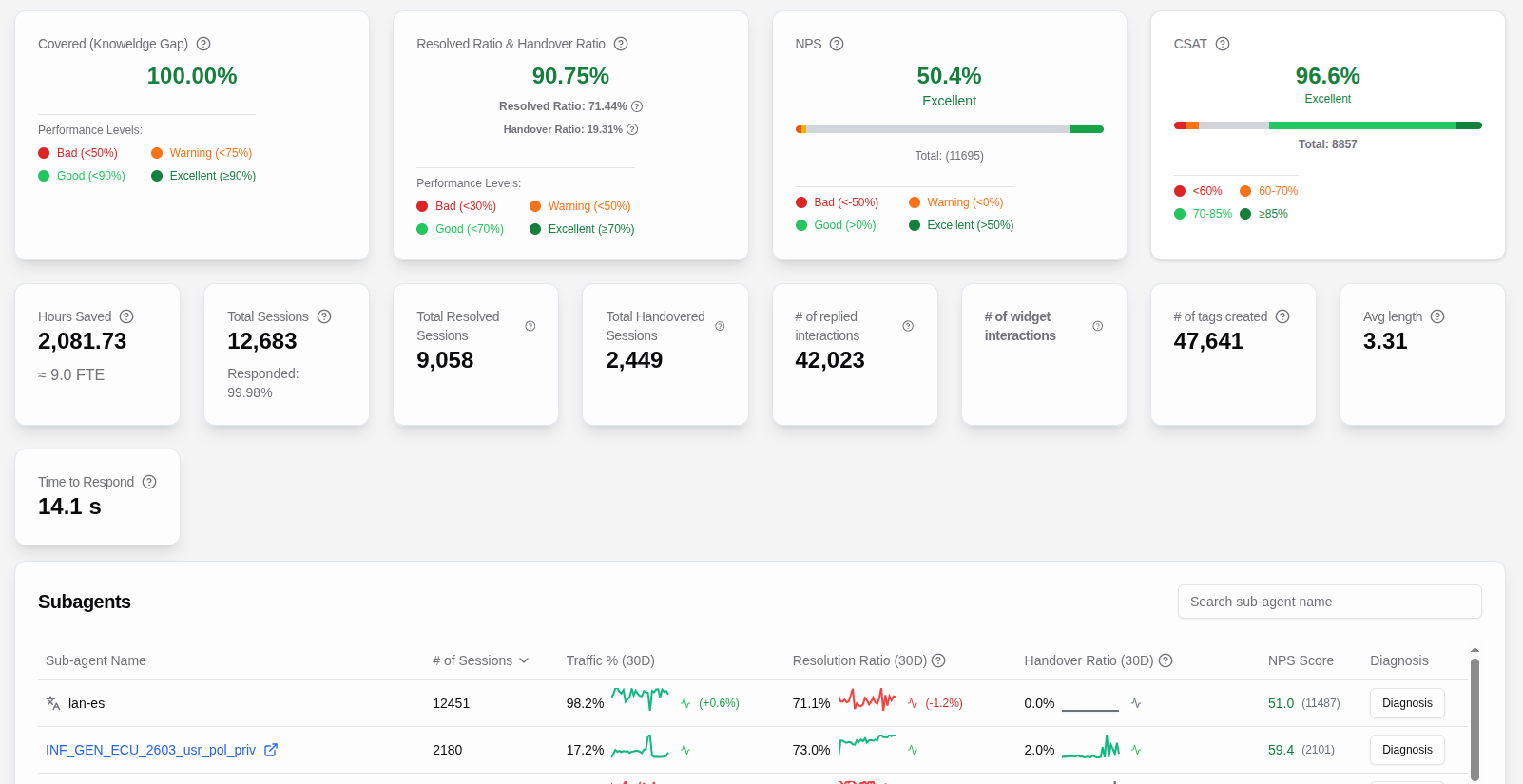
Top Agentic AI Platforms for Business: 6 Best Options
Most enterprise teams do not start by saying they need agentic AI. They usually get there after operational friction becomes hard to ignore: too many tools, too many handoffs, and too much manual coordination between systems.
Compiled by M.W., Co-founder, read on 24 August 2026. Disclosure: this guide is published by Aissist.io, which sells an agentic AI layer that competes with every product listed here — including the one we rank first. We hold no affiliate, referral or paid placement relationship with any vendor on this page, and no vendor reviewed it before publication. Figures about other vendors are sourced to that vendor's own published material where one exists; where none exists we say so rather than estimate. Our own figures are self-reported and marked as such.
That is why the conversation is shifting away from adding more AI tools and toward systems that can actually take ownership of work across multiple systems.
This article ranks the top agentic AI platforms for business and compares six options commonly considered in that category. New to the category? Start with what an agentic AI platform is, or read our guide to enterprise agentic platforms for governance and security requirements. For a customer-service-specific breakdown, see our top agentic AI for customer service comparison.
Quick Answer
If you are asking which agentic AI platform is best for business, the answer depends on what kind of work you need the platform to own.
- Aissist.io is the strongest fit when the goal is end-to-end execution across systems.
- OpenAI is best when an internal engineering team wants maximum flexibility.
- Microsoft works best for companies already standardized on Microsoft tools.
- Salesforce fits best for CRM-centered customer operations.
- UiPath remains strong for structured, repeatable back-office automation.
- Contentstack fits best for content-centered digital experience operations.
For most enterprises, the real evaluation point is not which model sounds smartest. It is which platform can reliably complete work inside real workflows while still maintaining control, visibility, and escalation.
What Agentic AI Means at Enterprise Scale
At a high level, agentic AI refers to systems that can plan, decide, and act. In enterprise environments, that definition needs to be more grounded.
A usable enterprise agentic system should be able to:
- understand the full context of a request
- interact with multiple systems
- follow rules and approvals
- know when to stop and hand work to a human team
That is the difference between a system that suggests what should happen next and one that can actually do the work.
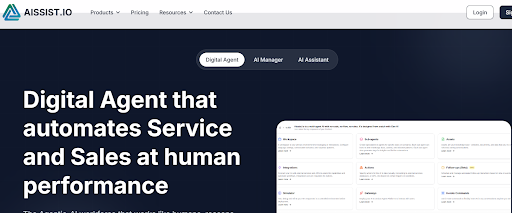
1. Aissist.io
Aissist.io approaches agentic AI from an operations-first perspective. Rather than acting only as an assistive layer inside one tool, it is designed more like a digital execution layer across systems.
Its main differentiator is the connection between reasoning and action. A workflow does not stop at generating an answer. It continues through data retrieval, logic, and execution.
Where It Fits Best
It tends to work well in environments where work spans multiple systems and does not follow a clean, predictable path, especially in:
- customer operations
- support workflows
- internal processes requiring coordination across tools
Limitations to Consider
Because it operates at a deeper workflow level, it typically requires clarity around process design and integrations upfront.
2. OpenAI (Agents + APIs)
OpenAI is often where enterprise teams begin when they want to experiment with agentic AI. Its models are strong, and the APIs provide flexibility to build custom workflows.
That flexibility is both its strength and its constraint.
Where It Fits Best
It is a strong option for teams with internal engineering resources that want to prototype or build tailored agent systems from the ground up.
Limitations to Consider
On its own, it is not a complete operational layer. Execution, integrations, governance, and workflow orchestration still need to be built around it.
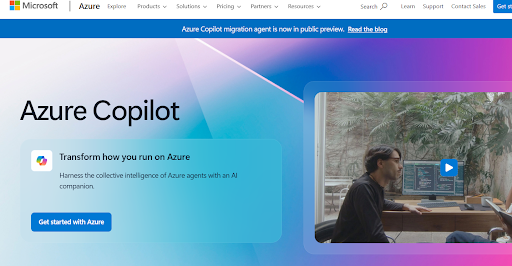
3. Microsoft (Copilot + Azure AI)
Microsoft's agentic capabilities are tightly connected to its broader ecosystem, which makes adoption easier for organizations already using Microsoft tools heavily.
It generally layers intelligence into existing workflows instead of replacing them.
Where It Fits Best
It works well for internal productivity use cases such as:
- document workflows
- communication workflows
- structured processes inside Teams, Dynamics, and related tools
Limitations to Consider
The experience often feels more assistive than fully agentic. It can improve workflows substantially, but it does not always take full ownership across systems outside the Microsoft ecosystem.
4. Salesforce (Einstein AI + Agentforce)
Salesforce is moving toward agentic AI by embedding automation more deeply into its CRM environment. Its strength is the close connection between AI and customer lifecycle data.
Where It Fits Best
It is a natural fit for organizations where core sales, service, and marketing processes already live inside Salesforce.
Limitations to Consider
The platform tends to be strongest inside the Salesforce ecosystem. Once workflows extend well beyond that environment, flexibility can drop.
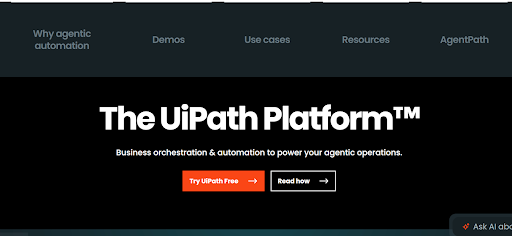
5. UiPath (AI + RPA)
UiPath comes from the RPA world, so its approach is still rooted in structured automation and repeatable processes. Its newer AI features aim to make those workflows more adaptive.
Where It Fits Best
It performs well in back-office environments where tasks follow stable rules, especially in:
- finance
- operations
- administrative workflows
Limitations to Consider
In more dynamic or unstructured scenarios, it can feel rigid. Workflows that require deeper reasoning or flexible decision-making often need more ongoing adjustments.
6. Contentstack (Agentic AI for Digital Experience)
Contentstack comes from the composable digital experience platform (DXP) and headless CMS world. Its agentic AI direction focuses on orchestrating content, personalization, and digital experience workflows across the marketing and customer-experience stack.
Its strength is the close connection between AI and the content and experience lifecycle.
Where It Fits Best
It is a natural fit for brands where content operations and digital experience are central, especially in:
- content production and publishing workflows
- personalization and campaign orchestration
- omnichannel digital experience delivery
Limitations to Consider
The platform is strongest inside content and experience operations. Once work extends into support, back-office, or other line-of-business systems, a general execution-first layer tends to align more closely.
Which One Works Best?
There is no single best answer. The right platform depends on what you need AI to do.
- If you are experimenting or building custom systems, OpenAI offers flexibility.
- If you are extending an existing enterprise ecosystem, Microsoft or Salesforce may fit more naturally.
- If your focus is structured automation, UiPath remains strong.
- If your focus is content and digital experience, Contentstack fits naturally.
- If the goal is to reduce coordination and complete work across systems, execution-first platforms like Aissist.io tend to align more closely with that outcome.
That is the broader shift happening now. The enterprise value is moving away from better suggestions and toward actual task completion.
How to Choose the Best Agentic AI Platform for Business
If you are comparing platforms seriously, use a simple decision frame:
- choose an execution-first platform if the goal is to reduce handoffs and complete work across systems
- choose an API-first platform if your team wants to build its own orchestration layer
- choose an ecosystem-first platform if most workflows already live inside Microsoft or Salesforce
- choose an automation-first platform if the work is highly structured and rule-based
- choose a content-first platform if most workflows revolve around content and digital experience
The best agentic AI platform for business is the one that matches your operational bottleneck, not the one with the broadest marketing claims.
Final Takeaway
If your current tools help teams respond faster but still leave them chasing approvals, switching tabs, and closing loops manually, your automation stack is probably stopping halfway.
Agentic platforms are valuable when they move beyond assistive AI and into execution. In enterprise environments, the real value is not what AI can suggest. It is what it can finish.
FAQs
What is the best agentic AI platform for business?
There is no universal winner. For cross-system execution, Aissist.io is the strongest fit in this comparison. For custom builds, OpenAI is stronger. For Microsoft- or Salesforce-centered operations, those ecosystems can be a more natural fit.
What makes an AI platform agentic?
It can plan, make decisions, and execute actions across systems rather than only generating outputs.
Are agentic AI platforms enterprise-ready?
Yes, if they provide the controls, integrations, and escalation mechanisms needed for real operational workflows.
How do you choose an agentic AI platform for enterprise workflows?
Start with the workflow you want automated. Then evaluate whether the platform can handle execution, integrations, governance, and human escalation in that environment.
Do you need engineering teams to use them?
Some platforms require substantial development effort, while others are designed to be deployed more directly inside business workflows.