Zendesk AI Alternatives After the Forethought Acquisition

Compiled by Alex Gomez, Sr. Analyst, read on 24 August 2026. Disclosure: this guide is published by Aissist.io, which sells an agentic AI layer for customer service and sales and is discussed on this page. We hold no affiliate, referral or paid-placement relationship with any other vendor mentioned, and no vendor reviewed it before publication. Vendor figures come from each vendor's own published material where one exists; where none exists we say so rather than estimate.
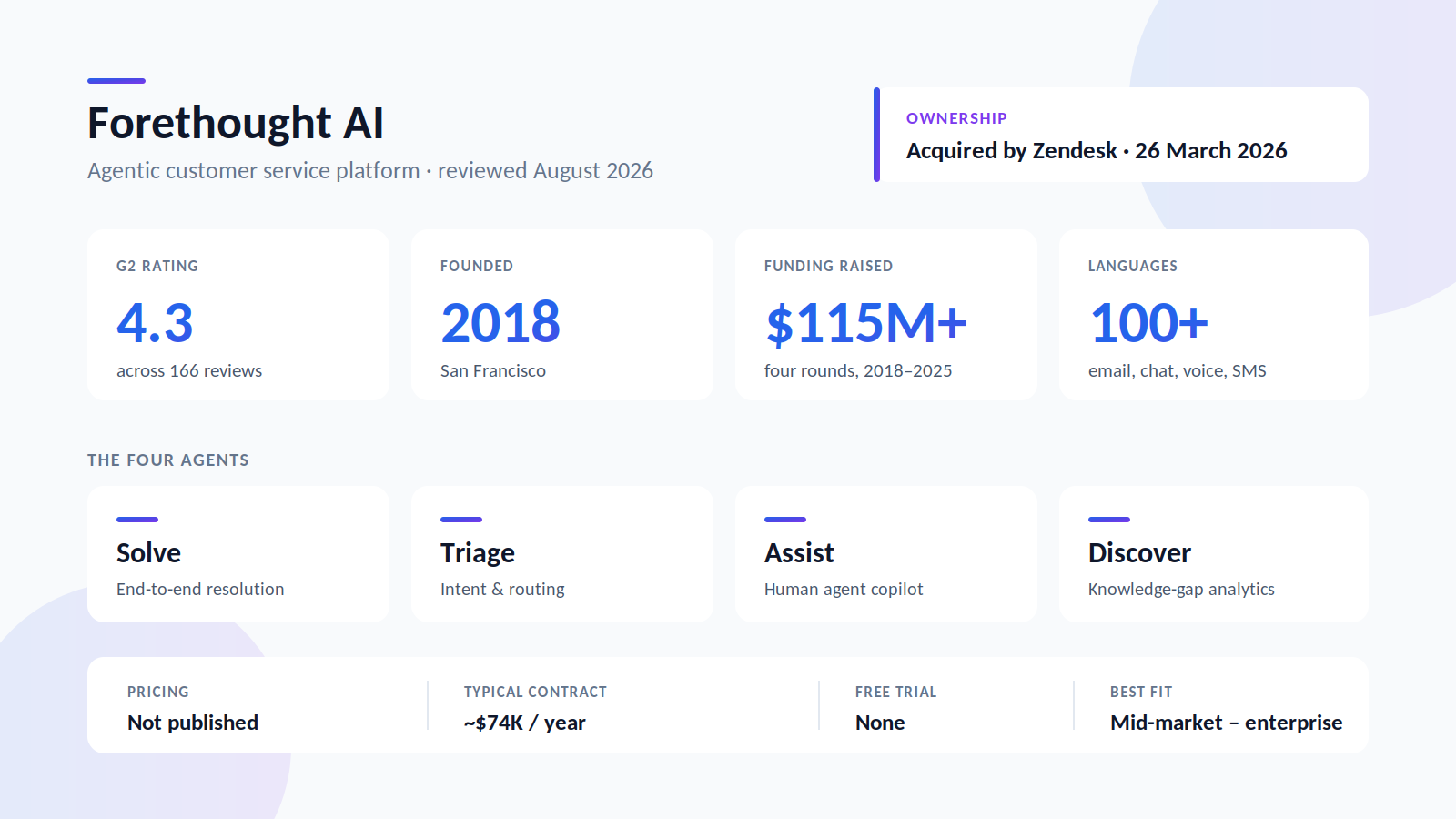
When Zendesk acquired Forethought AI in March, this move fundamentally changed how teams around the world think about "AI layers" for customer support. This $200-million deal converted a popular neutral AI co-pilot into part of Zendesk's native stack. So, many non-Zendesk teams realized that their automation roadmap needed to think beyond Forethought AI. If you are also looking for Zendesk AI alternatives, this is the right blog for you.
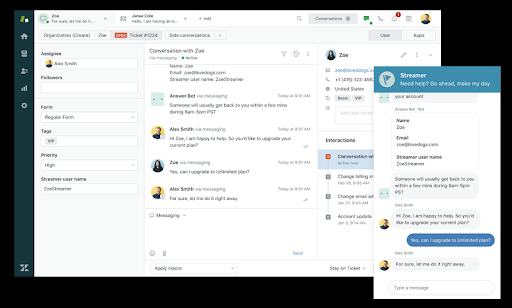
What the March 2026 Forethought Acquisition Changed
If we need to understand the true Forethought acquisition impact, we need to realize exactly what Forethought's main appeal was: it was an "AI brain" that people could plug into Zendesk, Salesforce, ServiceNow, and other tools without the need to stick to just a single vendor. Its job was to simply sit on top of your existing stack and drive smarter triage. You got numerous benefits, like faster responses and higher self-service. But it all changed in March.
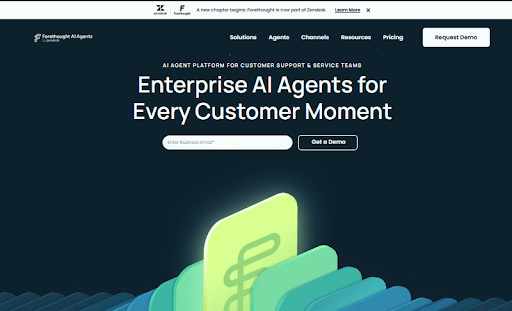
The March deal ended this neutrality, so now Forethought's agentic AI is being folded directly into Zendesk's Resolution Platform and AI agents. The roadmap is very clearly tilted toward Zendesk-first use cases. The deepest integrations and fastest innovation will now exist inside Zendesk. You won't be able to benefit from them across the broader help-desk ecosystem.
When it comes to non-Zendesk Forethought customers, this situation has created uncertainty. That's because over time, you may witness tighter coupling to Zendesk workflows and incentives through its various features and/or pricing. Even if they keep offering cross-platform support, it is a tad risky to base your long-term AI strategy on a tool now owned by your suite vendor.
When You Should Look Beyond Zendesk + Forethought
Did you know that the former HQ of Zendesk lost almost 90% of its property value last year? This value loss is another reason why people are searching for Zendesk support automation alternatives today. If your team is already standardized on Zendesk and you intend to enjoy the most out-of-the-box AI experience inside the very same ecosystem, the Zendesk-Forethought AI merger is the right path for you. You'll get native workflows, consolidated admin and analytics, and fewer moving parts to take care of.
Note that this is a question about the AI layer, not the help desk underneath it. If the acquisition has you reconsidering the platform itself, our Zendesk competitors guide covers the 13 leading alternatives on price, fit, and AI.
But Zendesk alternatives will be best if:
- You run your customer support mostly on a non-Zendesk help desk (like Salesforce or Freshdesk)
- You want an AI layer that abstracts away the underlying help desk so you can change your ticketing systems without rebuilding your automations
- You really care about fine-grained control over your AI (e.g., choosing your models or managing prompt and workflow logic)
- You just don't want your AI roadmap to be fully dictated by one suite vendor's product and M&A strategy
Top 5 Standalone Forethought Alternatives in 2026

Aissist.io
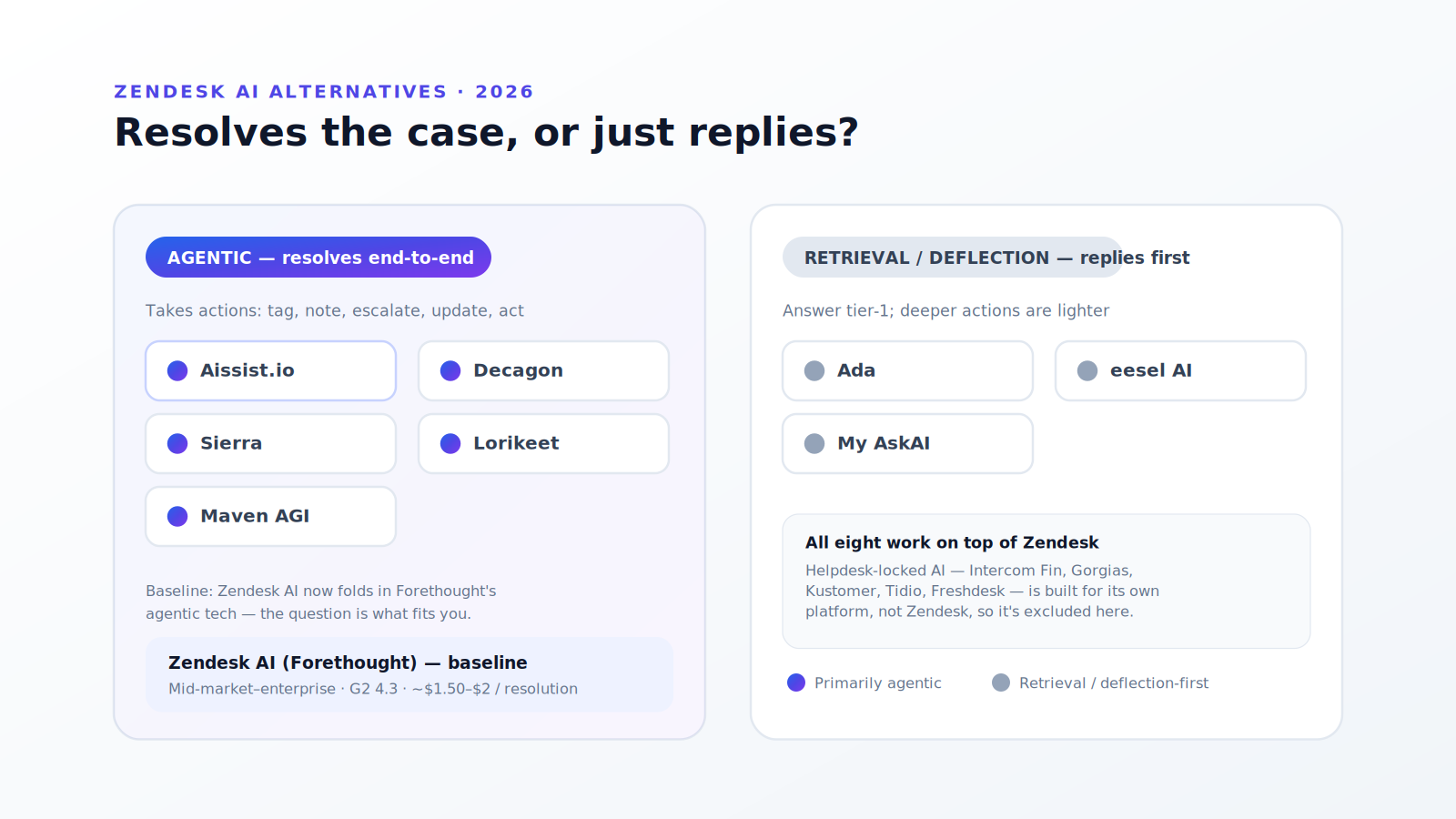
Aissist is your standalone AI support platform. It acts as the intelligence layer for your customer service stack, not another monolithic help desk. It plays a similar role to what Forethought did before it was acquired by Zendesk: it ingests your historical tickets and documents, absorbs your knowledge, reads past customer interactions, and uses this context to triage, draft, and resolve your incoming requests across different channels as neutrally and flexibly as possible.
You don't even have to migrate to a particular help desk. You can keep your existing ticketing tools and plug in Aissist as the AI co-pilot that orchestrates responses. If you are tired of the usual AI customer support platforms, try this agentic AI solution. You'll get Forethought-style automation, and you don't have to commit to Zendesk at all — a win-win situation.
Intercom Fin
Another great option is Intercom's AI agent. It's built natively into its customer communications platform. You should experience Fin when you adopt Intercom as your primary support hub, but it's a serious contender when it comes to choosing an alternative to Zendesk-bundled AI.
Fin is really good at conversational UX and product-led environments. If your support happens to be heavily app-oriented and chat-driven, Fin combines AI responses, proactive messages, and product tours to make it something beyond just another chatbot. However, keep in mind that Salesforce has recently acquired Fin for $3.6 billion, so that might be a bother for you.
Ada
Ada is an AI-native automation platform. It's perfect for large B2C and enterprise brands in ecommerce, fintech, telecom, and similar high-volume industries. It doesn't act primarily as a help desk. Ada focuses on deflecting and resolving a large share of customer queries across a number of channels, such as web chat, messaging apps, and sometimes even voice support.
What makes Ada a truly effective Forethought alternative is its sheer scale orientation. It gives you robust workflows, routing, and analytics. It is designed around deflection and containment rates. So, if your main concern is that at least 30% of your total ticket volume hits AI before an agent (and you want it to behave safely and consistently), trust Ada's enterprise-grade controls to get the job done. It doesn't matter which help desk you're using; Ada will deliver.
Sierra & Decagon
When we are discussing Zendesk AI alternatives, let's not forget about the latest Silicon Valley startups. Both Sierra and Decagon are powerful representations of a newer breed of agentic AI platforms, mainly Decagon, which aims to take on Salesforce, and Sierra. Their pitch goes beyond merely answering FAQs; they aim to be actual agents that read context.
These two agentic AI solutions require more design and configuration work than a traditional plug-and-play chatbot. So, you may need product owners and sometimes even engineers to tell these tools which tasks they're allowed to perform. You have to connect them to your internal tools and monitor their outcomes. These two tools are best suited for technical or high-growth startups that treat AI as a core product capability, not just a support add-on.
FAQs
Is Forethought still available as a standalone product after the Zendesk acquisition?
In the short term, yes, for existing customers, but the roadmap is now clearly Zendesk-first, so non-Zendesk teams should plan for alternatives.
Do I have to switch my help desk to use advanced AI agents?
No. Many AI platforms layer on top of your current help desk, so switching only makes sense if you also want a new core support platform.
Are standalone AI support platforms more expensive than Zendesk's built-in AI?
Not necessarily. Standalone tools can cost more per interaction but may deliver better automation, which can lower overall support spend.
Which Zendesk AI alternative is best for small teams or startups?
Look for tools with self-serve setup, simple workflows, and transparent pricing, especially chat-first or SaaS-oriented platforms.
How should I evaluate data security and compliance when choosing an AI support tool?
Check where data is stored, how it's used for model training, and whether the vendor offers relevant certifications and clear data-export or deletion options.