Checked 17 Nov 2026. Zendesk introduced the Open Service Directory on 13 October 2026, then folded it into its Outcome AI Platform at AI Summit in November. If you run support on Zendesk, someone will soon ask whether to register. Here is what it does, what it doesn't, and when listing helps.
TL;DR: Zendesk's free Open Service Directory, listed with seven launch partners, only routes AI assistants to your support — it touches no customer data and takes no actions — so register when your self-service resolves, and fix resolution first when it doesn't.
| What it is | What it is not |
|---|---|
| An open specification plus a public directory of verified support destinations | The protocol for the conversation itself — Zendesk points to UCP, PACT and PAP for that |
| Open to brands on Zendesk or any other service platform | A Zendesk-only feature |
| Opt-in: you approve a listing, checked against your domain and screened for impersonation | Switched on for every Zendesk account |
| A way for an assistant to find and verify your official support agent | Access to private customer data, or a system that performs service actions |
| Free: "no cost to participate," says the sign-up page | Generally available — the November press release marks it "Launching Soon" |
Methodology & sources
- Zendesk's launch post (13 Oct 2026), its Outcome AI press release (12 Nov 2026), the Open Service Directory developer docs (v0.3.0) and registration page, all read 17 Nov 2026.
- Analyst view: Futurum Group (15 Oct 2026). Survey figures: Zendesk's YouGov release (July 2025).
- Disclosure: this is Aissist's blog. Aissist sells an AI layer that resolves service and sales requests on top of help desks, including Zendesk.
What is the Zendesk Open Service Directory?
The Zendesk Open Service Directory is an open specification and public index that helps AI assistants find and verify a brand's official support agent.
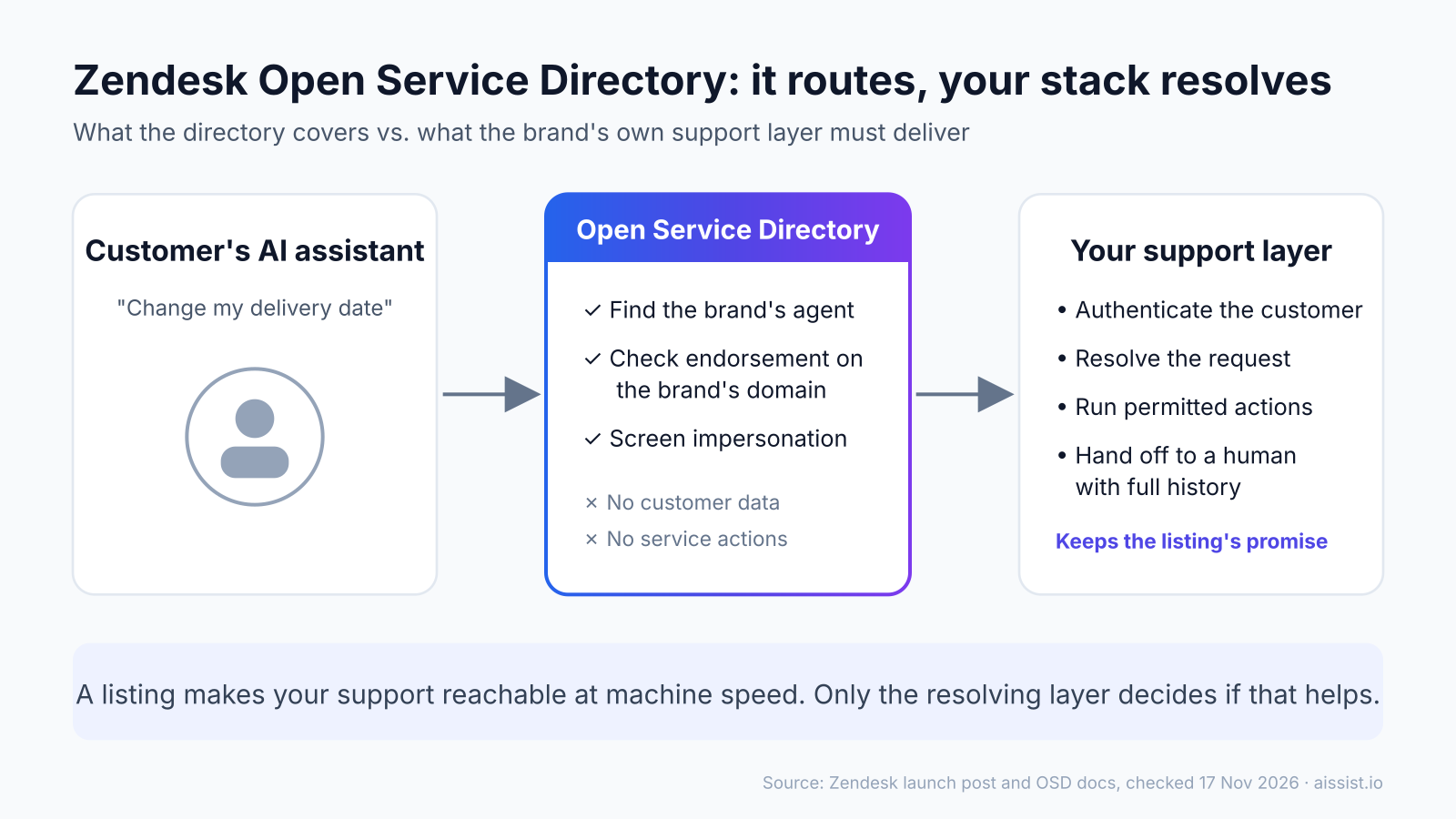
It works in three steps, per Zendesk's launch post: a brand approves a listing through its service provider; an assistant searches participating registries and verifies the match; the assistant connects to the brand's official support experience. It extends the Agentic Resource Discovery (ARD) specification. Zendesk says the brand decides what customer information can be accessed, which actions are permitted and when a human must step in.
None of it is live in the general sense yet. The registration page is a register-interest form, and acceptance and account activation are separate steps. For Zendesk customers, early access covers accounts using Messaging with an AI agent or bot, including third-party bots.
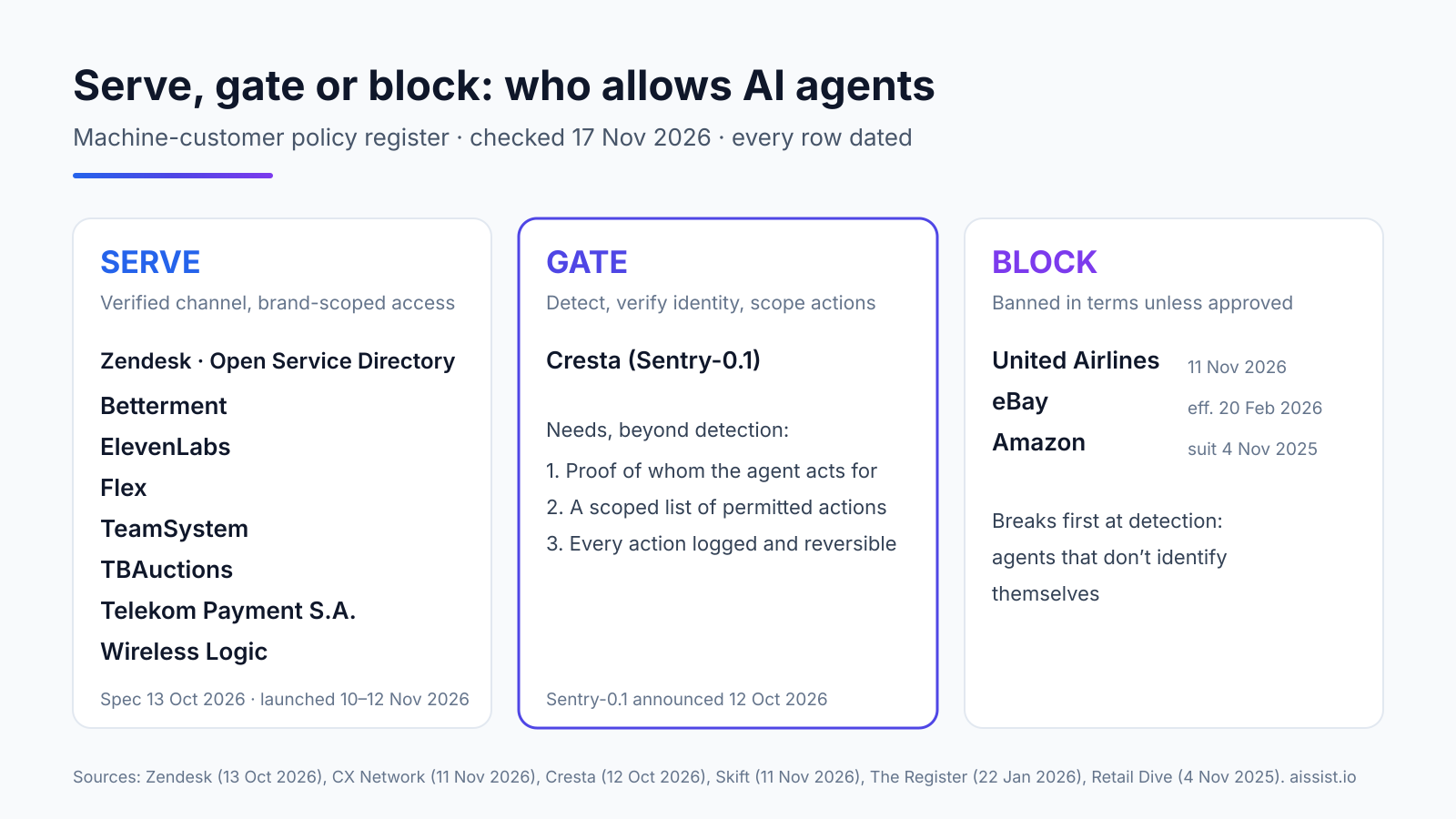
Zendesk names seven launch partners:
- Betterment
- ElevenLabs
- Flex
- TeamSystem
- TBA Auctions (styled "TBAuctions" in Zendesk's post)
- Telekom Payment S.A.
- Wireless Logic
"…it's essential that they can find the right, official support destination." — Mati Staniszewski, CEO, ElevenLabs, quoted by Zendesk
That sentence is the whole problem statement. An assistant that books a repair through a fake support number has done worse than nothing.
Is an open directory from Zendesk good for buyers?
Yes: an open specification that any service platform can list in, with no participation fee, is better for buyers than a registry each vendor locks to its own stack. We'd rather say that plainly than pretend the incumbent got it wrong.
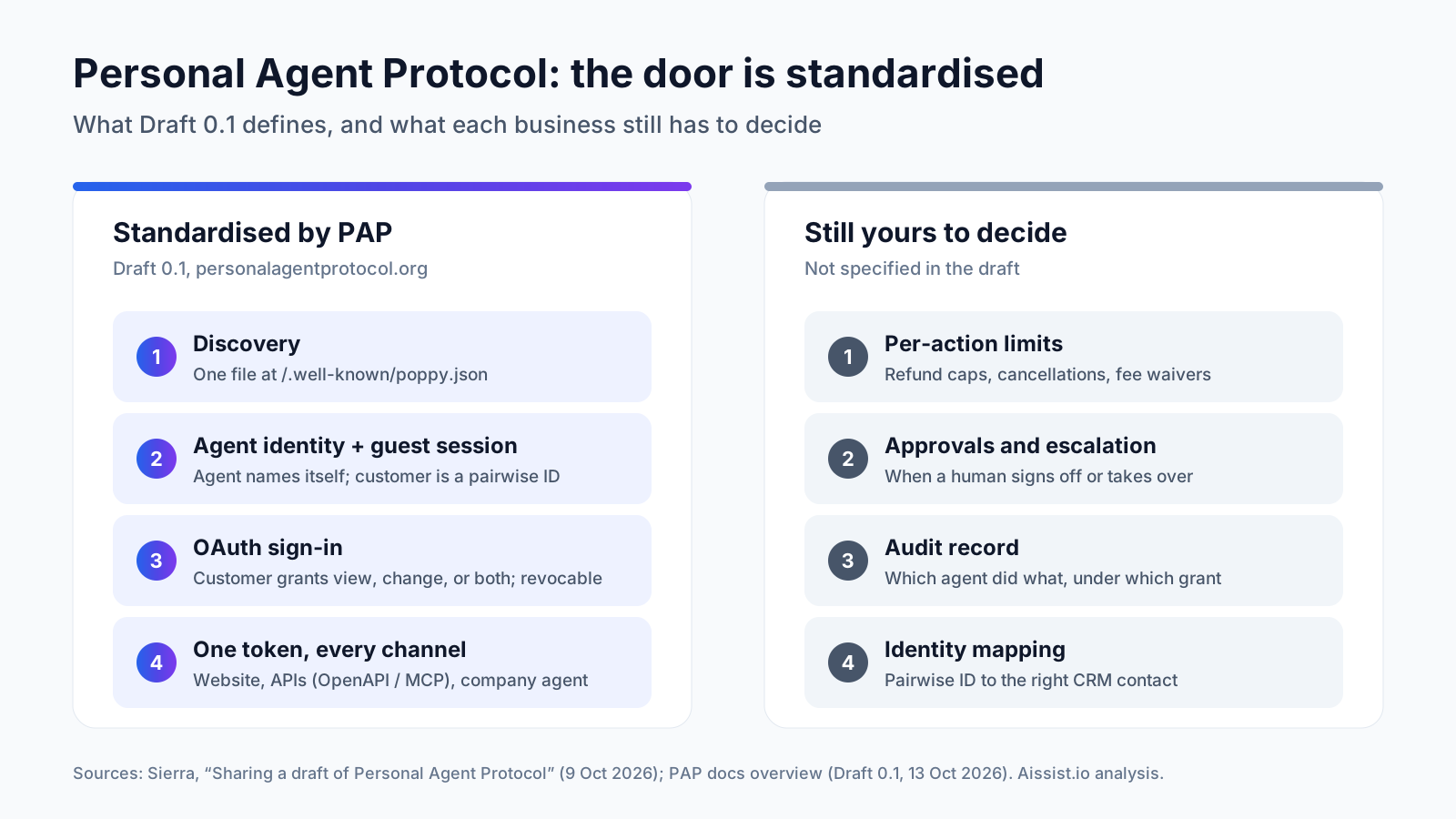
The design choices are buyer-friendly. Brands on other platforms can list. The endorsement lives on the brand's own domain, so the brand, not the directory, is the source of truth. And Zendesk positions the directory as complementary to conversation protocols built by others, including Sierra's PAP and Decagon's PACT, rather than as a replacement.
The open question is traffic, not design. Futurum Group's Keith Kirkpatrick notes that Zendesk lists ChatGPT, Claude and Gemini as compatible, but that rivals such as Salesforce, ServiceNow, Genesys and NICE have reasons to protect their own ecosystems.
"Compatibility means an assistant could use OSD; it does not mean OpenAI, Anthropic, or Google will query it by default." — Keith Kirkpatrick, analyst, Futurum Group
Openness is the right default. Whether anyone queries the index is a separate bet. Registering costs little; the cost arrives when traffic does.
What does registering actually expose?
Registering makes your official support agent discoverable to any assistant that queries the index, so whatever that agent does well — or badly — now happens at machine speed.
Today, a weak self-service flow hides behind a help-centre search box and a tired customer who gives up. An assistant doesn't give up. It finds your endorsed agent directly, retries without sighing and reports the outcome back to its user. The directory makes your worst self-service path the easiest one to reach.
Endorsement proves the agent is yours. It says nothing about whether the agent can refund an order, change a booking or hand off cleanly. When we read the v0.3.0 developer docs on 17 Nov 2026, the overview pages covered discovery, endorsement and connection — not handoff. The "when a human steps in" control is real, but it is enforced by your platform and the protocols behind the listing, and Zendesk says assistant-identity controls are still in development.
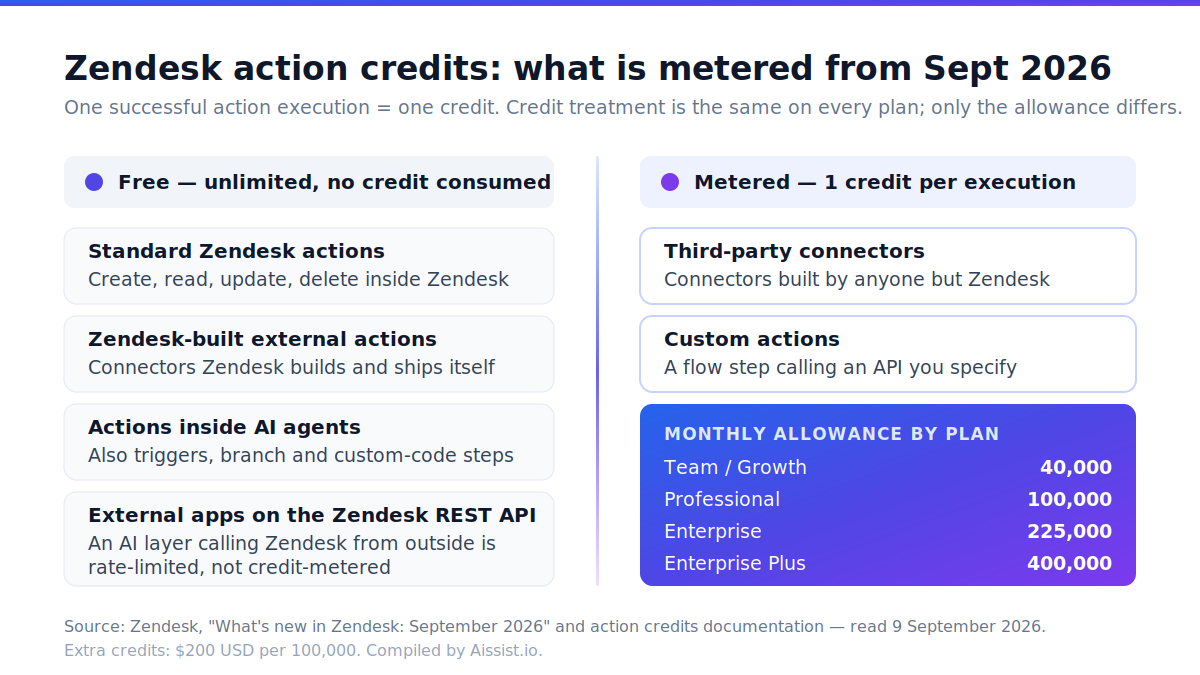
A directory entry is a promise about what your service can do. The layer that keeps that promise is the one that resolves, not the one that routes. That layer is your AI agent and the actions behind it — wherever they run. If you're adding one to Zendesk, our guide to adding AI to Zendesk without replacing your stack covers the options, and how Zendesk meters action credits matters once assistants start triggering actions at volume. Aissist, which publishes this blog, reports an 83% average resolution rate (up to 98% in mature deployments) and 4.8/5.0 CSAT for its own AI agents.
Assistants also argue. Our playbook for customer AI agents that dispute your policy is the companion to this page.
Should I register my support for AI agents?
Register when your top intents resolve end-to-end; wait when your self-service mostly answers questions and escalates. The table below covers the four situations we see most.
| Your situation | Register? | Why | What to fix first |
|---|---|---|---|
| Zendesk customer, mature self-service (top intents resolve, actions automated, handoff carries context) | Yes — register interest now | Assistants that find you reach a path that finishes the job | Write down which actions an assistant may take; test with a participating assistant before going live |
| Zendesk customer, self-service mostly FAQ answers and escalation | Not yet | Listing sends machine traffic to a flow that deflects instead of resolving | Automate the top intents end to end; make escalation pass full history to agents |
| Non-Zendesk help desk | Register interest, then wait on your provider | Any platform can list, but your provider must publish listings or run a registry | Ask your vendor whether and when it will support the specification |
| Regulated operation (finance, payments, telecoms) | Not until identity controls ship | Assistant identity and customer-specific permissions are still being built | Define which actions need authentication or a human; get compliance sign-off |
For how United, eBay, Amazon and others already treat AI agents, see our AI-agent policy register.
Two of the seven launch partners, Betterment and Telekom Payment S.A., work in regulated sectors. Being a launch partner means helping shape the specification. It is not evidence that the controls are finished — Futurum flags identity, permission and audit controls as unproven for exactly these industries.
How should you read Zendesk's launch numbers?
Read each figure as Zendesk's own, check where it came from, and use none of them as evidence that assistants will send you traffic.
| Figure | Zendesk's claim | Source | What is published |
|---|---|---|---|
| 52% | of consumers comfortable relying on personal AI assistants for everyday tasks | YouGov survey commissioned by Zendesk | ~10,000 adults, 10 countries, fielded 4–10 June 2025; "comfortable" includes trusting "somewhat" |
| 63% | say companies will need to redesign customer service for assistants | Same survey | Same; no margin of error reported |
| 84% | say human interaction should always remain an option | Same survey | Same |
| Up to 84% | of service requests automatable on Outcome AI Platform plans | Zendesk press release | No sample, method or baseline published |
| Nearly two-thirds | of consumers use AI more than a year ago | CX Network's launch coverage | Underlying study not named |
The survey is real and reasonably sized, but it was fielded 16 months before the directory existed, by a vendor selling the answer. "Up to 84%" is a ceiling, not an average — the most a platform can do, not what yours will.
"People don't think about which channels, systems, or departments they need to navigate to interact with an organization." — Tom Eggemeier, CEO, Zendesk, Outcome AI announcement
He's right, and it cuts both ways: assistants won't think about your org chart either. They'll just find the gap.
List the service you can keep, not the one you hope to have
The Open Service Directory is a sensible, open piece of plumbing, and buyers should welcome it. It solves discovery and impersonation. It does not solve resolution, and it was never meant to. So treat registration as the last step, not the first: get your top intents resolving, your actions authorised and your handoffs carrying context, then list. If you're on Zendesk, register interest now — it's free and acceptance takes time — but switch the listing on only when the agent behind it can keep its word. For the wider picture, see AI for Zendesk, the best Zendesk apps and Aissist's Zendesk integration.
Frequently asked questions
Is the Zendesk Open Service Directory free?
Yes. Zendesk's registration page says "there is no cost to participate," and no pricing has been announced. Your costs sit elsewhere: the AI agent and actions that handle the requests assistants send.
Do I need to be a Zendesk customer to register?
No. Zendesk says any brand on Zendesk or another service platform can list, approved through its service provider. Non-Zendesk brands depend on their provider supporting the specification.
Is the Zendesk A2A directory live yet?
Not generally. Zendesk's November press release marks it "Launching Soon," and the registration page collects interest, with acceptance and activation as separate steps.
Which AI assistants can use the Open Service Directory?
Zendesk lists ChatGPT, Claude and Gemini among compatible assistants. Compatibility means an assistant could query the directory; Futurum notes that does not mean providers will query it by default.
What happens when an assistant's request needs a human?
Zendesk says the request moves to your support team with the conversation history and actions already taken. That handoff is delivered by your service platform, not by the directory.
What did Zendesk announce at AI Summit 2026?
The Outcome AI Platform: the Open Service Directory (launching soon), Zendesk Bridge for connecting external AI agents (early access), specialised AI agents (generally available) and unlimited-seat pricing tied to outcomes, per IT Brief.