The 10 Best Call Center Quality Assurance Software Tools in 2026 — and Who Can Score the AI Agent
Compiled by Alex Gomez. Published September 28, 2026 · Last updated September 28, 2026.
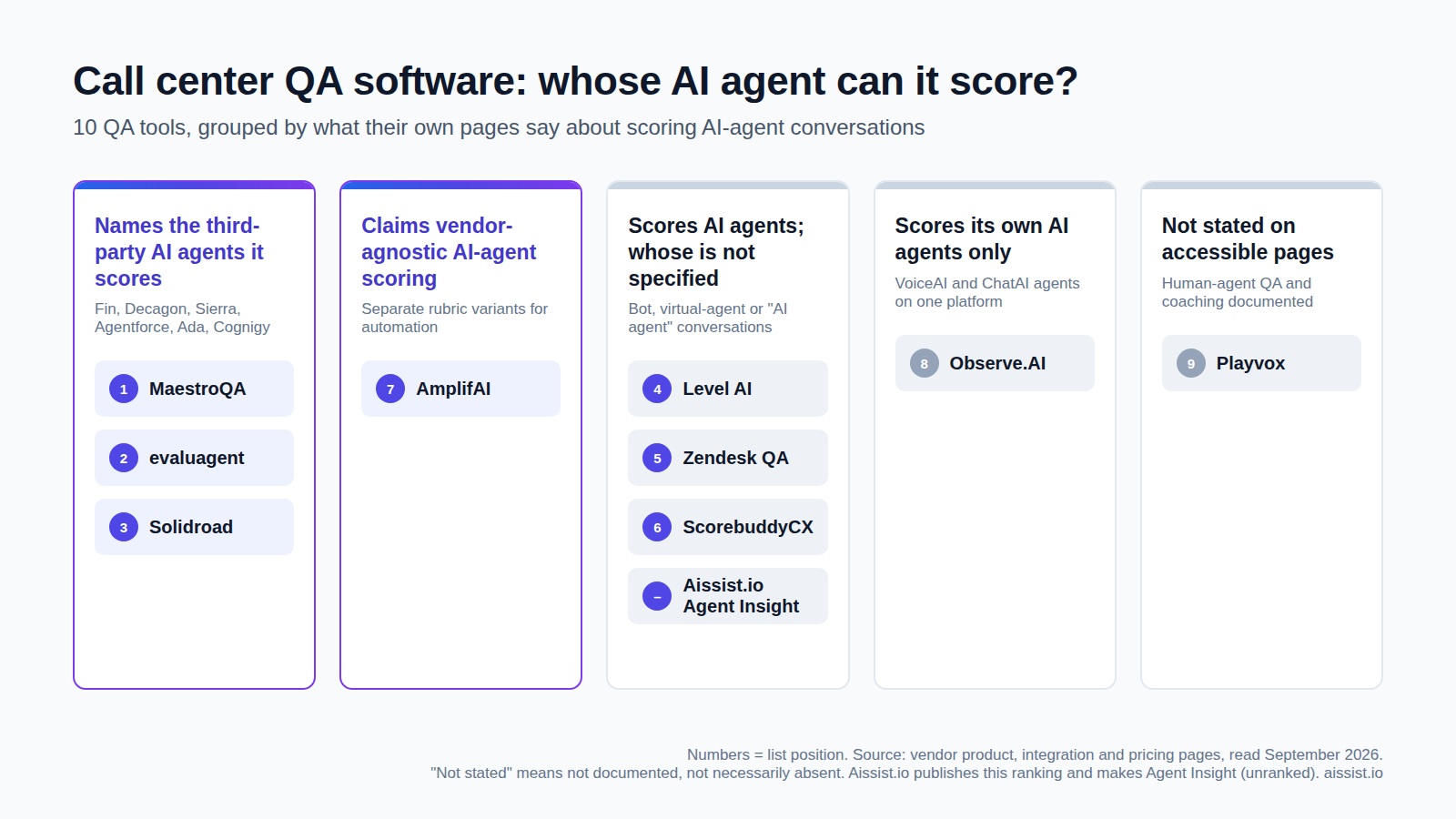
Call center quality assurance software was built to grade humans against a rubric, and in 2026 it is being pointed at conversations no human had. Nine of the ten QA platforms reviewed here now claim they can score an AI agent's conversation; only three name the third-party AI agents they can score.
TL;DR: AI-agent scoring is now table stakes in QA software — nine of ten vendors claim it on their own pages — so choose on whose agent it can score, which AI-specific failures it catches, and how much volume it really covers.
The shortlist
- MaestroQA — best for teams running a third-party AI agent (Agentforce, Ada, Decagon, Sierra) alongside a human team.
- evaluagent — best for buyers who want a published price and separate per-conversation pricing for AI agents.
- Solidroad — best for AI-first support teams that want QA wired straight into agent training.
- Level AI — best for large voice-heavy contact centers that want QA, analytics and virtual agents in one suite.
- Zendesk QA — best for teams already on Zendesk Suite that want QA inside the helpdesk they run.
- ScorebuddyCX — best for mature QA programs that want a dedicated bot-QA module next to human scorecards.
- AmplifAI — best for BPOs and multi-site operations that tie QA to coaching and performance management.
- Observe.AI — best for contact centers deploying Observe.AI's own voice and chat AI agents.
- Playvox — best for human-agent QA programs that live inside the NiCE ecosystem.
- Aissist.io Agent Insight — listed unranked because we make it; built for teams that want AI and human agents scored on one self-defined standard.
How we compared these call center QA tools
We compared each tool on six criteria, read from the vendor's own pages in September 2026: can it score AI-agent conversations, how it samples, how far the rubric can be customised, whether it supports calibration, whether it publishes a price, and which helpdesks and contact center platforms it connects to. A tool was listed only if it sells quality assurance as a core product, not as a reporting tab inside something else.
The first criterion carries the most weight, because it is the one that changes fastest. The ordering reflects how completely each vendor documents AI-agent scoring today, then how transparent its pricing and integrations are. It is not a quality ranking of human-agent QA, where most of these tools are mature and well reviewed.
We'll declare the bias up front: this is Aissist.io's blog, and Aissist sells AI agents and an agent-evaluation product called Agent Insight. That is why Agent Insight sits at the end of the list, unranked, with the same slots and a real cons list.
Methodology & sources
- Capabilities, pricing and integrations: each vendor's own product, pricing, integration and help-center pages, read 28 September 2026. Where a page was blocked or silent, the table says "Not stated" rather than guessing.
- Ratings: G2 product review pages, read September 2026; Capterra where no G2 listing exists.
- Quotes: named customers in vendor case studies and press releases, verbatim.
- Market figures: Gartner, McKinsey, LangChain and Akamai, linked where cited.
- Disclosure: this is Aissist.io's blog; Aissist sells AI agents and AI-agent evaluation.
Which call center QA software can score an AI agent?
Nine of the ten call center QA tools reviewed here say, on their own pages, that they can score AI-handled conversations; only Playvox's accessible pages do not. The difference is in scope: three vendors name the third-party AI agents they can score, AmplifAI calls its scoring vendor-agnostic, and the rest either score their own agents or do not say whose.
That split matters because the question buyers are about to ask is not "do you do bot QA?" It is "can you grade the Fin, Decagon or Agentforce deployment I already bought?" A QA vendor that also sells AI agents is grading its own homework when it only scores its own bots.
The timing is not subtle. On 24 September 2026, Dataiku launched Agent Management, a product that "finds every AI agent an enterprise is running, regardless of which platform built it, measures the business and technical performance, and flags agents that pose the greatest risk." Two days earlier, Akamai's security report said securing the business has become "a challenge of behavioral governance over nonhuman entities." Behavioural control of a customer-facing agent is a QA problem wearing a security label.
"Ask a bank how many servers it runs, and you get an answer to the decimal. Ask how many AI agents it's running, and you get a shrug or a guess." — Florian Douetteau, Co-founder and CEO, Dataiku
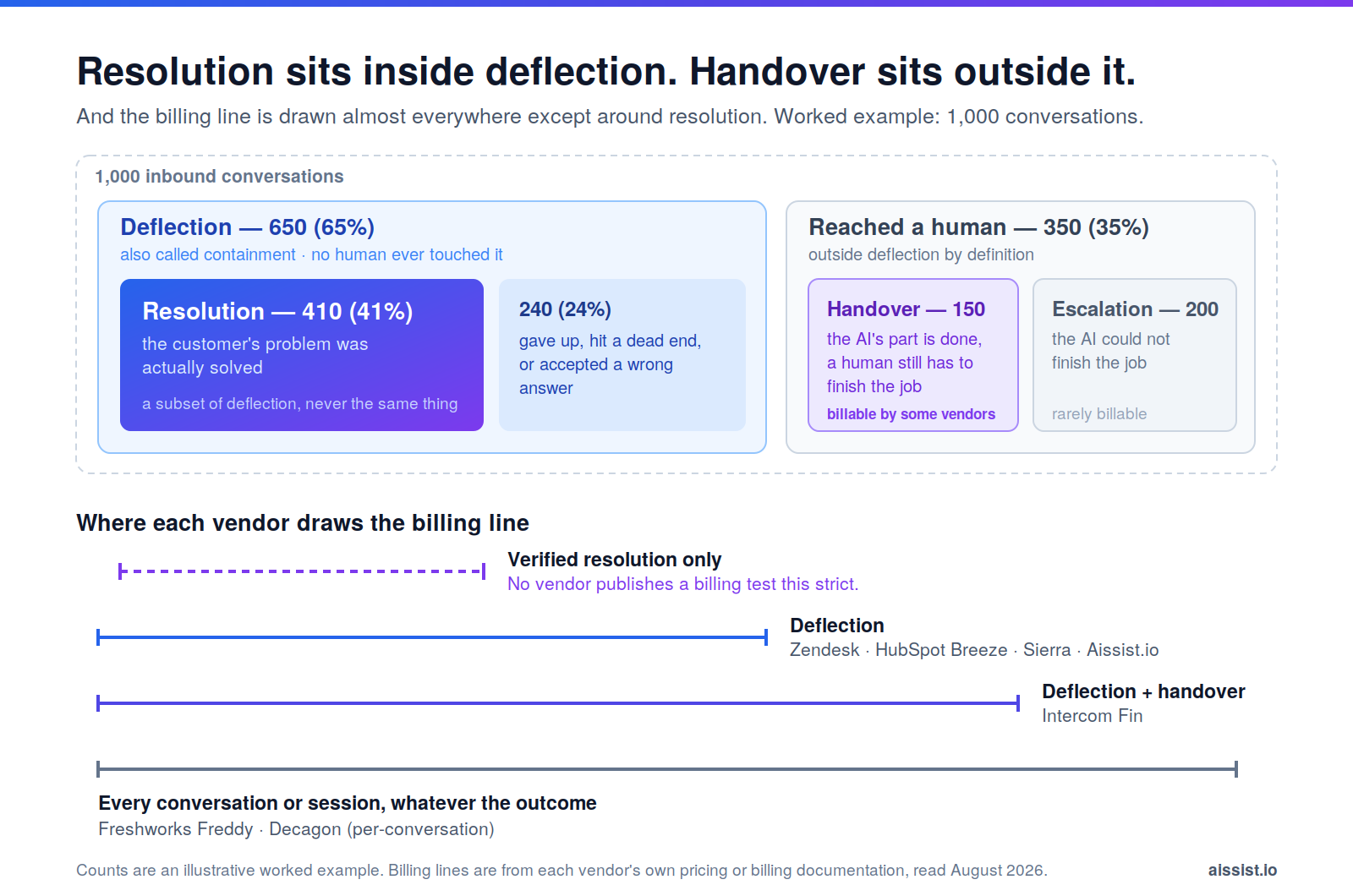
The volume is coming either way. Gartner predicts that by 2029 agentic AI will autonomously resolve 80% of common customer service issues without human intervention. If that holds, most of the conversations a QA team is responsible for will not have a human on the other end. Page one of this search still mostly grades vendors on how well they score people — and the two roundups that do ask about AI agents each conclude that only their own product qualifies.
The table nobody publishes
| Tool | Scores AI-agent conversations? | Sampling | Rubric customisation | Calibration | Price floor (Sep 2026) | Helpdesk & CCaaS coverage |
|---|---|---|---|---|---|---|
| MaestroQA | Yes — names Agentforce, Ada, Decagon, Sierra, Forethought | Manual + auto, 100% | Custom, weighted sections, auto-fail | Live sessions + grader alignment scores | Not published | Zendesk, Salesforce, Intercom, Freshdesk, Gorgias, Kustomer, Front, HubSpot; Five9, Talkdesk, Amazon Connect |
| evaluagent | Yes — names Cognigy, Sierra, Decagon | Manual + auto, 100% | Custom, weighted, auto-fail | Sessions + disputes | $35 per user/month (human agents); AI agents per conversation, quote | Zendesk, Intercom, Salesforce, Freshdesk; Genesys, Five9, Talkdesk, Amazon Connect |
| Solidroad | Yes — names Fin, Decagon, Sierra | Auto, 100% | Custom, weighted, pass/fail triggers | Calibration retrains scoring | Not published | Zendesk, Intercom (documented); Gorgias, Gladly, Help Scout, ServiceNow (vendor-stated) |
| Level AI | Yes — bot and virtual-agent conversations | Auto, 100%; hybrid human questions | Custom and hybrid scorecards | Score overrides retrain the model | Not published | Zendesk, Salesforce, Intercom, Freshworks, Kustomer, Gorgias, Front; Five9, Genesys, Talkdesk |
| Zendesk QA | Yes — "including AI agents" | Manual assignments + auto, 100% | Custom, weighted categories | Sessions + disputes | Not published standalone; Workforce Engagement bundle $50/agent/month, annual | Zendesk native; Gorgias, Front, API |
| ScorebuddyCX | Yes — dedicated "QA for Bots" | Manual + auto, capped by plan | Fully configurable | Calibration module | Not published; AI scoring from Accelerate plan | Zendesk, Intercom, Salesforce, Freshdesk, Kustomer, HubSpot; Genesys, NiCE CXone, Five9, Talkdesk |
| AmplifAI | Yes — chatbots, voice bots, AI agents | Auto, 100% | Custom, weighted, AI rubric variants | Evaluator-vs-engine calibration + disputes | Not published | Zendesk, Salesforce, Oracle; Five9, Talkdesk, Amazon Connect, NICE, Genesys |
| Observe.AI | Yes — its own VoiceAI and ChatAI agents | Auto, 100% + manual for disputes | Existing scorecards, rule builder | Sessions + disputes | Not published | 250+ claimed; Amazon Connect, Talkdesk, Avaya, 8x8, Aircall confirmed |
| Playvox | Not stated on accessible pages | Manual/random with auto distribution | Custom scorecards | Calibration + disputes | Not published | Zendesk, Salesforce, Kustomer |
| Aissist.io Agent Insight | Yes — AI and human agents on one rubric | Auto, 100% | Customer-defined standards | Evidence-based disputes; sessions not described | Not published on product page | Zendesk, Intercom, Freshdesk, Kustomer, Front, Gorgias, Salesforce, HubSpot |
"Not stated" means the vendor's accessible pages did not say — not that the feature is missing. Ask for a demo on your own transcripts before assuming either way.
1. MaestroQA — best for scoring a third-party AI agent alongside your human team
MaestroQA is a QA and conversation analytics platform that scores calls, chats, emails and bot conversations, with integrations for AI agents from Salesforce Agentforce, Ada, Decagon, Sierra and Forethought. No other vendor here names as many third-party AI agents on its integrations page.
- AI-agent scoring: MaestroQA's chatbot QA page offers "Auto QA on 100% of chatbot interactions," and its Agentforce integration promises to "track and evaluate your Salesforce Agentforce AI agents' effectiveness."
- Sampling: AutoQA "analyzes 100% of your tickets," alongside manual grading by your QA team.
- Rubric and calibration: The scorecard builder supports custom weighted sections and auto-fail sections; calibration sessions come with GraderQA alignment scores.
- Price: Not published — the pricing page says pricing is "based on your use case and team size."
- G2: 4.8/5 from 325 reviews.
In a published case study, Upwork says it previously reviewed 1% of chatbot conversations by hand, and cut QA time from 16 hours per week to seconds.
"We've learned that QA is essential for any customer support operation—chatbots need to be treated like agents, and their development must include a structured QA process." — Alix Pérez, AI Operations Admin, Upwork
Pros
- Names five third-party AI-agent platforms it integrates with, the widest list here.
- Weighted sections, bonus sections and auto-fail sections in one scorecard builder.
- Calibration has a measurable output (grader alignment scores), not just a meeting.
Cons
- No published price, so budget conversations start with a sales call.
- A sampling method for manual review is not documented on public pages we could read.
- The breadth of helpdesk and AI-agent connectors means more configuration up front.
Our take: MaestroQA is the safest pick if your AI agent comes from a different vendor than your QA tool. Skip it if you need a price on a web page before you'll take a demo.
2. evaluagent — best for a published price and per-conversation AI-agent pricing
evaluagent is a contact center QA platform that scores 100% of human and AI-agent conversations and publishes seat pricing, with AI agents priced per conversation instead of per seat. It is one of only two vendors here with a price on a public page.
- AI-agent scoring: The AI agents page says evaluagent "evaluates every conversation your AI agents have, against your standard, compared to your best human agents," naming Cognigy, Sierra and Decagon. The pricing page lists "fabrication detection" to "flag bot responses that hallucinate or invent information."
- Sampling: "100% of conversations scored, automatically," with manual review available.
- Rubric and calibration: Weighted criteria, auto-fail logic and per-queue scorecards; structured calibration sessions and a two-way dispute workflow.
- Price: From $35 USD per user per month (AutoQM & Improvement) and $65 with conversation intelligence, per the pricing page (read September 2026). AI agents are priced "by the conversation instead of the seat," on quote. Billing period and seat minimums are not stated.
- G2: 4.5/5 from 448 reviews.
In a published case study, Capital on Tap reports QA coverage rising from 1–3% to 90–95%.
Pros
- Published seat price, which is rare enough in this category to count as a feature.
- Per-conversation pricing for AI agents matches how AI volume actually behaves.
- Fabrication detection is named as its own check, not buried inside "accuracy."
Cons
- "From" pricing: the billing period and any seat minimum are not stated.
- AI-agent pricing is quote-only, so the cheapest line on the page does not cover bots.
- Gorgias and Kustomer are not on its integrations page.
Our take: evaluagent is the easiest tool here to budget for human agents and the clearest about bot hallucinations. Look elsewhere if you run Gorgias or Kustomer and need a native connector.
3. Solidroad — best for AI-first teams that want QA and training in one loop
Solidroad is an AI QA and training platform that scores 100% of support conversations and connects directly to third-party AI agents such as Fin, Decagon and Sierra to evaluate them. It started as a simulation-based training product and added QA, which shows in how tightly the two connect.
- AI-agent scoring: Its integrations page says: "Connect AI agents like Decagon, Sierra, and Fin to automatically evaluate their performance."
- Sampling: AI Scorecards promise "100% of conversations are evaluated with consistent, reliable logic."
- Rubric and calibration: Custom criteria, weighting and automatic pass/fail triggers; each calibration "sharpens the scoring model." An agent dispute workflow is not described.
- Price: Not published; Solidroad lists custom enterprise pricing.
- G2: 4.5/5 from 3 reviews — too few to lean on.
In a published case study, Crypto.com reports 800,000+ monthly conversations scored, with average handle time down 18%. Solidroad's ActiveCampaign case study says over 2,000 hours of manual QA effort were replaced by automated scoring.
Pros
- Names the third-party AI agents it evaluates, and does not sell a competing agent.
- QA findings feed training simulations, so a low score turns into practice, not a memo.
- Proven at high volume in a named deployment (Crypto.com).
Cons
- Three G2 reviews is not yet a reputation.
- No dispute workflow described for agents who disagree with a score.
- Only Zendesk and Intercom have documented integration guides; other helpdesks are vendor-stated.
Our take: Solidroad suits teams where most volume already runs through Fin, Decagon or Sierra. A large voice contact center on Genesys or Five9 will find better-documented options above and below.
4. Level AI — best for large voice-heavy contact centers that want one suite
Level AI is a contact center AI suite whose QA product scores 100% of calls, chats, emails and bot conversations, alongside its own virtual agents and analytics. It holds humans and AI to one scorecard, and its integrations list is among the broadest here.
- AI-agent scoring: The QA product page promises to "score 100 percent of calls, chats, emails, and bot conversations with standards your team can defend." The virtual agent page says to "hold humans and AI to one quality standard."
- Sampling: Automated, 100%, with hybrid scorecards mixing AI-scored and human-evaluated questions.
- Rubric and calibration: Keep your scorecard or use industry rubrics; evaluators can override AI scores, and corrections recalibrate future scoring.
- Price: Not published — there is no pricing page.
- G2: 4.6/5 from 220 reviews.
Level AI's own page puts manual QA coverage at "often around 1% to 3%," and McKinsey's customer care research puts it at "less than 5 percent."
"We've gone from manually scoring 1-2% of our calls to using Level AI to score 100% of our calls!" — Angela Zander, Director of Operations, Quinstreet
Pros
- Integrates with helpdesks (Zendesk, Salesforce, Intercom, Gorgias, Kustomer) and telephony (Five9, Genesys, Talkdesk, NICE).
- Hybrid scorecards let humans keep the judgement calls AI shouldn't make.
- Analytics, QA and virtual agents share one data layer.
Cons
- No public price.
- Explicit third-party AI-agent support is not named; the bot-scoring claim is general.
- Calibration is override-driven; formal calibration sessions are not described.
Our take: Level AI fits a large, voice-heavy operation that wants one vendor for most of its CX stack. If your AI agent comes from another vendor, confirm it can ingest those transcripts before signing.
5. Zendesk QA — best for teams already running Zendesk Suite
Zendesk QA, formerly Klaus, is Zendesk's quality assurance add-on that reviews every support interaction, including those handled by Zendesk AI agents, with AutoQA, manual review, calibration and disputes built in. For a Zendesk shop, it is the shortest path to QA.
- AI-agent scoring: The product page says to "start analyzing every interaction, including AI agents, with AutoQA," and Zendesk's admin guide says it "helps you evaluate how well your AI agents perform."
- Sampling: AutoQA covers 100%; managers can also assign manual reviews and set review goals; Spotlight flags high-risk interactions.
- Rubric and calibration: Custom scorecards with categories, rating scales and weights; calibration sessions and a dispute flow.
- Price: No standalone QA price on Zendesk's pricing page (read September 2026). The Workforce Engagement bundle, which includes QA and coaching, is $50 USD per agent per month, billed annually, on top of a Support or Suite plan (Suite Team is $55 per agent per month, billed annually). Add-ons are bought for all agents on the account.
- Rating: No G2 listing with reviews under the Zendesk QA name; the legacy Klaus listing on Capterra shows 4.9/5 from 24 reviews.
"We need to provide great customer service 100% of the time. Zendesk QA has helped us maintain focus on the consistency of quality and identify specific areas where we need to improve." — Sophie Elgar, Quality and Training Manager, Liberty
Pros
- Native to Zendesk: no connector, no data export, same agent roster.
- Calibration and disputes are fully documented in Zendesk's help center.
- Covers Zendesk's own AI agents without extra setup.
Cons
- Add-ons apply to every agent on the account, so a small QA need buys full-team seats.
- Scoring of non-Zendesk AI agents is not documented.
- Outside Zendesk, only Gorgias, Front and a custom API integration are documented.
Our take: Zendesk QA is the default for teams whose world is Zendesk. Teams on Salesforce, Intercom or a CCaaS voice platform should start elsewhere on this list.
6. ScorebuddyCX — best for mature QA programs that want a dedicated bot-QA module
ScorebuddyCX is a QA, conversation analytics and coaching platform with a dedicated "QA for Bots" product that evaluates bot conversations for accuracy, safety and brand alignment. Its bot module flags invented policies and wrong answers as named failure types.
- AI-agent scoring: The QA for Bots page says: "Evaluate every bot conversation for accuracy, safety, and brand alignment," and promises to flag responses where a chatbot "invents information, cites non-existent policies, or provides incorrect answers."
- Sampling: GenAI auto-scoring "up to 100%," but the pricing page includes 500 AI scores per month on Accelerate and 1,000 on Elite, and none on Foundation.
- Rubric and calibration: Fully configurable scorecards; a calibration module from the entry plan up.
- Price: Not published — all three plans say "Request a price."
- G2: 4.5/5 from 835 reviews.
"Scorebuddy's commitment to leveraging AI to radically transform how QA can be carried out at scale made the solution the best fit for Intercom." — Declan Ivory, VP Customer Support, Intercom
Pros
- A dedicated bot-QA product with hallucination and fake-policy checks named explicitly.
- Broad CCaaS coverage (Genesys, NiCE CXone, Five9, Talkdesk, Amazon Connect) plus Zendesk and Intercom.
- Calibration is included on every plan.
Cons
- Included AI scores are capped per plan; at 1,000 per month, "100%" covers a small AI agent, not a busy one.
- No published price.
- Salesforce and the open API are reserved for the top plan.
Our take: ScorebuddyCX is a strong fit for an established QA team adding bots to an existing program. Check the AI-score allowance against your bot's monthly volume before you believe the word "100%."
7. AmplifAI — best for BPOs and multi-site operations tying QA to coaching
AmplifAI is a performance and CX management platform whose Auto QA scores 100% of voice, chat, email and AI-agent interactions, using separate rubric variants for automated conversations. It is built for operations that manage many sites, teams or outsourcing partners.
- AI-agent scoring: The Auto QA page says AmplifAI "evaluates automated conversations across chatbots, voice bots, and AI agents, scoring resolution, compliance, and customer experience," with "rubric variants built for automation, visible beside live team results."
- Sampling: Automated, 100%.
- Rubric and calibration: Weighted, multi-form scorecards; calibration compares evaluator scores against engine scores; dispute and appeal trails sit beside each evaluation.
- Price: Not published.
- G2: 4.7/5 from 20 reviews.
In a published case study, The Home Depot reports a 20% increase in customer satisfaction after deploying AmplifAI's performance platform.
Pros
- Separate rubric variants for AI agents, rather than forcing a human scorecard onto a bot.
- Calibration measures evaluators against the scoring engine, which catches drift in both.
- Designed for BPO and multi-site consistency.
Cons
- Twenty G2 reviews is a thin sample.
- Helpdesk coverage leans enterprise (Salesforce, Zendesk, Oracle); Intercom, Freshdesk and Gorgias are not listed.
- No public price.
Our take: AmplifAI suits large outsourced or multi-site operations where QA and coaching must line up across partners. A 20-agent team on Intercom is not its customer.
8. Observe.AI — best for teams running Observe.AI's own AI agents
Observe.AI is a contact center AI platform that sells voice and chat AI agents and scores 100% of interactions across those AI agents and human agents on one QA rubric. It is the right tool when the AI agent and the QA tool come from the same vendor by design.
- AI-agent scoring: Observe.AI's trust blog post describes "consistent quality scoring across VoiceAI Agents, ChatAI Agents, and human agents." Scoring of other vendors' AI agents is not stated.
- Sampling: Auto QA assesses "100% of customer interactions," with manual QA for disputes, appeals and high-stakes calls.
- Rubric and calibration: Runs on your existing scorecards; calibration sessions and agent disputes are documented.
- Price: Not published — every plan says "Talk to sales."
- G2: 4.6/5 from 268 reviews.
In a published case study, Cox Automotive reports 90,000 evaluations per month with 100% of interactions evaluated.
Pros
- One rubric across AI and human agents on the same platform.
- Mature voice QA with calibration, disputes and manual review for sensitive calls.
- Claims 250+ integrations.
Cons
- Documented AI-agent scoring covers Observe.AI's own agents only.
- Scoring your own AI agents is a structural conflict of interest, however good the rubric.
- No public price.
Our take: Observe.AI makes sense if you are buying its AI agents anyway and want one pane of glass. If you need an independent grade on someone else's agent, pick a vendor that doesn't sell one.
9. Playvox — best for human-agent QA inside the NiCE ecosystem
Playvox, now Playvox by NiCE, is a quality management and coaching platform for contact centers that distributes evaluations by sampling rule and ties scores to coaching, with deep Zendesk and Salesforce integrations. It is one of the most-reviewed QA tools on G2.
- AI-agent scoring: Not stated on the Playvox pages we could access; several product pages block automated reading, so check with the vendor.
- Sampling: "Whether your evaluation strategy involves random sampling or a narrow, defined focus, Playvox automatically distributes work based on your criteria," per a NiCE datasheet. An AutoQA feature covering 100% of interactions was announced in 2022.
- Rubric and calibration: Customisable scorecards; the datasheet describes calibrating evaluations against expert opinion and automating disputes.
- Price: Not published — the pricing page offers a custom quote.
- G2: 4.8/5 from 1,163 reviews.
Pros
- The largest review base of any tool here, and a high rating to match.
- Sampling rules and automatic work distribution suit established manual QA programs.
- Strong Zendesk and Salesforce integration.
Cons
- AI-agent scoring is not documented on the pages we could read.
- Current AutoQA availability is not confirmed on an accessible vendor page.
- No public price.
Our take: Playvox remains a solid choice for human-agent QA and coaching. If your AI agent will carry real volume in the next year, ask NiCE for a written roadmap before committing.
10. Aissist.io Agent Insight — unranked, because we make it
Aissist.io Agent Insight is a QA and agent-evaluation product that scores AI and human agents on the same customer-defined standard across 100% of conversations, deployed on top of the helpdesk a team already runs. It launched in September 2026 alongside Aissist's AI agents.
- AI-agent scoring: The product page says "AI and human agents are evaluated on the same standard, in the same system, at the same time." Scoring of third-party AI agents is not stated.
- Sampling: Automated, 100% of conversations; when a case passes through several hands, each agent involved is scored separately.
- Rubric and calibration: Customer-defined standards — resolution criteria, tone, policy checks, escalation discipline and custom dimensions. Scores carry timestamped evidence so disputes are settled on the transcript; formal calibration sessions are not described.
- Price: Not published on the product page.
- G2: 4.8/5 from 41 reviews for Aissist.io overall, not Agent Insight specifically.
Pros
- Scores handovers, so a case touched by a bot and two humans gets three separate grades.
- Evidence-linked scores make disputes about the transcript, not about who is more senior.
- Integrates natively with Zendesk, Intercom, Freshdesk, Kustomer, Front, Gorgias, Salesforce and HubSpot.
Cons
- New: launched in September 2026, with no Agent Insight-specific reviews yet.
- No voice or CCaaS integrations are named; it is built for helpdesk-based support.
- Like Observe.AI, Aissist also sells AI agents — the same conflict-of-interest question applies.
Our take: Agent Insight fits helpdesk-based teams that want AI and human agents graded on one standard they write themselves. Voice-first contact centers on Genesys or Five9 should look at Level AI, Scorebuddy or evaluagent first.
What should an AI-agent QA scorecard measure that a human scorecard doesn't?
An AI-agent scorecard should grade what the agent did and how badly it could go wrong — fabrication, policy adherence, action correctness, escalation discipline and error severity — because tone, empathy and hold time rarely fail for a machine. A human scorecard grades behaviour; an AI scorecard grades consequences.
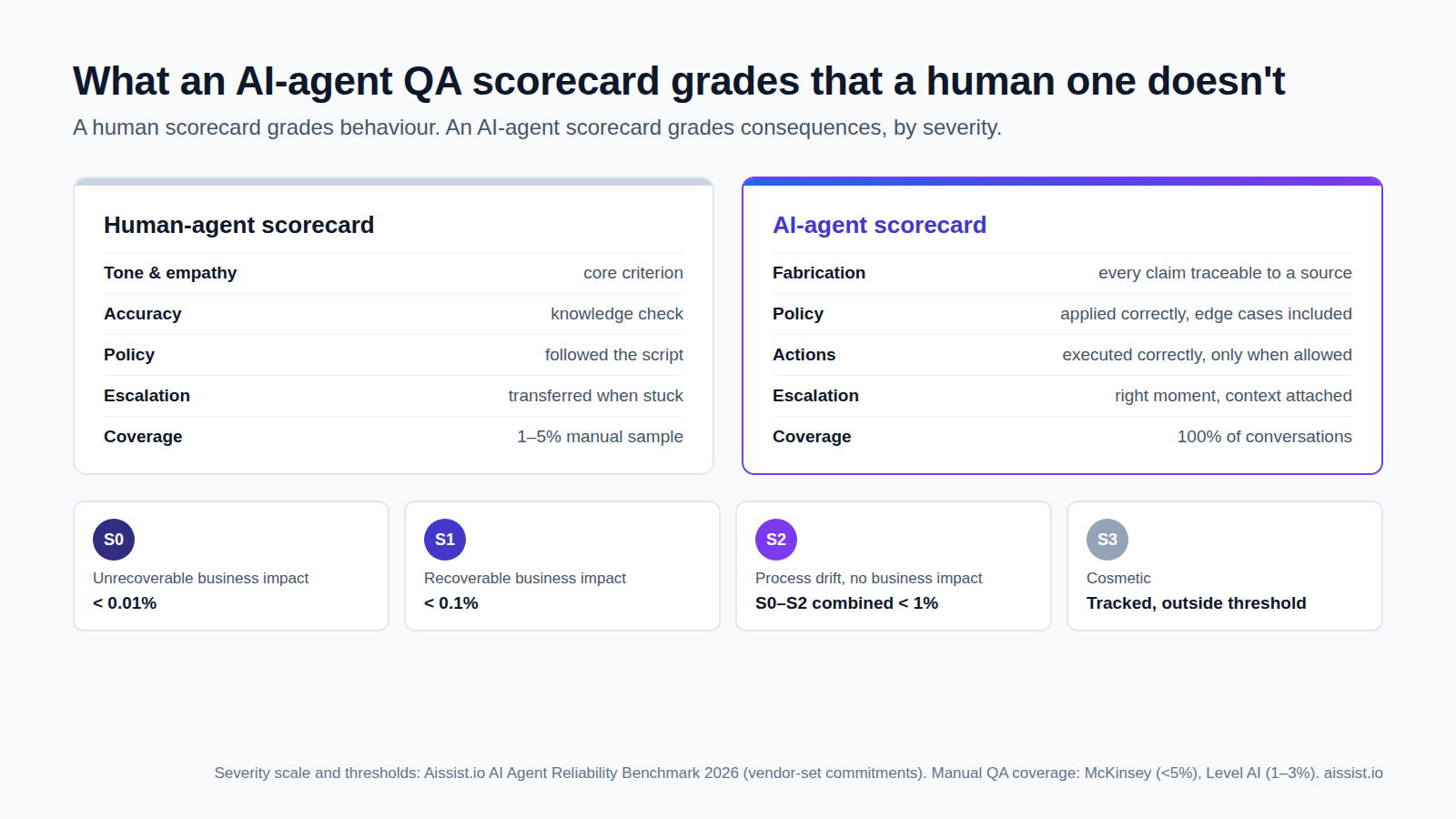
A human agent rarely invents a refund policy. An AI agent can, confidently, at 3am, for every customer who asks. That is why the useful AI-specific checks in this list are the ones that name the failure: evaluagent's "fabrication detection," Scorebuddy's flag for a chatbot that "cites non-existent policies," and AmplifAI's separate rubric variants for automation.
| Criterion | Human-agent scorecard | AI-agent scorecard |
|---|---|---|
| Tone and empathy | Core criterion | Rarely fails; check brand voice instead |
| Accuracy | Knowledge check | Fabrication check: every claim traceable to a source |
| Policy | Followed the script | Applied the policy correctly, including edge cases |
| Actions | Logged the ticket | Executed the refund, change or lookup correctly — and only when allowed |
| Escalation | Transferred when stuck | Handed over at the right moment, with context attached |
| Severity | Pass or fail | Graded by business impact and whether it can be undone |
| Coverage | 1–5% sample | 100%, because AI failures repeat at scale |
Severity is the criterion most scorecards miss. Aissist.io's AI agent reliability benchmark grades every error on a four-step scale: S0 is unrecoverable business impact, S1 is recoverable business impact, S2 is process drift with no business impact, and S3 is cosmetic. Aissist commits to under 1% for S0–S2 errors combined, under 0.1% for S1 and under 0.01% for S0 — a vendor-set threshold, not an independent measurement.
The first-hand lesson from building that measurement is that neither half works alone. Aissist runs an LLM audit over every transcript, plus human QA sampling "that keeps the auditor honest." The LLM gives coverage; the humans stop the auditor from drifting into grading its own style preferences. That is calibration, just pointed at the grader instead of the graded.
Evaluation is still unevenly practised. In LangChain's State of Agent Engineering survey of 1,340 practitioners, 52.4% run offline evaluations on test sets and only 37.3% run online evaluations of live traffic. For more on the measurement case, see Aissist's page on evaluable AI.
"Deploying Voice AI agents is relatively easy, but knowing if they are actually resolving issues or deflecting a live call to the satisfaction of the caller is the real challenge." — Anshuman Rawat, CTO, 3CLogic
How much does call center quality assurance software cost?
Most call center QA software does not publish a price: eight of the ten tools here are quote-only, and the two that publish start at $35 (evaluagent) and $50 (Zendesk's Workforce Engagement bundle) per agent per month. For AI agents, the more important number is how many AI-scored conversations a plan includes.
| Tool | Published entry price (Sep 2026) | Billing unit | What it covers |
|---|---|---|---|
| evaluagent | $35 USD | Per user per month | Human-agent AutoQM; AI agents quoted per conversation |
| Zendesk QA | $50 USD, billed annually | Per agent per month, all agents | Workforce Engagement bundle incl. QA; requires Support or Suite plan |
| All others | Not published | Varies | Quote only |
Seat pricing was built for humans, and AI agents break it. A bot has no seat. That is why evaluagent prices AI agents per conversation and why Scorebuddy caps included AI scores per plan.
Here is what the cap means in practice. Suppose an AI agent handles 20,000 conversations a month. ScorebuddyCX's Elite plan includes 1,000 AI scores a month, which covers 5% of that volume — closer to a manual sample than to full coverage. Additional scores may be available; ask what they cost.
Three hidden costs to check on any quote:
- Host-platform tiers. Zendesk QA needs a Support or Suite plan, and add-ons are bought for every agent on the account.
- Plan-gated integrations. ScorebuddyCX reserves Salesforce and its open API for the Elite plan.
- AI volume. Ask for the price of scoring your AI agent's full monthly volume, not the price of the seats.
McKinsey's research gives the reason to pay for coverage: a financial services company using gen AI in QA achieved "more than 90 percent accuracy" across key quality parameters, compared with 70 to 80 percent through manual scoring.
How do you choose the right contact center QA software?
Choose contact center QA software by where your conversations live and who handles them: the helpdesk or telephony platform decides the shortlist, and the AI agent you run decides the winner. Use these rules:
- If you run a third-party AI agent (Fin, Decagon, Sierra, Agentforce), choose MaestroQA, Solidroad or evaluagent, because they name those agents on their own pages.
- If you are all-in on Zendesk, choose Zendesk QA, because it needs no connector — but price it at your full agent count.
- If you need a price before a demo, choose evaluagent, because it is the only standalone QA vendor here that publishes one.
- If your volume is mostly voice on Genesys, Five9 or Talkdesk, shortlist Level AI, ScorebuddyCX and evaluagent, because each lists those platforms.
- If you manage BPOs or many sites, choose AmplifAI, because its calibration compares evaluators against the engine across partners.
- If you bought Observe.AI's AI agents, use Observe.AI's QA, because it scores them natively — and consider a second, independent grade.
- If your QA team is human-only and staying that way, Playvox and ScorebuddyCX are proven, heavily reviewed choices.
- If you want AI and human agents on one self-written standard inside your helpdesk, consider Aissist.io Agent Insight, with the bias noted above.
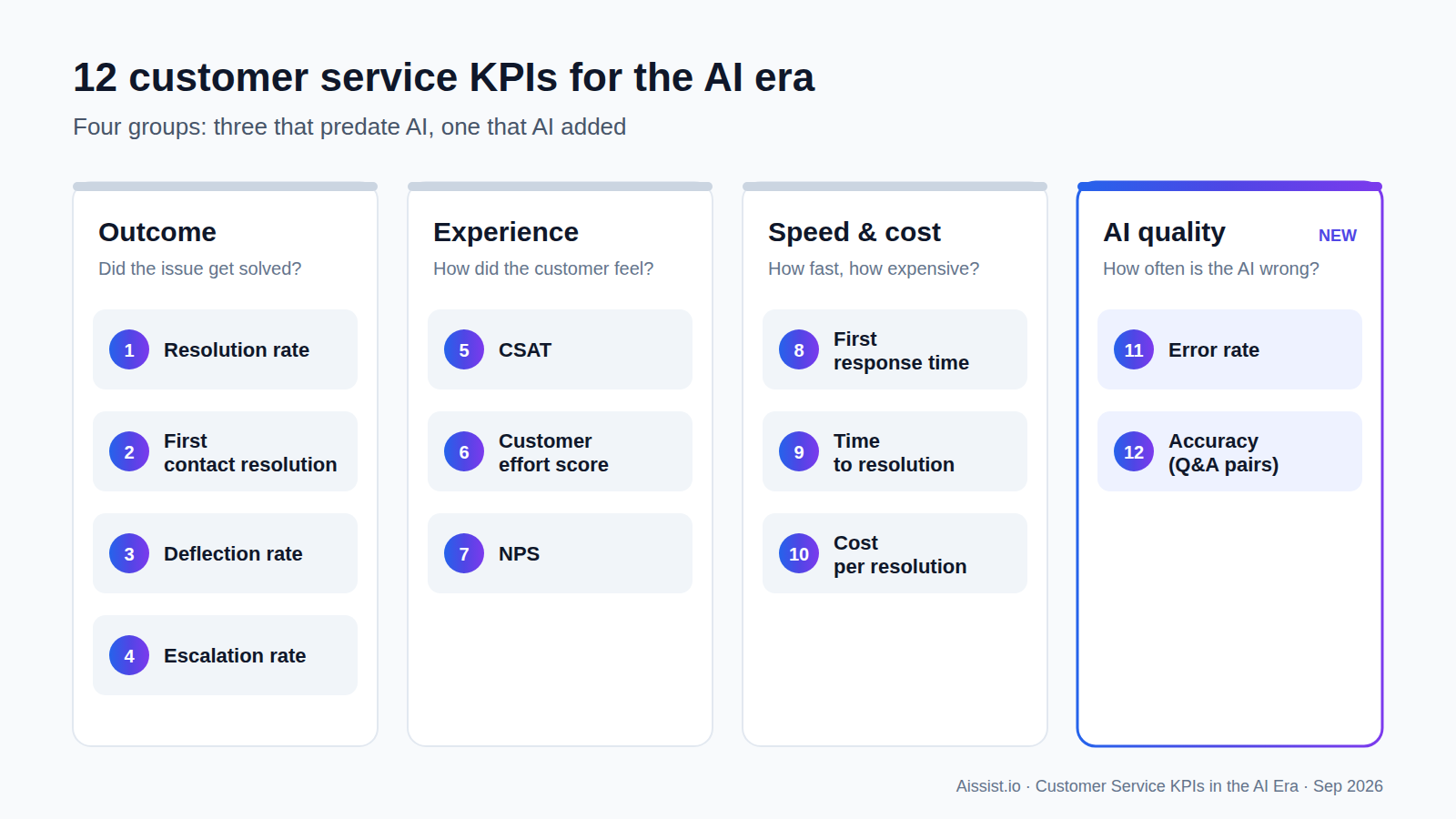
Before signing, run a paid pilot on 500 of your own AI-handled conversations and compare the tool's scores with your best human grader's. If they disagree more than your graders disagree with each other, the tool is not calibrated yet. For the metrics worth tracking alongside QA scores, see Aissist's guide to customer service KPIs.
What is the difference between QA, conversation intelligence and speech analytics?
Quality assurance grades individual conversations against a rubric; conversation intelligence finds patterns across all conversations; speech analytics is the voice-processing technology that makes calls searchable for both. Page one uses the three terms interchangeably, and vendors bundle them, but they answer different questions.
| Term | Question it answers | Output | Typical user |
|---|---|---|---|
| Quality assurance (QA) | Did this conversation meet our standard? | A score per conversation and per agent | QA analyst, team lead |
| Conversation intelligence | What is happening across all our conversations? | Trends, topics, contact reasons, sentiment | CX leader, product, sales |
| Speech analytics | What was said on this call? | Transcripts, keyword and acoustic detection | Feeds QA and conversation intelligence |
G2 defines conversation intelligence as "the process of capturing, analyzing, and interpreting customer conversations across calls, video meetings, chats, and emails to uncover insights about sales, support, and customer behavior." Speech analytics is narrower: the transcription and audio analysis layer that makes a call readable at all.
The lines blur in practice. evaluagent sells conversation intelligence as a $65 tier above its $35 QA tier, and ScorebuddyCX describes itself as connecting QA, conversation analytics and coaching. Aissist separates the two: Pulse looks outward at why customers contact you, while Agent Insight looks inward at how each agent performed.
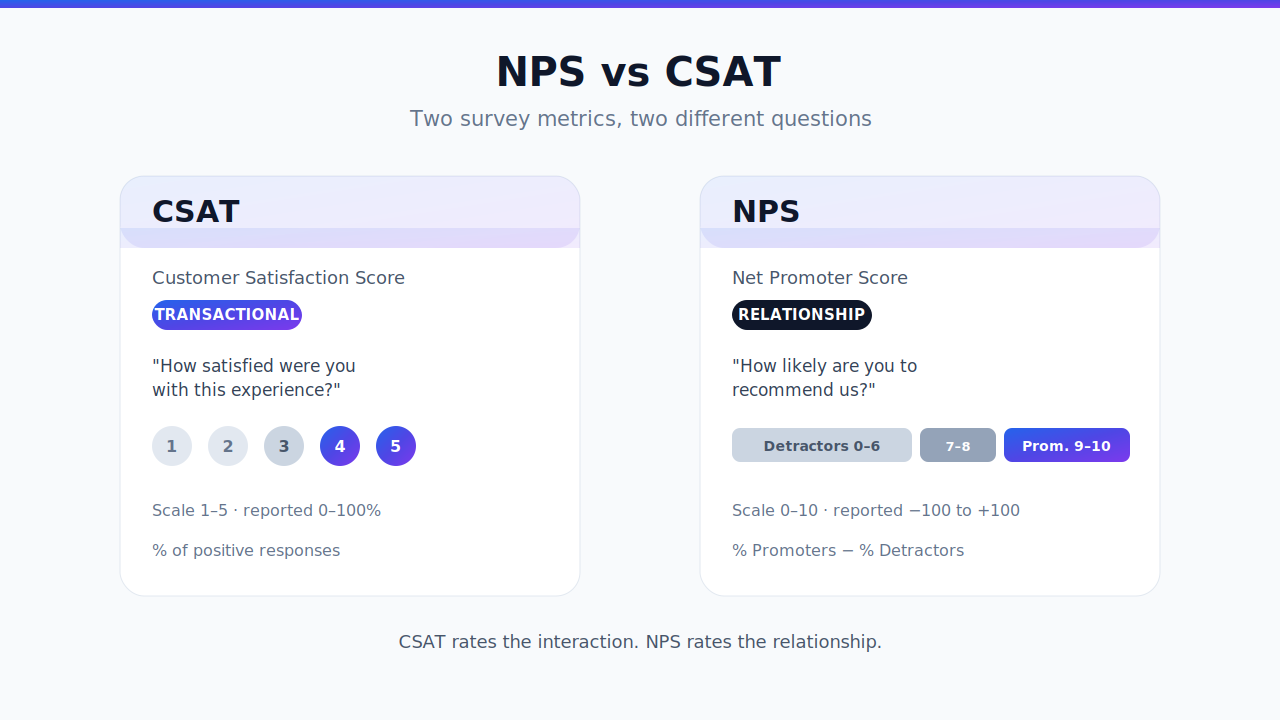
The practical rule: buy QA to grade agents, conversation intelligence to understand customers, and check that both run on the same transcripts so the answers agree. Satisfaction data belongs in the same view; Aissist's NPS vs CSAT guide covers which survey measures what.
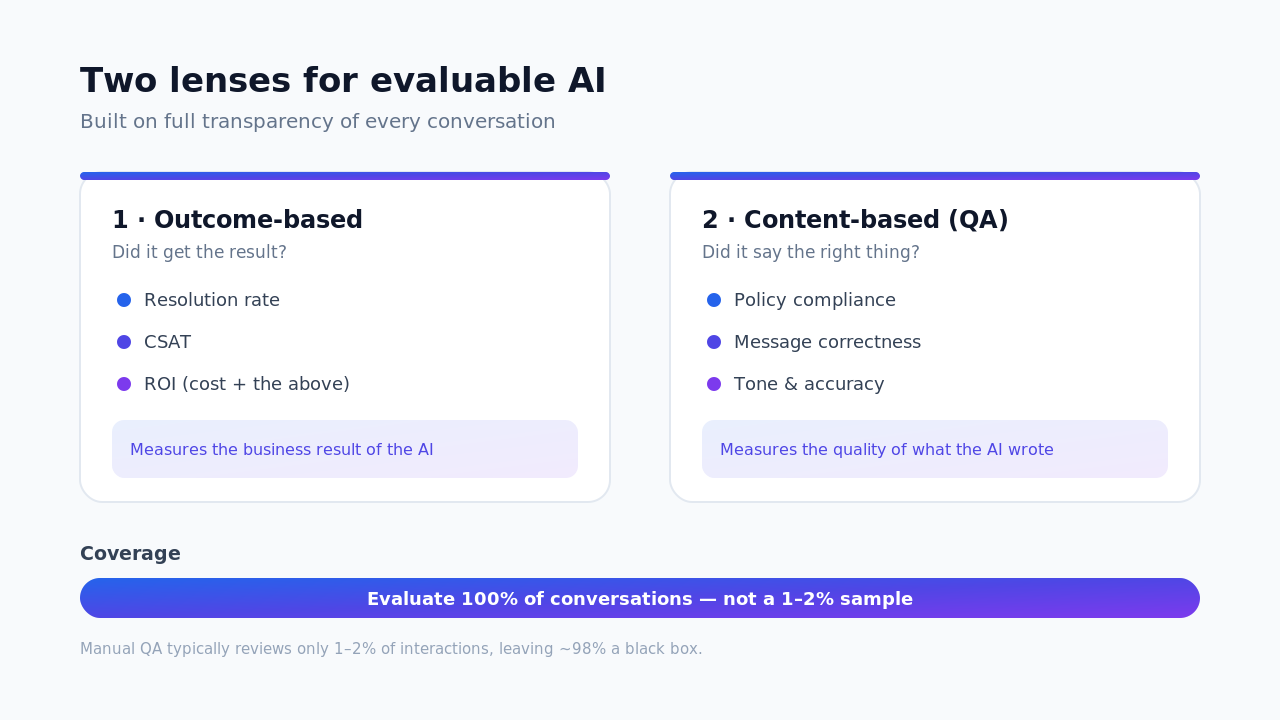
Scoring the AI agent is table stakes; scoring it on the right things is the product
Every serious QA vendor now claims it can score an AI agent. That makes the claim nearly worthless on its own. The differences that matter are whose agent a tool can score, whether it grades AI-specific failures like fabrication and wrong actions, and whether "100% coverage" survives contact with the plan's AI-score allowance.
Start with the platform your conversations live on, then ask each vendor to score a month of your AI agent's real transcripts. The tool that agrees with your best grader, catches the invented refund policy, and prices the full volume is the one to buy.
Frequently asked questions
What is call center quality assurance software?
Call center quality assurance software scores customer conversations against a rubric to measure agent performance, compliance and customer experience. Modern tools auto-score 100% of calls, chats and emails with AI instead of reviewing a small manual sample, and many now score AI-agent conversations too.
Can QA software evaluate AI agents and chatbots?
Yes. Nine of the ten tools reviewed here say they score AI-handled conversations. MaestroQA, evaluagent and Solidroad name the third-party AI agents they score, and AmplifAI calls its scoring vendor-agnostic; Observe.AI documents scoring its own agents.
What percentage of calls does manual QA review?
Manual QA typically reviews a small fraction of conversations. McKinsey puts it at less than 5 percent, and Level AI says around 1% to 3%. Automated QA tools claim 100% coverage, subject to plan limits on AI-scored conversations.
Which call center QA software publishes its pricing?
evaluagent publishes pricing from $35 per user per month for human-agent QA. Zendesk lists its Workforce Engagement bundle, which includes QA, at $50 per agent per month billed annually. The other eight tools here are quote-only.
Is auto QA accurate enough to replace human graders?
Auto QA is accurate enough to replace random sampling, but not calibration. McKinsey reports gen-AI QA exceeding 90 percent accuracy versus 70 to 80 percent for manual scoring. Keep human graders to calibrate the model and handle disputes.
What should a scorecard for an AI agent include?
An AI-agent scorecard should check fabrication, policy application, action correctness, escalation timing and error severity. Tone and empathy matter less for a machine. Severity grading by business impact, such as an S0–S3 scale, shows which errors actually cost money.
What is the difference between QA and conversation intelligence?
QA grades individual conversations against a standard and produces agent scores. Conversation intelligence analyses all conversations for trends, topics and contact reasons. Many vendors sell both, but they answer different questions: how did the agent do, versus what are customers telling us.
Should the vendor that built my AI agent also score it?
It can, but an independent grade is safer. A vendor scoring its own AI agent has a structural conflict of interest, however good its rubric. Many teams use the built-in scores for daily monitoring and a separate QA tool for the audit.
Changelog
- 28 September 2026 — First published. Ten tools reviewed; capabilities, pricing and ratings read from vendor pages and G2 in September 2026.