Kore.ai Review (2026): What It Does, What It Costs, and Who It's For
Kore.ai is an enterprise agentic AI platform, founded in 2014 by Raj Koneru, that builds, governs and runs AI agents across customer service, employee support and internal processes, and deploys onto your existing contact-centre and CRM stack rather than replacing it. It rates 4.6 on G2 across 505 reviews, says it serves more than 500 large enterprises handling over 20 billion interactions a year, and — unusually for this category — publishes a real rate card. This review covers what Kore.ai does, what it actually costs at both ends of the range, where its evidence is thin, and which alternatives fit which teams. If you have already decided Kore.ai is not the fit, our Sierra AI review and Decagon AI review cover the two closest enterprise rivals.
TL;DR:
- What it is: Kore.ai is an enterprise platform for building, governing and running AI agents, spanning AI for Service (customers), AI for Work (employees) and the Agent Platform {Artemis} that both run on.
- Best for: Large enterprises standardising agent development across service, HR and IT, especially with on-premises or data-residency requirements.
- Strongest capability: Governance and deployment flexibility — eight pre-built guardrail scanners, a deterministic flow engine alongside the reasoning engine, and SaaS, dedicated VPC or on-premises hosting.
- Biggest friction: Time. G2 buyers report a two-month average implementation and a seven-month average time to ROI, and "steep learning curve" is the most-cited complaint on its profile.
- Not for: SMB or most mid-market support teams, or anyone who needs automated resolutions live inside a quarter.
- Rating: 4.6/5 on G2 across 505 reviews, read 20 August 2026. Our score: 4.2/5.
One thing to fix in your head before you read any Kore.ai pricing article, including this one: the published $29–$60/month tiers and the real enterprise contract are not the same product. Kore.ai's own AWS Marketplace listing puts a realistic first-year enterprise bundle near $90,000.
Reviewed by M.W., Co-founder. Disclosure: this review is published by Aissist.io, which sells an agentic AI layer that competes with Kore.ai in the mid-market. Ratings, prices and quotes come from Kore.ai's own pages and documentation, its AWS Marketplace listing, G2, Capterra, TrustRadius and PeerSpot, all captured in August 2026.
How we evaluated Kore.ai, and who wrote this
We build a competing product. Aissist.io sells an agentic AI layer for customer service and sales, so we are not a neutral party and you should not read us as one. What we can offer instead is a review where every claim is sourced and every gap is marked as a gap — and where Kore.ai wins several criteria outright.
Three rules governed this piece:
- Kore.ai's own materials outrank everything. Where kore.ai or its documentation says something, we quote it and link it.
- Every performance figure is labelled by provenance — vendor-claimed, case study, or independently reported. Nothing is laundered into fact.
- Where we could not verify something, we say so rather than filling the gap with a plausible number. Several figures circulating about Kore.ai's enterprise pricing come from blogs citing other blogs; we do not repeat them as fact.
We scored Kore.ai on six criteria, each out of 5. All figures were read on 20 August 2026.
| Criterion | Score | Why |
|---|---|---|
| Technology class | 5 / 5 | Genuinely agentic, with a deterministic flow engine running alongside the reasoning engine |
| Deployment model | 5 / 5 | Deploys onto an existing stack; SaaS, dedicated VPC or on-premises |
| Governance & security | 5 / 5 | SOC 2 Type II, ISO 27001:2022, PCI DSS, eight pre-built guardrail scanners |
| Pricing transparency | 4 / 5 | A published rate card, which most rivals lack — but enterprise terms are quote-only and the page renders inconsistently |
| Evidence quality | 3 / 5 | Every performance figure is an anonymised case study; no independently audited benchmark |
| Time to value | 3 / 5 | Two-month average implementation, seven-month average ROI (G2 buyer-reported) |
| Overall | 4.2 / 5 | An excellent enterprise build platform; a poor fit for teams that need resolutions this quarter |
Kore.ai at a glance
| What it is | Enterprise agentic AI platform, with conversational AI heritage |
| Founded | 2014; co-founder and CEO Raj Koneru, who previously founded Kony and Intelligroup |
| Headquarters | Orlando, Florida, with a Bay Area strategic headquarters opened in San Mateo in May 2026 |
| Funding | ~$223M through the $150M round led by FTV Capital with NVIDIA participating (January 2024); an undisclosed growth investment from AllianceBernstein Private Credit Investors (January 2026) |
| Revenue | ARR "north of $100 million" as reported by TechCrunch in January 2024; no later official figure published |
| Scale | 500+ large enterprises and 20B+ interactions per year (vendor-claimed, August 2026) |
| Architecture | Agentic, with a deterministic flow engine running in parallel with the reasoning engine |
| Deploys onto existing stack | Yes — Salesforce, ServiceNow, Zendesk, SAP, Genesys, NICE, Teams, Slack, Zoom, Webex |
| Channels | 40+ claimed in marketing; roughly 23 documented for AI for Service, including voice, chat, email, SMS, WhatsApp and social |
| Languages | ~120 for dialogs; out-of-the-box summarisation in five, agent coaching in one |
| Pricing | Published self-serve tiers from $29/month plus per-session usage; enterprise quote-only |
| G2 | 4.6/5, 505 reviews (read 20 Aug 2026) |
| TrustRadius / PeerSpot | 6.8/10 (11 reviews) and 3.9/5 (16 reviews) — notably cooler technical panels |
| Best fit | Large enterprise with platform engineers and a multi-year agent roadmap |
What is Kore.ai?
Kore.ai is an enterprise AI platform company that sells software for building, governing and running AI agents across customer service, employee services and business processes. It raised a $150M growth round in January 2024 led by FTV Capital with NVIDIA participating, at which point TechCrunch reported that annual recurring revenue "now stands north of $100 million." In January 2026 it took a further, undisclosed strategic growth investment from AllianceBernstein Private Credit Investors.
In August 2026 Kore.ai stated that it serves "more than 500 large enterprises worldwide" handling "more than 20 billion interactions per year." Named public customers on its own site include AT&T, Coca-Cola, Airbus, Roche, Deutsche Bank, Morgan Stanley and Eli Lilly. That is a genuine enterprise install base, not a logo wall of pilots.
Analyst recognition is the strongest part of its résumé. Kore.ai reports Leader placement in the Gartner Magic Quadrant for Conversational AI Platforms for a fourth consecutive year since 2022, Leader in The Forrester Wave: Conversational AI Platforms For Customer Service, Q2 2026, and Leader in the Everest Group Agentic AI Products PEAK Matrix 2026. Those placements are vendor-reported from Kore.ai's own analyst recognition page; the underlying reports are paywalled and we did not verify them against the source documents.
A naming note that trips up buyers. The platform many people still search for as the "Kore.ai XO Platform" — Experience Optimization — is the prior generation. In May 2026 Kore.ai launched Artemis, the current generation of the Kore.ai Agent Platform, first on Microsoft Azure. Gartner Peer Insights and parts of the documentation still carry XO branding, so you will meet both names in the same evaluation.
The product line in 2026
Kore.ai sells three application families on one platform. AI for Service covers customer-facing agents and contact-centre automation. AI for Work covers employee-facing agents across HR, IT, legal, finance and sales. Agent Platform {Artemis} is the underlying build-and-govern layer that both run on.
Artemis introduced three things worth understanding before a demo. Agent Blueprint Language is a compiled, declarative language for defining agents, with six orchestration patterns — meaning agent definitions are code artefacts you version and review, not clicks in a builder. Arch is an agent architect that translates a stated business objective into a production blueprint. Dual-Brain Architecture runs an agentic reasoning engine and a deterministic flow engine in parallel over shared memory, which is Kore.ai's answer to the reliability problem: use reasoning where you want flexibility, use the deterministic path where you need the same outcome every time.
That architecture is the honest reason Kore.ai appeals to regulated enterprises. It is also the honest reason it takes two months to implement.
Architecture: where Kore.ai sits in your stack
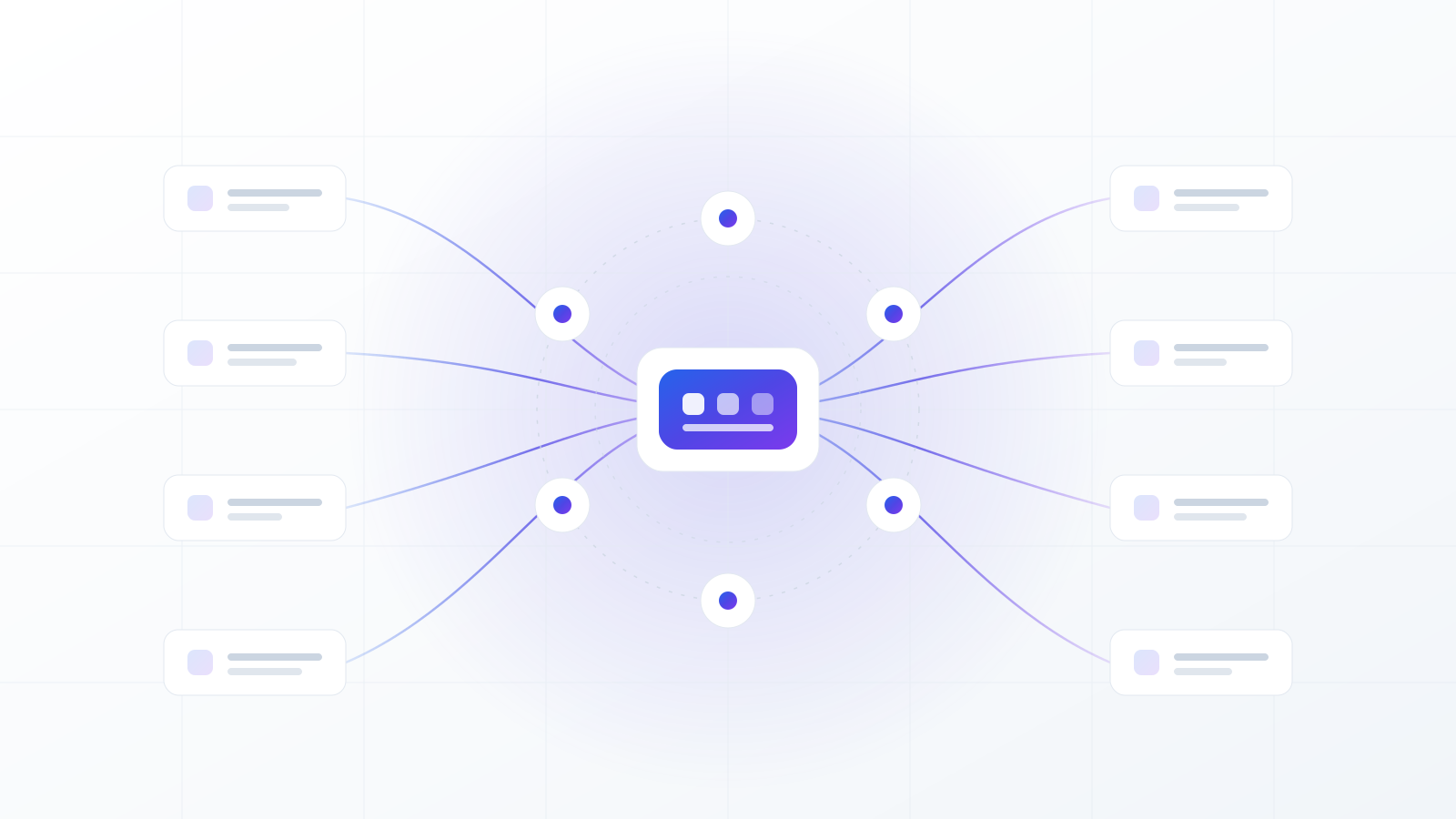
Kore.ai deploys onto the stack you already run. Documented integrations include Salesforce, ServiceNow, Zendesk, SAP and Epic on the systems side, and Genesys, Microsoft Teams, Zoom, Webex and Slack on the channel side. Contact-centre coverage is deep: Kore.ai publishes integration documentation for NICE MAX Desktop and NICE CXone Agent Desktop across chat, voice and outbound calling, alongside Amazon Connect Chat and Twilio SMS and voice.
Hosting is unusually flexible for this category. Kore.ai's Trust Center lists public-cloud multi-tenant SaaS, a dedicated single-tenant VPC, and full on-premises deployment. On-premises is rare among the newer agentic vendors and is a real differentiator for banks, insurers and public-sector buyers with data-residency mandates.
What Kore.ai's agents can actually do
Channels and languages: read the asterisk
Kore.ai's marketing cites more than 40 digital and voice channels, though the current AI for Service channel documentation lists roughly 23 — the higher number appears to span older platform generations. Documented channels include web and mobile chat, email, SMS, WhatsApp, Facebook Messenger, Instagram, Microsoft Teams, Slack, Zoom, Genesys Cloud CX, Webex, Amazon Connect Chat, Twilio and native voice.
The language number carries the asterisk most buyers miss. Kore.ai supports roughly 120 languages for dialogs — its own blog says "about 120" — but advanced features run far narrower. Per Kore.ai's supported-languages documentation, out-of-the-box summarisation is supported in five languages (English, Spanish, French, German and Dutch) and agent coaching in one (English). If your Portuguese or Thai queue needs automated summaries, confirm feature coverage per language before you sign — the headline count is a dialog number, not a capability number.
Actions: yes, if you build the tools
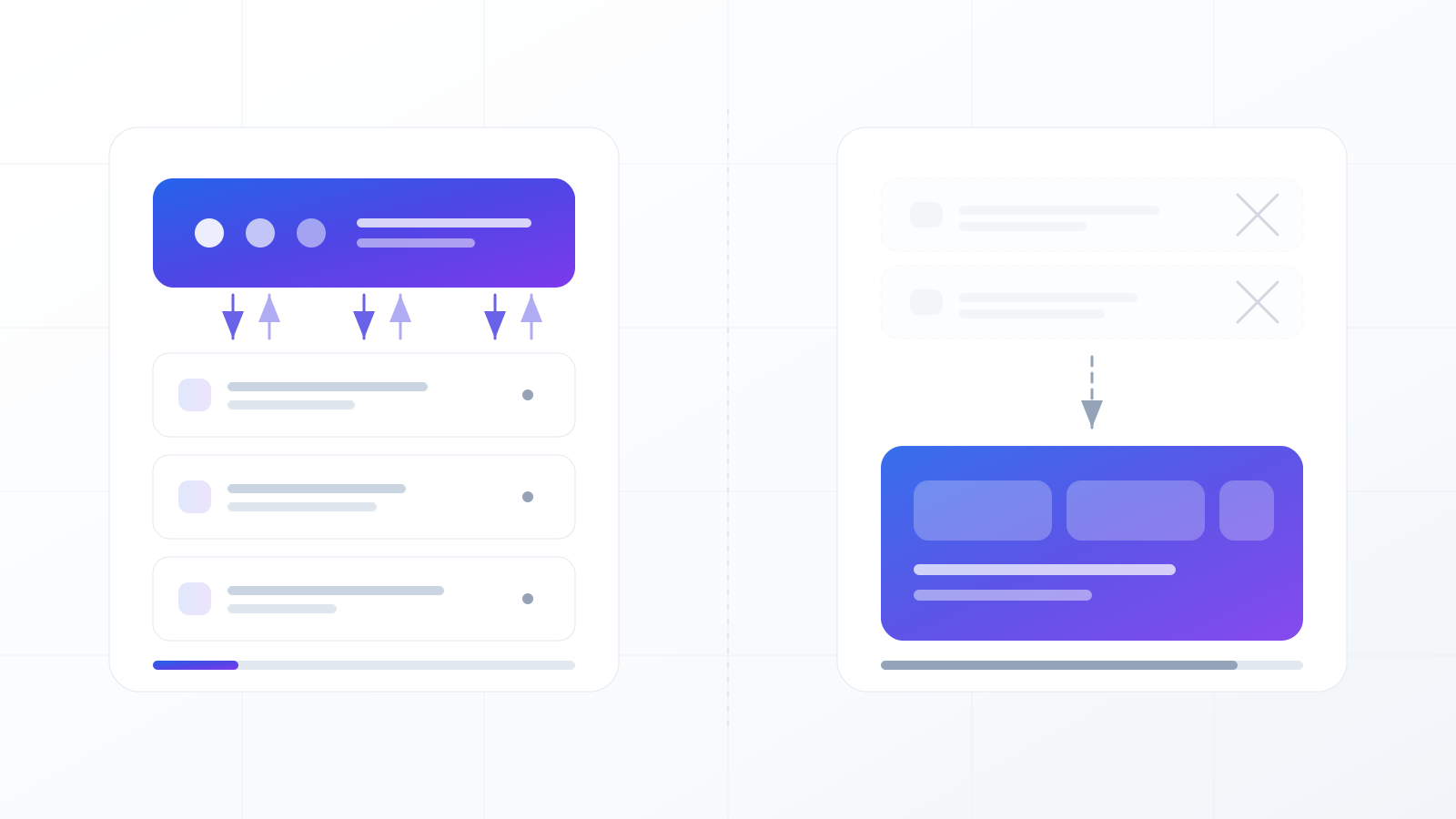
Kore.ai agents execute transactions; they are not answer-only. The mechanisms are API service nodes inside the Dialog Builder and, newer, a native Model Context Protocol client that discovers and invokes tools hosted on external MCP servers. In practice that means refunds, order lookups and account changes are achievable — provided your team exposes the corresponding API or MCP tool. Kore.ai supplies the orchestration; it does not ship pre-built connectors into arbitrary back-office systems.
That distinction is the whole game in this category. An agent that can only answer deflects. An agent that can act resolves, and the gap between those two words is usually a quarter of engineering work. Our explainer on agentic AI versus generative AI walks through where the line actually falls.
Knowledge, guardrails and governance
Knowledge ingestion works three ways: URL extraction from FAQ pages, document upload (PDF up to 5MB, or CSV in a two-column question-answer format), and manual PDF annotation for non-standard layouts. Kore.ai does not document an automatic re-crawl or scheduled refresh — extraction is on-demand, so ingested Q&A pairs go stale unless someone re-runs them. Build that into your operating model.
Guardrails are more mature. Kore.ai ships eight pre-built scanners in a documented pipeline: input scanners handle regex validation, PII anonymisation, topic blocking, prompt-injection detection and toxicity analysis; output scanners handle toxicity, bias identification, de-anonymisation and relevance scoring. Thresholds are configurable per application and nothing has to be custom-built.
On model choice, the Model Hub supports commercial models, open-source models via Hugging Face, and custom fine-tuned models, with explicit bring-your-own-model support and private-cloud deployment. What you will not find is a published hallucination rate or any "zero hallucination" guarantee — we looked. If a salesperson offers one, ask for the measurement methodology in writing. Our view on what that methodology should contain is set out under reliable AI.
Escalation runs through a separate Agent Assist product with documented integration into Salesforce Service Cloud Voice on Amazon Connect telephony. The exact metadata that transfers to a human on handoff is not fully documented publicly; ask for it in the technical evaluation, because a handoff that drops the transcript costs you the CSAT you were buying.
Time to deploy and who maintains it
G2's buyer-reported data puts average implementation at two months and average time to ROI at seven months (read August 2026). Kore.ai publishes no "go live in X days" claim of its own, and the case studies we reviewed report results "since go-live" without dating the launch or the build. Large rollouts commonly run through implementation partners — Kore.ai's own banking case study describes the deployment as delivered "via partners."
The maintenance question matters more than the launch question. Kore.ai markets a drag-and-drop Dialog Builder for business users, and G2 reviewers do describe the interface as intuitive for basic configuration — "ease of use" is the single most-cited praise, appearing in 209 reviews. But "steep learning curve" is the most-cited complaint, in 47 reviews, followed by usage limitations (43), slow performance (40), slow loading times (32), software bugs (29) and poor documentation (27).
One reviewer quote worth reading before a demo, on the cost of the roadmap dependency:
"Post asking for any enhancement team will take months to fulfill the requirement which spoil the overall experience as well as the customer experience too." — Dikshant T., Financial Services, Capterra, read August 2026
Kore.ai also runs a formal Academy with Developer Basic and Advanced certification tracks. A vendor-run certification programme is a useful signal in both directions: it means real expertise is available, and it means real expertise is required.
Performance: what the numbers actually show
Every published Kore.ai performance figure we found is either an anonymised case study or a single reviewer's self-reported test. No independently audited benchmark exists.
| Figure | Provenance | Source |
|---|---|---|
| 90% call containment; 15M credit-card queries/month across 65M cardholders | Case study, customer not named ("global banking leader") | Kore.ai |
| 85.7% digital containment, 42.4% voice containment; 2.6M+ sessions automated | Case study, customer not named ("major bank") | Kore.ai |
| ~45% self-service resolution; $221K realised value, $1.06M projected | Case study, customer not named ("national insurance provider") | Kore.ai |
| 65% self-service completion; 74% reduction in escalations | Vendor-claimed, entities not disclosed | Kore.ai |
Read the second row carefully, because it is the most useful number on this page: 85.7% containment on digital versus 42.4% on voice, at the same customer, on the same platform. Voice is roughly half as automatable as chat and email even in a mature deployment. Any vendor quoting you one blended containment number is hiding that split.
Also note the vocabulary. Kore.ai's case studies report containment — the conversation did not reach a human. That is not the same as resolution, where the customer's problem is actually solved. A contained conversation that ends in an abandoned chat counts as a win in containment math and a loss in your CSAT. Our AI customer service benchmark shows how far vendor containment claims typically sit above measured resolution.
Reviews and ratings: what users actually say
| Platform | Rating | Reviews | Listing name |
|---|---|---|---|
| G2 | 4.6 / 5 | 505 | Kore.AI |
| Capterra | 4.4 / 5 | 17 | Kore (Conversational AI Platform) |
| TrustRadius | 6.8 / 10 | 11 | Kore.ai Agent Platform {Artemis} |
| PeerSpot | 3.9 / 5 | 16 | Kore.ai |
The spread is the story. G2's 4.6 across 505 reviews is a strong score with real volume behind it. TrustRadius at 6.8 out of 10 and PeerSpot at 3.9 out of 5 are notably cooler, and both skew toward longer-form reviews from technical implementers rather than end users. Buyers evaluating build effort should weight the technical panels; buyers evaluating day-to-day usability should weight G2.
G2 also flags Kore.ai's perceived cost at its highest tier, reports an average negotiated discount of 10%, and notes that "small businesses and startups face the steepest cost-to-complexity trade-off, with multiple small-business reviewers noting that Kore.AI's pricing may be a barrier."
Kore.ai pricing: what's published and what isn't
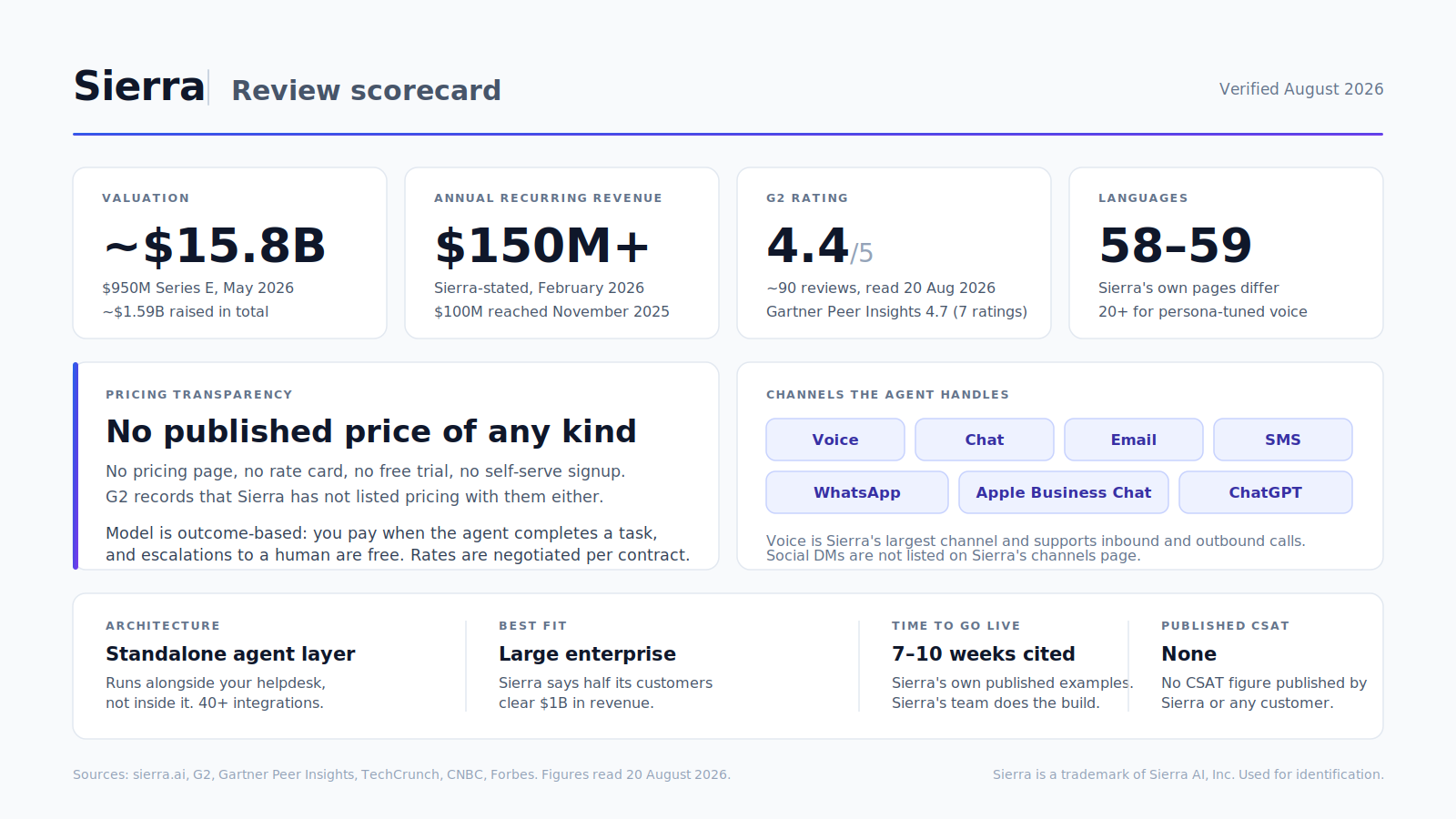
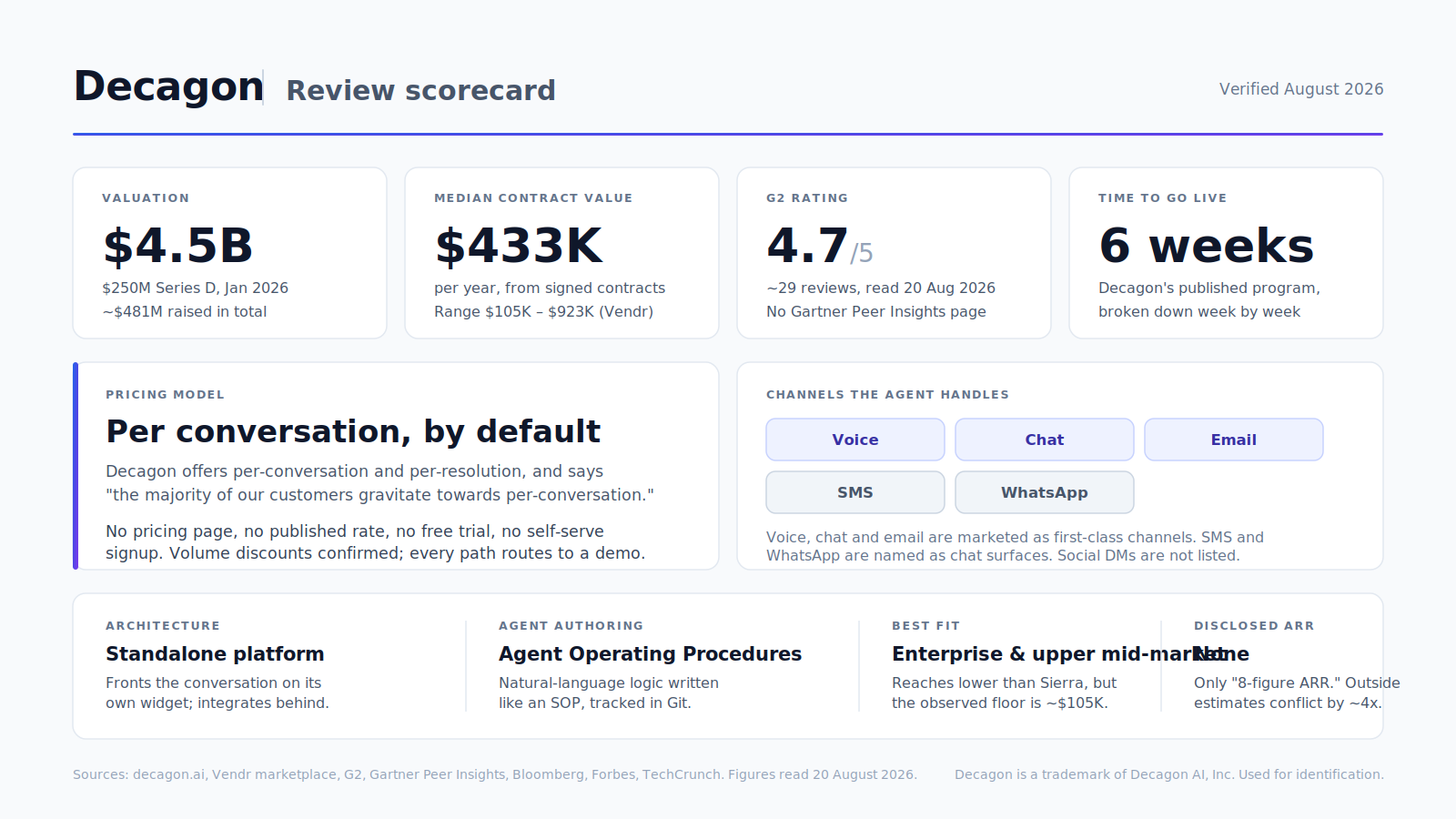
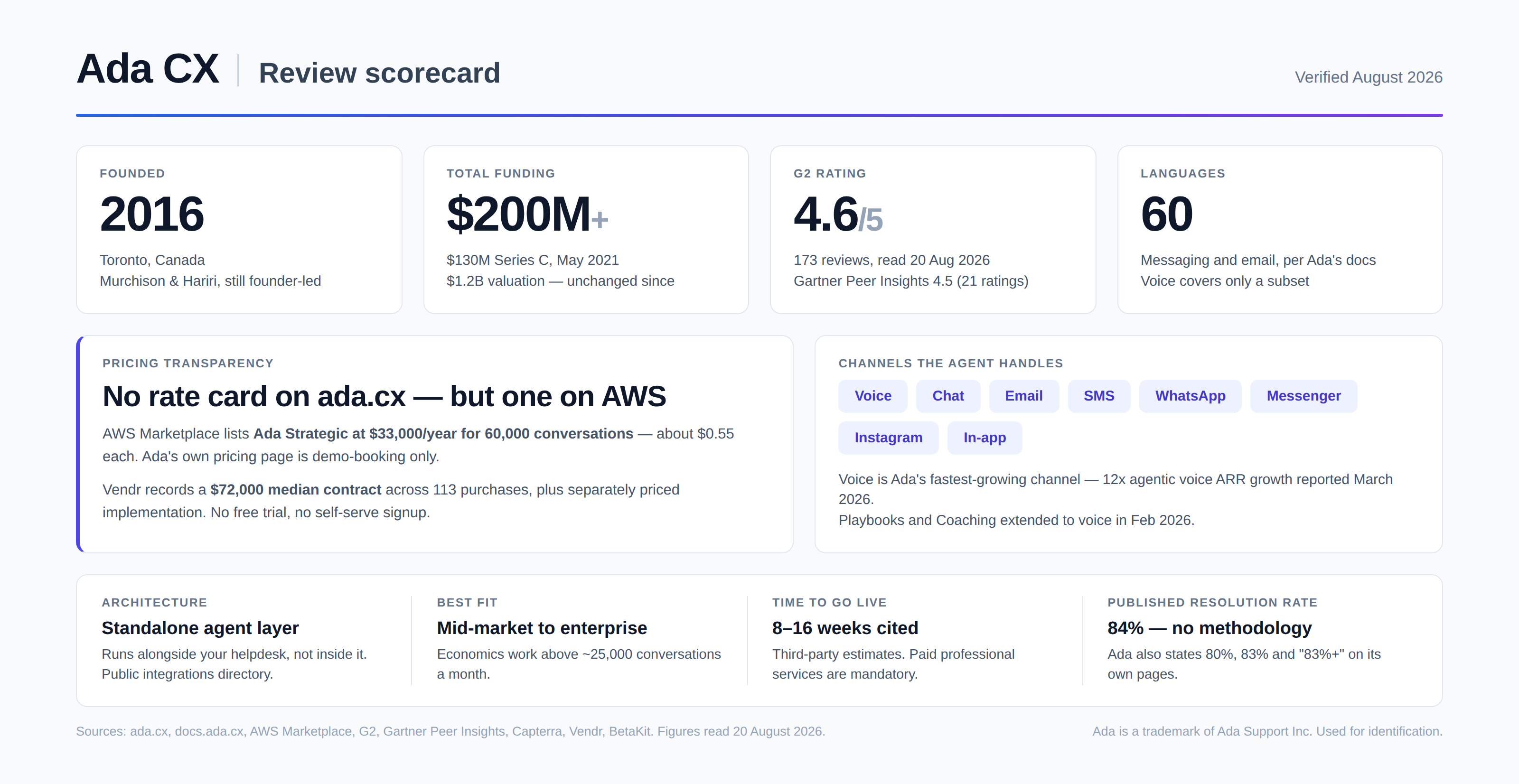
Kore.ai publishes a real rate card, which puts it ahead of Sierra, Decagon, Ada and Cognigy — none of whom publish a number at all. All figures below were read from kore.ai/pricing in August 2026.
| Product | Tier | Platform fee | Usage charge |
|---|---|---|---|
| Automation AI | Essential | $60/month | "0.05¢ per session" as printed — read as 5¢, corroborated by third-party marketplace listings |
| Automation AI | Advanced | $29/month | $0.10 per session |
| Automation AI | Enterprise | Quote only | Quote only |
| Contact Center AI | Essential | $29/month | Up to 30 agents |
| Contact Center AI | Advanced | $79/month | — |
| Contact Center AI | Enterprise | Quote only | Unlimited agents |
| Search AI | Advanced | $29/month | $0.10 per session |
| Agent AI | Essential | $29/month | $0.10 per session |
| Add-on: Proactive Outbound | — | $300 per 3,000 messages | — |
| Add-on: Workforce Management | — | $30/agent/month | — |
| Add-on: XO Voice Gateway | — | Quote only | Usage-based |
Trials are 14 days for Automation AI and 30 days for Contact Center AI, both without a credit card, with 50,000 AI credits included.
Two caveats before you model a budget on this table. First, the pricing page renders inconsistently — repeated reads returned different tier-to-price mappings, particularly around which Contact Center AI tier carries unlimited agents. Get the rate card in writing.
Second, a transcription oddity that changes the math by 100×: the Automation AI Essential card literally reads "0.05¢ per session." Taken literally that is five hundredths of a cent. Kore.ai's Vendr listing shows session-based line items at "+5¢ per session," and its AWS Marketplace SKUs price units at $0.01 and $0.05, so the intended figure is almost certainly $0.05. Confirm it before you build a model on it.
What enterprise Kore.ai actually costs
The enterprise price is a different animal entirely. Kore.ai's public AWS Marketplace listing exposes real 12-month contract SKUs:
| Component | Published figure | Type |
|---|---|---|
| AI for Service | 660,000 units for $6,600/year ($0.01/unit) | AWS Marketplace SKU |
| AI for Service Interaction Gateway | 660,000 units for $33,000/year ($0.05/unit) | AWS Marketplace SKU |
| Enterprise Support package | $40,000 one-time | AWS Marketplace SKU |
| Expert Services "Kore Tune-Up" | $50,000 one-time (75-hour onsite workshop) | AWS Marketplace SKU |
| Expert Services, Standard | $10,000 one-time | AWS Marketplace SKU |
| Year one, bundled | ~$89,600 | Sum of published SKUs |
The listing also states that "all fees are non-cancellable and non-refundable except as required by law." Third-party blogs circulate a "$300,000/year enterprise floor" figure; we could not trace it to a primary source and do not repeat it as fact.
A worked example
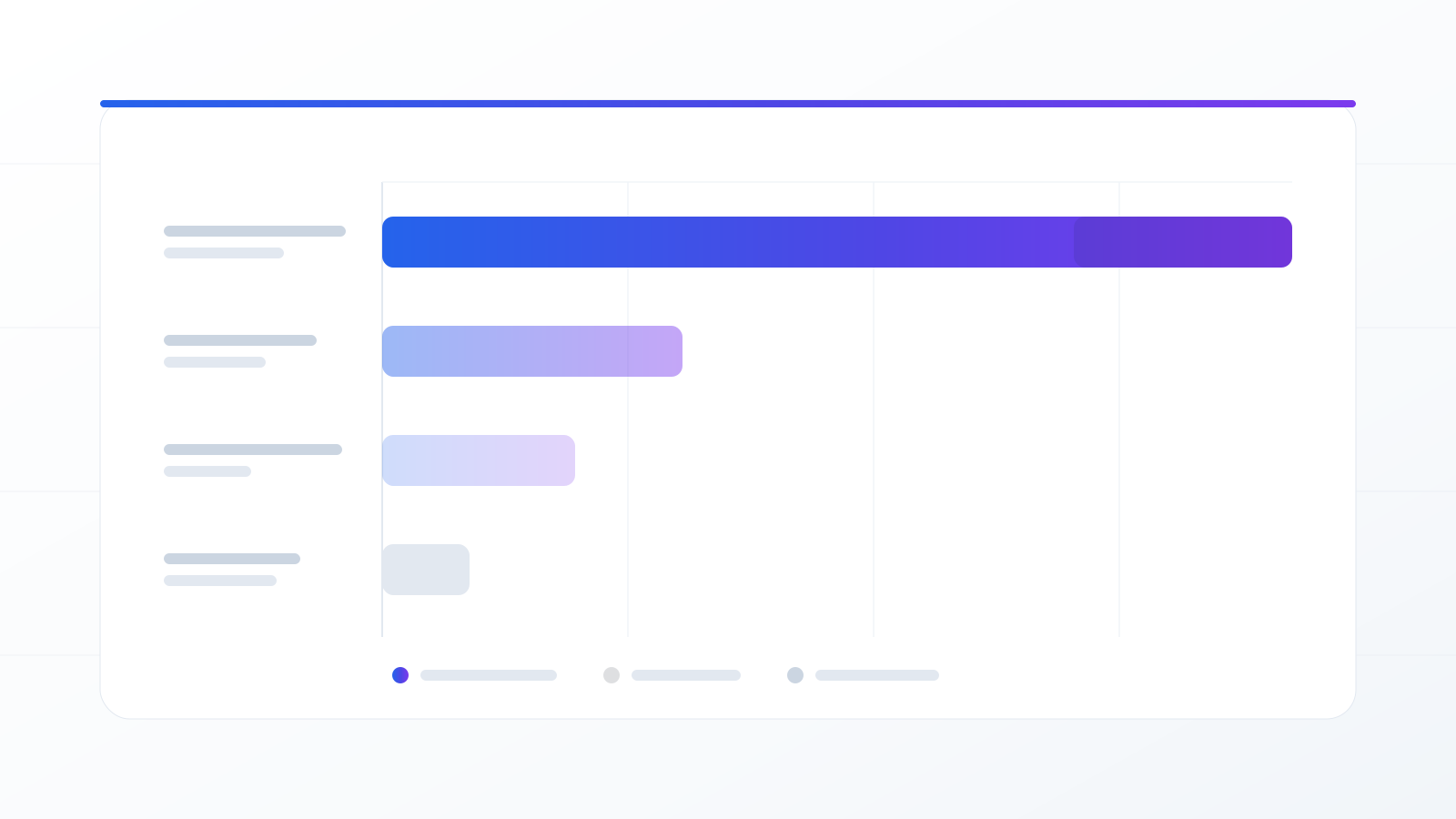
Scenario: 2,000 support tickets per month, 60% automated — 1,200 automated resolutions, 800 to humans. Chat and email only, no voice. Prices read August 2026.
| Platform | Billing unit | Monthly AI cost | First-year total | What's excluded |
|---|---|---|---|---|
| Kore.ai (self-serve Automation AI Essential) | Platform fee + per session | $60 + (2,000 × $0.05) = $160 | ~$1,920 | Voice gateway, Advanced RAG add-on, support upgrade, all implementation labour |
| Kore.ai (enterprise path, AWS Marketplace SKUs) | Annual unit commitment + services | — | ~$89,600 first year | Voice minutes, add-ons, internal engineering |
| Aissist.io | Per resolution, capped | 1,200 × up to $0.60 = up to $720 | ~$8,640 | Free-tier allowance is a separate plan, not a Growth-plan credit |
| Intercom Fin | Per resolution | 1,200 × $0.99 = $1,188 | ~$14,256 | Intercom seat licences |
| Salesforce Agentforce | Per conversation | 1,200 × $2.00 = $2,400 | ~$28,800 | Service Cloud licences |
| Sierra AI / Decagon | Outcome-based, custom | Quote only | Quote only | — |
The self-serve row is real but misleading, and that is the single most important thing to understand about Kore.ai pricing: the $160/month tier is a build sandbox, not the shape of an enterprise deployment. Nobody serving a 2,000-ticket queue at a regulated enterprise ends up on Essential with no support package and no professional services. The honest comparison is the second row against the rest. Our AI agent pricing benchmark normalises these billing units across the category.
Hidden costs to budget for, in rough order of size: professional services or a certified partner for anything beyond simple flows; the Enterprise Support package if you need a real SLA; the XO Voice Gateway if voice is in scope; and the internal engineering time implied by a two-month average implementation.
Security and compliance
Kore.ai's Trust Center publishes SOC 2 Type II, ISO/IEC 27001:2022, PCI DSS, GDPR and CCPA, plus stated alignment with the EU AI Act and a DESC Cloud Service Provider certification for UAE deployments. Access controls listed include SSO, RBAC and MFA. Hosting spans multi-tenant SaaS, dedicated VPC and on-premises.
Two gaps to close in diligence. HIPAA is not stated on the public trust page — not disqualifying, since HIPAA has no formal certification, but healthcare buyers should get a BAA commitment in writing. FedRAMP authorisation was not found, which matters for US federal work. And the public trust materials do not state whether customer data is used to train models; that answer lives in the DPA, and you should read it.
Pros and cons
Pros
- Deploys onto the stack you already run, with documented Salesforce, ServiceNow, Zendesk, Genesys and NICE integrations, plus on-premises and dedicated-VPC hosting that most agentic competitors do not offer at all.
- Breadth almost nobody matches: dozens of digital and voice channels, roughly 120 languages, and one platform spanning customer service, employee services and internal process automation — a single vendor relationship covering three budgets.
- Governance built in, not bolted on: eight pre-built input and output scanners, a deterministic flow engine running alongside the reasoning engine, bring-your-own-model support, and SOC 2 Type II plus ISO 27001:2022 plus PCI DSS on the public trust page.
- A published rate card, which Sierra, Decagon, Ada and Cognigy do not have — plus AWS Marketplace SKUs that let you see enterprise unit economics before a sales call.
Cons
- Two months to implement and seven months to ROI, per G2's buyer-reported averages — a roadmap commitment, not a pilot.
- "Steep learning curve" is the most-cited complaint on G2 (47 reviews), compounded by documentation quality (27 reviews) and reported slow performance and loading times (40 and 32 reviews). The no-code positioning is closer to low-code in production.
- No automatic knowledge refresh is documented — ingestion is manual and on-demand, so content drift becomes an ongoing operational chore rather than a solved problem.
- Every published performance number is an anonymised case study, and the honest one in that set shows 42.4% voice containment against 85.7% digital at the same customer.
- Advanced language features are much narrower than the headline count. Roughly 120 languages handle dialogs, but out-of-the-box summarisation covers five and agent coaching covers one.
- The price you can see is not the price you will pay. Self-serve tiers start at $29/month; a realistic enterprise first year built from public AWS SKUs lands near $90,000 before add-ons.
Who Kore.ai is for, and who it isn't
- If you are a Fortune 2000 enterprise standardising agent development across service, HR and IT, then Kore.ai is a genuinely strong shortlist entry, because very few vendors cover all three application families on one governed platform.
- If you have hard data-residency or on-premises requirements, then Kore.ai belongs on the list regardless of everything else, because on-prem and dedicated-VPC deployment eliminate most of the newer agentic vendors immediately.
- If you run a large multilingual voice operation, then verify per-language feature coverage and voice containment before signing, because summarisation is documented in five languages and the platform's own case study shows voice containment at half the digital rate.
- If you need automated resolutions live inside a quarter, then Kore.ai is the wrong shape, because a two-month average implementation plus seven-month average ROI is a year-scale programme.
- If you have no platform engineering capacity, then do not buy a build platform, because the most-cited complaint in 505 G2 reviews is the learning curve and the vendor runs certification tracks for a reason.
- If you are an SMB or mid-market team under 200 seats, then buy an outcome layer instead, because G2 rates Kore.ai at its highest perceived-cost tier and reports that small-business buyers hit the steepest cost-to-complexity trade-off — you will pay for breadth you cannot staff.
- If your requirement is "resolve tickets in the helpdesk we already have," then evaluate per-resolution vendors first, because their billing unit matches the outcome you are buying and the migration cost is zero.
Kore.ai alternatives and competitors
| Platform | Billing unit | Entry AI price (Aug 2026) | Deploys onto existing stack | G2 rating (n) |
|---|---|---|---|---|
| Kore.ai | Per session + platform fee | From $29/mo + per-session usage | Yes | 4.6 (505) |
| Aissist.io | Per resolution, capped | Free to 1,000 tickets/mo, then $0.20–$0.60/resolution | Yes | 4.9 (45) |
| Sierra AI | Outcome-based | Not published | Yes | 4.4 (88) |
| Decagon | Per conversation/resolution | Not published | Yes | 4.7 (29) |
| Intercom Fin | Per resolution | $0.99/resolution | Both | 4.5 (3,904) |
| Salesforce Agentforce | Per conversation | $2.00/conversation, or $500 per 100,000 Flex Credits | Salesforce only | 4.3 (1,202) |
| Zendesk AI | Per automated resolution, bundled | Not published; Suite from $55/agent/mo | Zendesk only | 4.3 (7,044) |
| Yellow.ai | Subscription + per resolution | 500 free sessions/mo, then $0.99/resolution | Yes | 4.4 (107) |
| Cognigy (NiCE) | Custom | Not published | Yes | 4.6 (13) |
| Ada | Custom | Not published | Yes | 4.6 (173) |
All ratings and prices read August 2026 from each vendor's live pricing page and G2 listing. Cognigy was acquired by NICE in a $955M deal that closed 8 September 2025 and now ships both standalone and inside CXone Mpower. Decagon tripled its valuation to $4.5B on $250M in new funding led by Index Ventures and Coatue, announced February 2026. IBM's watsonx Assistant appears to be folding into watsonx Orchestrate's branding and pricing, so treat it as in transition. Deeper comparisons live in our Sierra AI alternatives, Decagon AI review and Ada CX review.
Where Aissist.io fits, with its limitations stated. Aissist.io is an AI Operational Layer that deploys onto an existing helpdesk — Intercom, Zendesk, Freshdesk, Gorgias, Kustomer, Front, Salesforce, HubSpot — and resolves service and sales cases end-to-end rather than deflecting them. It is billed per resolution with a published cap, it has a free tier, and it goes live in minutes rather than months. Its cons are real: 42 G2 reviews against Kore.ai's 505 is a much thinner evidence base; it does not offer on-premises deployment or FedRAMP; it is built for service and sales rather than the internal HR, IT and legal agents Kore.ai's AI for Work covers; and it is a younger brand with less analyst coverage. If your requirement is a governed enterprise build platform spanning three departments, Kore.ai is the better answer and we would say so in a bake-off.
How to choose between a build platform and an outcome layer
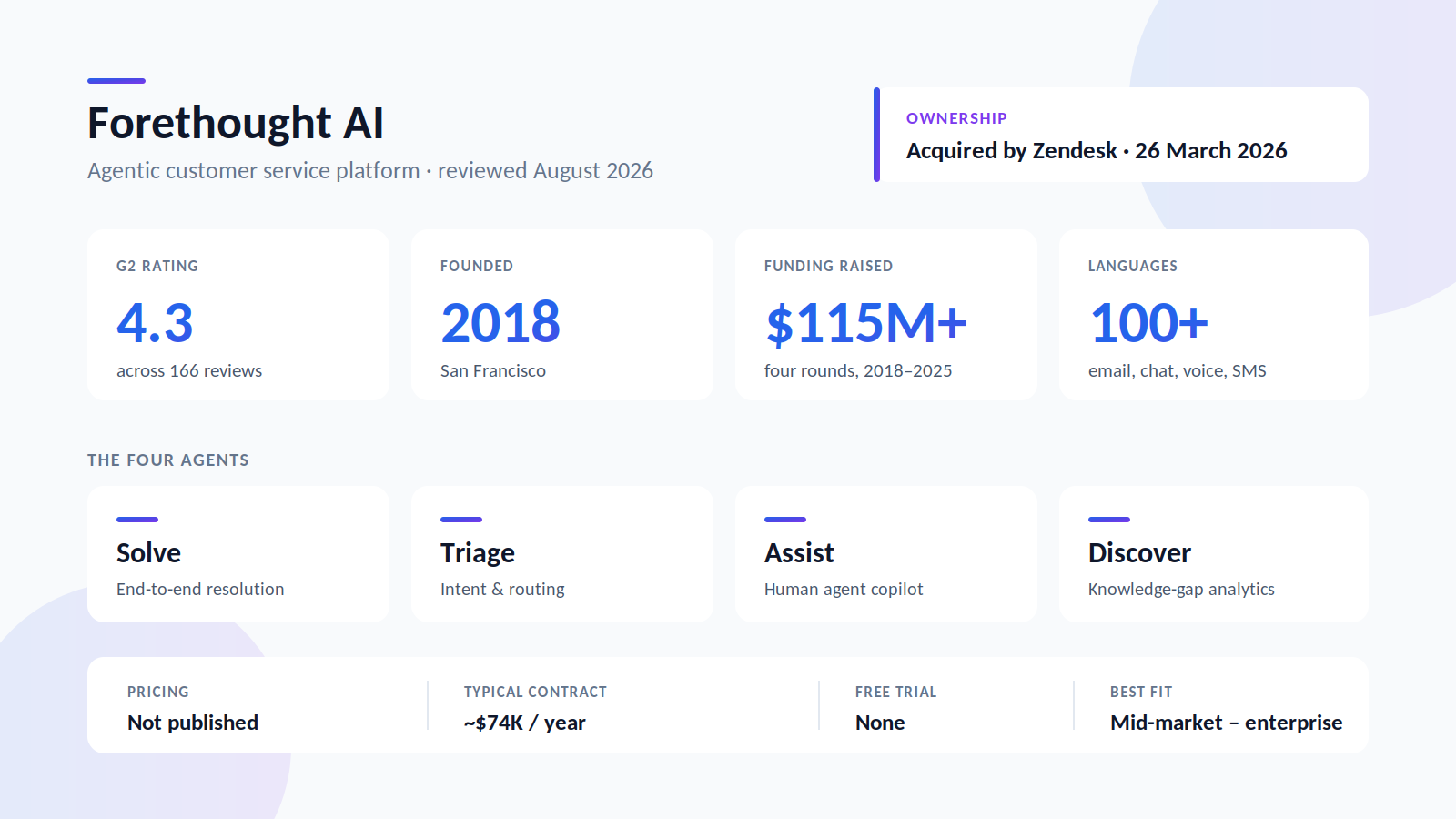
The category splits along an axis most vendor pages ignore. Build platforms — Kore.ai, Cognigy, IBM watsonx — sell you the machinery and the governance, and you supply the engineering. Outcome layers — Aissist.io, Intercom Fin, Sierra, Decagon — sell you resolutions, take on more of the configuration themselves, and bill per unit of outcome. Neither is better in the abstract. Build platforms win when you have many agents, many departments, hard hosting constraints and engineers. Outcome layers win when you have one queue, a real backlog and a quarter.
The mistake that costs the most money is buying a build platform with an outcome budget: signing a six-figure enterprise contract, staffing it with one part-time admin, and measuring it against a resolution target it was never configured to hit. If nobody on your team can name who will own agent maintenance twelve months from now, that is the signal to buy the outcome instead of the platform. Our guide to what an enterprise agentic platform actually is works through the distinction in more depth.
Frequently asked questions
What is Kore.ai used for?
Kore.ai is used to build and run enterprise AI agents across three areas: customer service automation (AI for Service), employee support in HR, IT and legal (AI for Work), and internal process automation, all on the Kore.ai Agent Platform. It covers dozens of digital and voice channels and roughly 120 languages, and deploys onto existing CRM and contact-centre systems rather than replacing them.
How much does Kore.ai cost?
Kore.ai's published self-serve pricing starts at $29/month plus per-session usage, with Automation AI Essential at $60/month plus roughly $0.05 per session, Contact Center AI at $29/month for up to 30 agents, and Search AI and Agent AI at $0.10 per session (read August 2026). Enterprise pricing is quote-only; Kore.ai's public AWS Marketplace SKUs put a realistic first-year enterprise bundle near $90,000 including support and expert services.
Is Kore.ai good for small businesses?
Generally no. G2 rates Kore.ai at its highest perceived-cost tier and reports that small-business buyers face the steepest cost-to-complexity trade-off, while buyer-reported data shows a two-month average implementation and seven-month average ROI. Small teams that want automated resolutions quickly are better served by per-resolution platforms that deploy onto their existing helpdesk in minutes.
What is the difference between the Kore.ai XO Platform and Artemis?
The XO (Experience Optimization) Platform is the prior generation of Kore.ai's platform; Artemis, launched in May 2026, is the current generation of the Kore.ai Agent Platform. Artemis added Agent Blueprint Language, an agent architect called Arch, and a dual-brain architecture pairing agentic reasoning with a deterministic flow engine. Both names still appear across documentation and review sites.
Who owns Kore.ai?
Kore.ai is privately held and led by co-founder and CEO Raj Koneru. It raised $150M in January 2024 led by FTV Capital with NVIDIA participating, and took an undisclosed strategic growth investment from AllianceBernstein Private Credit Investors in January 2026. It has not been acquired and is not publicly traded — note that the unrelated KORE Group Holdings (IoT connectivity, ticker KORE) is a different company.
What is Kore.ai's G2 rating?
Kore.ai holds 4.6 out of 5 from 505 reviews on G2 as of August 2026. Its scores are cooler on technical-implementer panels: 6.8 out of 10 on TrustRadius (11 reviews) and 3.9 out of 5 on PeerSpot (16 reviews). The most-cited praise is ease of use (209 reviews); the most-cited complaint is a steep learning curve (47 reviews).
How long does it take to implement Kore.ai?
G2 buyer-reported data puts average implementation at two months, with average time to ROI at seven months. Kore.ai publishes no fixed deployment-time claim of its own, and its case studies report results "since go-live" without dating the build. Large rollouts commonly run through implementation partners — Kore.ai's own banking case study describes delivery "via partners."
What resolution rate does Kore.ai achieve?
Kore.ai's published figures are case-study specific and anonymised: 90% call containment at a "global banking leader," and 85.7% digital versus 42.4% voice containment at a "major bank." No independently audited benchmark exists. Note that containment means the conversation avoided a human, which is not the same as the customer's problem being resolved.
Does Kore.ai replace my helpdesk?
No. Kore.ai deploys onto an existing stack, with documented integrations for Salesforce, ServiceNow, Zendesk, SAP, Genesys, NICE, Microsoft Teams, Slack and Zoom, and hosting options spanning multi-tenant SaaS, dedicated VPC and on-premises. You keep your system of record; Kore.ai adds the agent layer on top.
What are the best Kore.ai alternatives in 2026?
The strongest alternatives depend on what you are replacing. For a governed enterprise build platform, Cognigy (now NiCE) is the closest match. For per-resolution outcome pricing on an existing helpdesk, Aissist.io ($0.20–$0.60 per resolution, depending on channel) and Intercom Fin ($0.99 per resolution) publish real numbers. For Salesforce-standardised shops, Agentforce at $2.00 per conversation. Sierra AI and Decagon compete at the enterprise end but publish no pricing at all.
Evaluating Kore.ai and want the agents without the two-month build? Aissist.io runs inside the help desk you already have, bills $0.20–$0.60 per resolution, depending on channel, and starts free. See how it works on your stack →
Changelog
- August 2026 — First published. Figures verified 20 August 2026: G2 4.6 (505 reviews), TrustRadius 6.8/10 (11), Capterra 4.4 (17), PeerSpot 3.9/5 (16); kore.ai/pricing rate card and AWS Marketplace SKUs read the same day; Artemis launch (May 2026) and the AllianceBernstein growth investment (January 2026) reflected; NICE's acquisition of Cognigy and Decagon's $4.5B valuation reflected in the alternatives table.