The 9 Best Tidio Alternatives and Competitors for 2026
The best Tidio alternatives in 2026 are Intercom, Crisp, Gorgias, Zendesk, Freshdesk, LiveChat, HubSpot Service Hub, tawk.to, and Olark. The right one depends on how much you're paying for AI conversations that don't resolve — because that single billing difference is the sharpest line through this market. This guide compares all 9 on real G2 ratings, verified pricing, how each one bills its AI, and best-fit use case — plus a different path: adding an agentic AI layer on top of the platform you land on. For the wider market, see our best help desk software guide.
Tidio is live chat and a chatbot first, with a real help desk attached. Most teams shopping for an alternative are not unhappy with the product — they are unhappy with a bill that moves with conversation volume rather than with results. Below is a neutral, data-backed comparison so you can shortlist quickly.
Why teams look for a Tidio alternative
Tidio is a good product with genuinely happy users: 4.6 on G2 across 1,961 reviews, 4.7 on Capterra across 590, and 4.8 on the Shopify App Store across 1,253 reviews with 86% five-star. Teams rarely leave because it doesn't work. They leave because of how it bills.
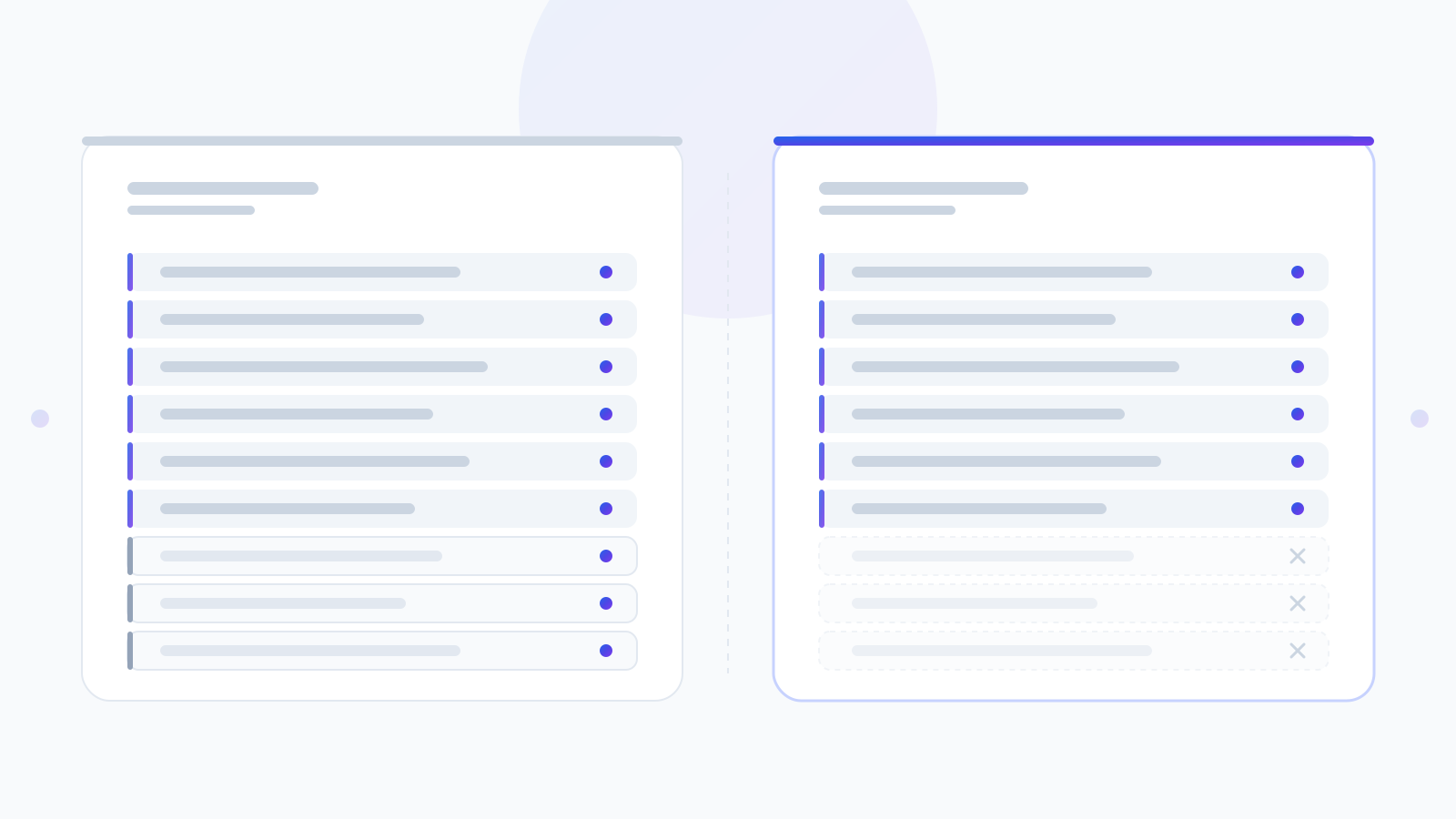
You pay per conversation attempted, not per conversation resolved. This is the structural issue and it deserves stating precisely. A Lyro conversation counts as any interaction where Lyro replies at least once — regardless of whether it replies once or twenty times, whether the customer comes back later, and whether it actually resolves anything. Pay-per-resolution billing exists only on the Premium tier, and that rate isn't published. Compare that to the alternatives: Gorgias charges $0.90 per resolved interaction and Intercom from $0.99 per outcome. Those vendors absorb the cost of AI that fails. On Tidio's mainstream tiers, you don't.
Cost is metered on two independent dimensions. Billable conversations and Lyro conversations are separate sliders, bought separately, with a third for Flows visitors. That's three usage meters to forecast. The G2 complaint data reflects it: expensive (76 reviewers), missing features (59), limited customization (57), pricing model expensive (56), more features desired (55), free-version usage limitations (47), chat functionality (46), AI limitations (44), cost limitations (44). G2 splits near-identical labels, so don't add them up — but three of the top ten themes are explicitly about cost, which is unusual.
Hitting a cap is a hard stop. Exceed your monthly billable conversations and you cannot respond to incoming messages until the counter resets or you upgrade. For a seasonal ecommerce business, that's a risk concentrated on exactly the days that matter most.
Lyro pricing is quoted two different ways by Tidio itself. The Lyro product page says "pay just $0.5 per conversation." The pricing page says AI "starts at $32.50/mo. From 50 Lyro AI conversations" — which works out to $0.65 per conversation. Both are first-party. Model with the higher one.
To be fair about what Tidio is: it does have real ticketing — mailbox connection, assignment, priorities, statuses, tags, merging, internal notes — and genuine SLA policies with breach tracking. Comparison articles that claim Tidio has no SLAs are wrong. The real product gap is that there's no customer-facing knowledge base, so you can't deflect repeat questions into self-serve articles.
If none of that describes you, staying is a reasonable answer. If one or more does, here's the field.
Compiled by Alex Gomez, Sr. Analyst, read on 24 August 2026. Disclosure: this comparison is published by Aissist.io, which sells an AI layer that runs on top of several of the platforms listed below. Ratings, prices and complaint counts come from G2 and each vendor's own pricing page.
How we evaluated these Tidio competitors
Every tool below is assessed on five things: what it genuinely does better than Tidio, the verified starting price at list, its G2 rating with review count so you can weight the evidence, how AI is billed — per seat, per conversation or per resolution — and a substantive weakness drawn from aggregated G2 review themes rather than invented for balance.
Ratings are each product's overall G2 score and review count captured in August 2026; prices are each vendor's published entry tier. Two naming notes: Intercom's G2 listing now resolves to Fin, and Zendesk's is Zendesk for Customer Service. Four products here have small review bases and are flagged accordingly.
Tidio alternatives compared at a glance
| Platform | G2 rating | Starting price | AI billed by | Best fit |
|---|---|---|---|---|
| Tidio (baseline) | 4.6 (1,961) | $24.17 / mo (Starter, annual) | Conversation | The incumbent you're comparing against |
| Intercom | 4.5 (3,904) | $29 / seat / mo | Outcome (from $0.99) | AI-first resolution at scale |
| Crisp | 4.5 (202) | $45 / mo per workspace (4 seats) | Credits | Flat monthly pricing instead of a usage meter |
| Gorgias | 4.6 (575) | $10 / mo (50 tickets) | Resolution ($0.90–$1.00) | Ecommerce and Shopify merchants |
| Zendesk | 4.3 (7,044) | $19 / agent / mo | Automated resolution | Enterprise scale and routing depth |
| Freshdesk | 4.4 (3,766) | $19 / agent / mo | Session ($49 / 100) | Best price-to-feature in full ticketing |
| LiveChat | 4.5 (811) | $19 / seat / mo annual | Seat | Pure live chat done properly |
| HubSpot Service Hub | 4.4 (2,920) | $7 / seat / mo annual | Credits | Teams standardised on HubSpot CRM |
| tawk.to | 4.5 (203) | Free | Add-on | Zero-budget live chat |
| Olark | 4.3 (224) | $29 / agent / mo | Flat AI plan ($400/mo) | Simple human live chat |
Crisp, tawk.to and Olark have review bases under roughly 450 — weight their ratings accordingly.
The 9 best Tidio alternatives and competitors
1. Intercom — best AI-first alternative
Intercom is where Tidio users go when AI resolution becomes the whole point. Fin is the most capable AI agent in this comparison, and critically it's billed per outcome rather than per conversation — you're not paying for attempts that fail. Best for: SaaS and digital-first teams with real conversation volume. Pricing: Essential $29/seat/mo, Advanced $85, Expert $132, plus Fin from $0.99 per outcome. Pros: strongest AI resolution available, excellent messenger, outcome-aligned billing. Cons: it's substantially more expensive at the seat level, and the reviewer data is candid — missing features (135), AI limitations (117), limited features (103), challenging learning curve (102), poor customer support (81), high pricing (80), inaccuracy (74). G2: 4.5 (3,904), listed as Fin. There's an Intercom integration if you'd rather keep it and automate on top.
2. Crisp — best flat-rate pricing
Crisp prices per workspace rather than per conversation — a flat monthly number instead of a meter, which matters if your problem with Tidio is unpredictable metered cost. Best for: teams who want a predictable monthly bill rather than usage forecasting. Pricing: Mini from $45/mo billed monthly including 4 seats; Essentials includes 10 and Plus 20+, with additional seats at $10/mo. A free tier covers 2 seats with no AI credits. Pros: no per-conversation meter, clean multi-channel inbox, predictable budgeting. Cons: seats are capped per tier and overage seats are billed, so it is not unlimited headcount. At 202 G2 reviews the evidence base is thin, and the largest themes are mobile-specific — missing features in the mobile app (12), limited mobile functionality versus web (7), poor customer support (7), expensive pricing and limited agent capacity (5). Rated 4.5, but on a small sample.
3. Gorgias — best for ecommerce
If you're on Tidio because you sell on Shopify, Gorgias is the direct upgrade: agents refund, cancel and edit orders inside the ticket, and support conversations get revenue attribution. It also charges per resolution, not per conversation. Best for: Shopify, BigCommerce and Magento merchants. Pricing: per billable ticket — Starter $10/mo for 50, Basic $60 for 300, Pro $360 for 2,000, Advanced $900 for 5,000, overages $0.40 or $0.25 per ticket. AI Agent is $0.90 per resolved interaction on most plans and $1.00 on Starter, with a bundle of automated interactions included per plan rather than a flat base fee. Pros: deepest ecommerce actions here, revenue reporting, resolution-aligned AI billing. Cons: Starter and Basic cap at 3 agents; steep learning curve (14 reviewers), expensive (7), missing features (7), ticketing issues (7). G2: 4.6 (575). See our Gorgias competitors guide.
4. Zendesk — best for scale
At some point live chat with a chatbot attached stops being the right shape, and you need a ticketing platform with routing, SLAs, a help centre and reporting depth. Best for: support organisations past roughly 25 agents. Pricing: Support Team $19/agent/mo billed annually; Suite Team $55, Suite Professional $115, Suite Enterprise by quote. AI is billed per automated resolution; the rate isn't published. Pros: unmatched depth and ecosystem, proven at scale. Cons: missing features (216), limited features (180), steep learning curve (179), limited customization (158), complexity for beginners (137), expensive (136). Moving from Tidio to Zendesk is a category change, not a vendor swap. See our Zendesk competitors guide.
5. Freshdesk — best price-to-feature ratio
Freshdesk gives you a real help desk — knowledge base, customer portal, dispatch rules, reporting — at the $19 tier, which is the self-serve knowledge base Tidio lacks. Best for: teams that want to deflect repeat questions into articles rather than answer them in chat. Pricing: Growth $19/agent/mo billed annually, Pro $55, Enterprise $89. Freddy AI includes 500 sessions, then $49 per 100 sessions; Freddy Copilot is $29/agent/mo on Pro and Enterprise. Pros: a lot of platform for the money, includes the KB Tidio doesn't have. Cons: notably, thin live chat is its single largest complaint theme (69 reviewers) — which is precisely Tidio's strength. Also limited features (62), limited customization (58), cumbersome ticket management (55), slow loading (54). G2: 4.4 (3,766). See our Freshdesk competitors guide.
6. LiveChat — best pure live chat
LiveChat does one thing and does it properly, with per-seat pricing that doesn't move with volume. If Tidio's chat is what you like and its metering is what you don't, this is the cleanest swap. Best for: teams that want excellent live chat with predictable per-seat cost. Pricing: $19/seat/mo billed annually or $25 billed monthly — one of the few vendors here that publishes both clearly. Pros: mature, focused product; transparent seat-based pricing; strong agent tooling. Cons: interface not intuitive (7 reviewers), notification issues (6), then a cluster of five-reviewer themes covering notification visibility, expensive pricing, AI integration and learning curve. AI capability is weaker than Intercom or Gorgias. G2: 4.5 (811).
7. HubSpot Service Hub — best if you already run HubSpot
Chat conversations land on the same customer record as marketing and sales activity — hard to replicate by stitching Tidio to a CRM. Best for: revenue teams already standardised on HubSpot. Pricing: Starter $7/seat/mo billed annually or $20 monthly; free for 2 users; Professional $90 annually or $100 monthly plus a $1,500 one-time onboarding fee. Pros: the cheapest annual entry price on this list, one record across the funnel. Cons: missing features (117), limited customization (93), limited features (88), limited email processing options (75), expensive (56) — costs escalate quickly past Starter. G2: 4.4 (2,920). There's a HubSpot integration if you keep it.
8. tawk.to — best free option
tawk.to is genuinely free at its core, with no stated agent or chat cap — it monetises through add-ons like branding removal and hired agents. If Tidio's free plan limits are what pushed you to look, this removes them. Best for: zero-budget teams that need live chat working today. Pricing: free core product; add-ons billed monthly. Pros: no cost, no seat cap, quick to deploy. Cons: at 203 G2 reviews with only one or two reviewers per complaint theme, there's not enough aggregated data to characterise its weaknesses honestly. The recurring qualitative points are limited customization, limited features and basic reporting. Rated 4.5 — treat as directional.
9. Olark — best simple human live chat
Olark is the "just let humans chat with customers" option, and it has repositioned around AI in a way worth knowing about before you shortlist it. Best for: teams that want straightforward human live chat without a chatbot. Pricing: $29/agent/mo for the human-only tier; the AI plan is $400/mo billed annually including one seat — a very different proposition from the entry price. Pros: simple, focused, easy to run. Cons: the complaint themes are tiny — design and customization limitations (3 reviewers), then limited integrations, user-limit issues and technical glitches at 2 each — so there is little aggregated weakness data to weigh either way. G2: 4.3 (224). If you saw Olark listed as cheap simple live chat elsewhere, note the AI tier's price.
A different path: add an AI layer instead of switching platforms
Every option above asks you to migrate. Sometimes that's right — particularly the move from chat widget to real ticketing.
But look again at why people leave Tidio. Paying for AI conversations that don't resolve. Three usage meters to forecast. A hard stop when a cap is hit. Those are billing-model and resolution-rate problems. Swapping one chat widget for another changes the logo on the bubble; it doesn't necessarily change how many conversations a human still has to touch.
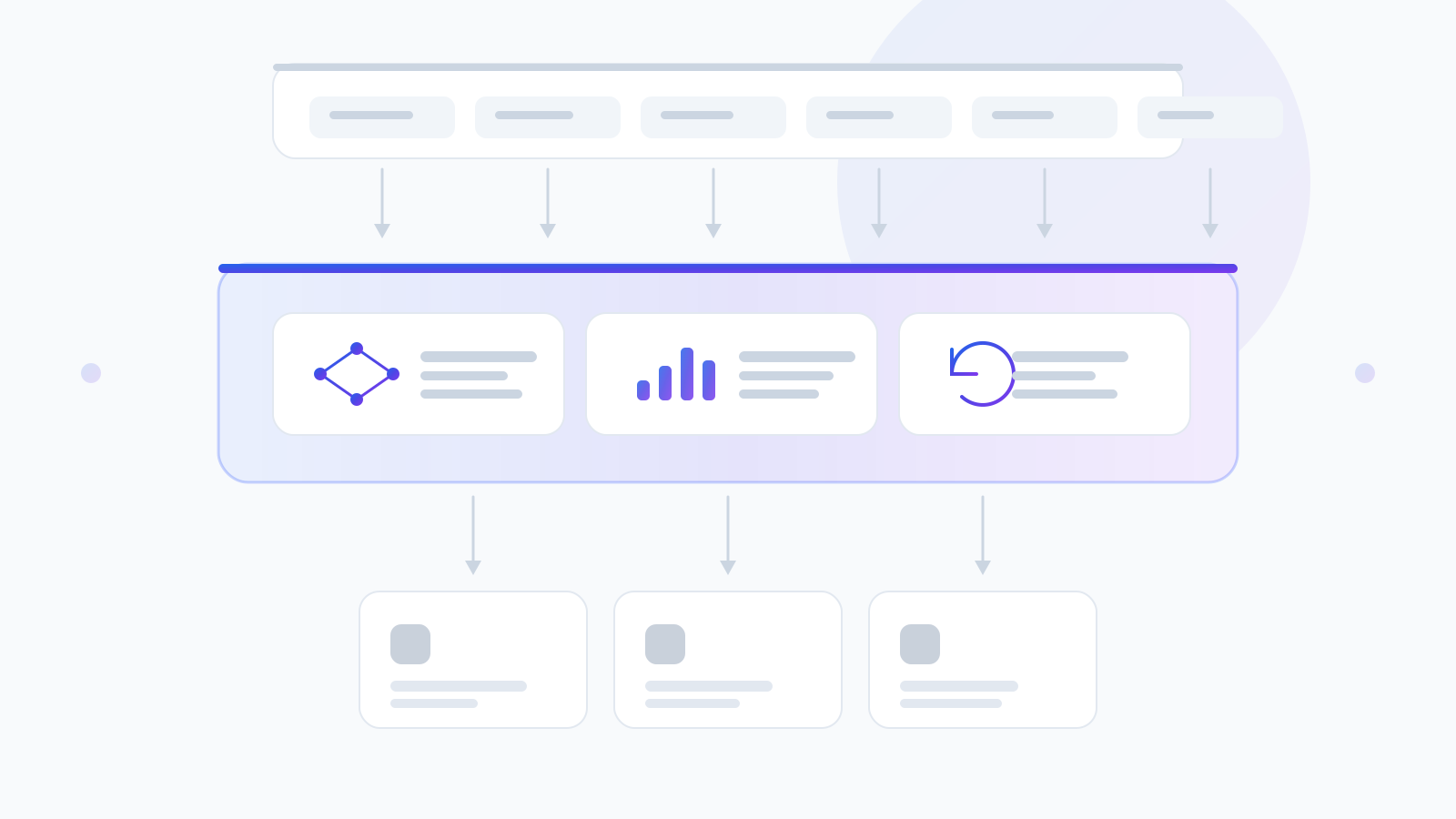
Aissist.io is an AI Operational Layer that sits on top of the help desk you already run — Intercom, Zendesk, Freshdesk, Kustomer, Front, Gorgias, eDesk, Salesforce and HubSpot among others — and resolves support and sales conversations end-to-end. Instead of a migration, its AgentMesh™ multi-agent workforce plugs into your existing stack, Pulse™ reads every conversation in real time, and Evolve™ keeps improving the operation. It's built on multi-agent reasoning with governance and human escalation, not a legacy FAQ chatbot that deflects and breaks on complexity.
The honest caveat: Tidio is not a supported native integration, so this applies to teams already on — or moving to — one of the platforms above. Best for: teams whose real constraint is conversation volume and AI cost rather than the chat widget itself. Pricing: usage-based — $0.09 per AI interaction, capped at $0.20–$0.60 per resolution, depending on channel, with a free program covering 1,000 tickets a month on its free engine, which suits FAQs and simple procedures rather than the full agentic one. Pros: keep your current platform, deploys in about 10 minutes, and the cap is tied to resolution rather than conversation count; Aissist reports 83% average resolution and 4.8/5 CSAT on automated support — vendor-reported figures, unlike the G2 ratings above. Cons: it's an automation layer, not a chat widget — you keep a platform underneath it.
How to choose the right Tidio alternative
Start with the billing model, because it's the thing most likely to have brought you here.
If you're leaving over paying for AI that doesn't resolve, move to a resolution-priced vendor: Gorgias at $0.90–$1.00 or Intercom from $0.99 per outcome. If you're leaving over metered unpredictability generally, Crisp's flat per-workspace pricing or LiveChat's per-seat model removes the meter entirely. If you're leaving because you need a knowledge base to deflect repeat questions, Freshdesk or Zendesk — Tidio has no self-serve article product. If you need enterprise routing and SLAs at scale, Zendesk. If you're ecommerce, Gorgias. If budget is zero, tawk.to.
Then model the real number, not the entry price. Tidio's Starter at $24.17 covers 100 billable conversations; at 1,000 conversations a month with Lyro at $0.65 apiece you are in a different conversation entirely. Work out your monthly conversation volume, your expected resolution rate, and then price each option on cost per resolved conversation. That single calculation reorders this list for most teams.
Key takeaways
There's no single best Tidio alternative — there's a best one for why you're leaving. For AI-first resolution, Intercom. For flat predictable pricing, Crisp. For ecommerce, Gorgias. For scale, Zendesk. For a knowledge base at a fair price, Freshdesk. For pure live chat, LiveChat. For zero budget, tawk.to. The line that matters most runs through billing: Tidio charges per conversation attempted, while Gorgias and Intercom charge per resolution or outcome. If AI cost is what pushed you to look, that distinction is worth more than any feature comparison — and if the underlying problem is simply how many conversations reach a human at all, an agentic AI layer addresses that on whichever platform you land on.
Keep your platform, upgrade the resolution. Aissist.io adds an agentic AI layer to the major help desk platforms — resolving support and sales end-to-end, no migration required. Book a consultation →
Frequently asked questions
What are the best Tidio alternatives?
The best Tidio alternatives are Intercom, Crisp, Gorgias, Zendesk, Freshdesk, LiveChat, HubSpot Service Hub, tawk.to and Olark. Intercom is the most AI-capable, Crisp offers flat per-workspace pricing, Gorgias is strongest for Shopify merchants, and tawk.to is genuinely free. The right pick usually depends on how AI is billed.
Why do teams switch away from Tidio?
Primarily billing. Tidio charges per conversation attempted rather than per conversation resolved, so you pay for AI interactions that fail — pay-per-resolution exists only on Premium. Cost is metered across billable conversations, Lyro conversations and Flows visitors separately. Hitting a conversation cap is a hard stop that blocks replies until reset. Tidio also has no customer-facing knowledge base.
How much does Tidio cost?
Tidio's annual-billed tiers are Free ($0, 50 conversations a month, 10 seats), Starter at $24.17 a month for 100 conversations, Growth from $49.17 a month for 250, Plus from $300 a month plus usage, and Premium by quote. Lyro AI is a separate metered add-on, quoted by Tidio at both $0.50 and $0.65 per conversation depending on which page you read.
How is Lyro AI priced?
Lyro is a metered add-on sold on a slider, not bundled into the plan. Tidio's Lyro page quotes $0.50 per conversation while its pricing page implies $0.65. A Lyro conversation counts as any interaction with at least one Lyro reply, regardless of how many replies follow or whether it resolves. Pay-per-resolution billing is available only on Premium.
Does Tidio have a knowledge base?
No. Tidio's feature set covers Lyro, live chat, ticketing, Flows, channels, order management, analytics, departments and integrations — but there is no customer-facing knowledge base or article publishing product. If you want to deflect repeat questions through self-serve documentation, Freshdesk and Zendesk both include one.
Does Tidio have SLAs and ticketing?
Yes, both. Tidio has genuine SLA policies with breach tracking, and its help desk supports mailbox connection, assignment, priorities, statuses, tags, merging and internal notes. Comparison articles claiming Tidio lacks SLAs are inaccurate. It is best described as live chat and chatbot first, with a real but email-centric help desk attached and no self-serve knowledge base.
What is the best free Tidio alternative?
tawk.to is the strongest free option — its core product is free with no stated agent or chat cap, monetised through add-ons. HubSpot Service Hub is free for 2 users, and Crisp for 2 seats without AI credits. Tidio's own free plan allows 50 conversations a month and a one-off, non-renewing allocation of 50 Lyro conversations.
Tidio vs Intercom — which is better?
Intercom is more capable and more expensive; Tidio is cheaper and simpler. The decisive difference is AI billing: Intercom's Fin charges from $0.99 per outcome, so failed attempts don't bill, while Tidio charges per conversation regardless of result. For low volume Tidio is usually cheaper; as AI volume grows, outcome-based pricing often wins on cost per resolved conversation.
Which Tidio alternative is best for Shopify?
Gorgias. It's purpose-built for ecommerce, with refunds, cancellations and address edits performed inside the ticket, plus revenue attribution for support conversations. Its AI Agent is billed at $0.90 per resolved interaction, rising to $1.00 on the Starter tier. Tidio is genuinely strong on Shopify too — 4.8 across 1,253 App Store reviews — so this is an upgrade for scale, not a rescue.
Is Tidio expensive?
It depends entirely on volume. The $24.17 Starter tier is inexpensive, but it covers only 100 billable conversations, and Lyro is metered separately at roughly $0.50–$0.65 per conversation. Cost concerns are prominent in review data, with expensive (76 reviewers), pricing model expensive (56), usage limitations (47) and cost limitations (44) all appearing among the top complaint themes.